Climate Change and the New Kurdistan Strategy
How the Kurdistan Region’s Ninth Cabinet is linking dams, green infrastructure, electricity reform, and tourism into a long-term climate adaptation vision
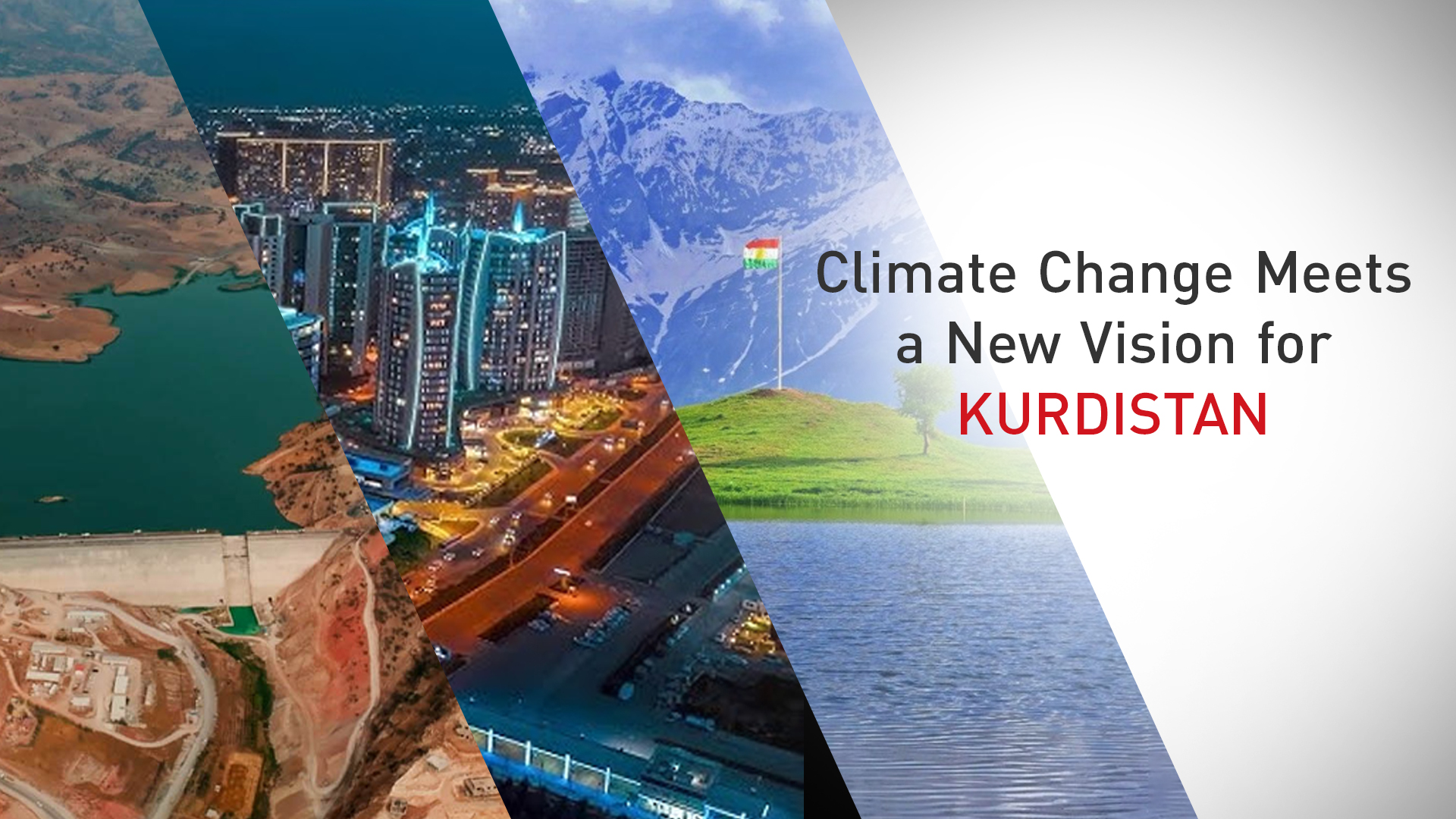
ERBIL (Kurdistan 24) - For years, climate change in the Kurdistan Region was discussed as a distant global threat, something tied to international summits, scientific reports, and future predictions. Today, it has become visible in daily life across the Region itself.
Summers are becoming hotter and longer. Rainfall patterns are increasingly unstable. Dust haze now covers cities more frequently. Rivers and groundwater levels are under growing pressure. Large agricultural areas face drought risks, while expanding urbanization continues to consume farmland and green spaces around major cities.
But while environmental pressure intensifies across Iraq and the wider Middle East, the Kurdistan Regional Government’s Ninth Cabinet has increasingly attempted to frame climate adaptation not only as an environmental necessity but as part of a broader long-term development strategy, connecting water security, infrastructure, tourism, energy reform, and urban planning into one future-oriented vision.
Across the Kurdistan Region, that strategy is becoming visible through:
- New dams and water storage systems
- The Green Belt project around Erbil
- Expansion of 24-hour electricity through the Runaki project
- Eco-tourism and mountain tourism initiatives
- Reforestation campaigns
- Environmental planning and sustainability programs
The broader goal appears increasingly clear: transforming climate resilience into economic resilience.
Climate Change Is No Longer Theoretical in Kurdistan
International organizations warn that the Kurdistan Region is among the areas increasingly vulnerable to climate stress across Iraq and the Middle East.
According to the International Organization for Migration (IOM) Climate Vulnerability Assessment in the Kurdistan Region of Iraq’s recent update on Dec, 31 2025, the Region faces:
- Rising average temperatures
- Declining and unpredictable rainfall
- More severe droughts
- Water scarcity
- Sand and dust storms
- Pressure on rain-fed agriculture
- Groundwater depletion
The report warns that climate stress increasingly threatens rural livelihoods and could contribute to future migration pressures and economic instability.
Similar warnings have also been issued by:
- UNDP Iraq Climate Programs
- World Bank Iraq Climate Reports
- UN Climate Change
Climate pressure is especially dangerous for the Kurdistan Region because much of its agriculture depends heavily on rainfall rather than large-scale irrigation systems.
Environmental experts warn that continued warming and drought could eventually affect:
- Food security
- Water availability
- Rural employment
- Tourism sustainability
- Urban living conditions
Dams Become Climate Infrastructure
One of the Ninth Cabinet’s largest infrastructure priorities has been water management.
According to official KRG figures, the government has completed nine dams with a combined storage capacity of approximately 253 million cubic meters, while dozens of additional ponds and smaller water projects are either completed or under construction.
Officially, the projects are aimed at:
- Water storage
- Flood control
- Agricultural irrigation
- Groundwater preservation
- Drought mitigation
But increasingly, the dams are also being viewed as climate adaptation infrastructure.
In many areas, reservoirs and mountain lakes connected to dam projects are gradually becoming part of local tourism development strategies as well.
Officials and tourism planners increasingly discuss:
- Lakeside tourism
- Eco-tourism
- Fishing areas
- Domestic tourism
- Mountain recreation zones
-Around several new water projects
The strategy reflects a broader shift in thinking:
Water infrastructure is no longer only about engineering; it is also about economic diversification and environmental survival.
The Green Belt: A Symbolic Battle Against Desertification
Perhaps no project better symbolizes the Kurdistan Region’s climate ambitions than the Green Belt of Erbil.
The long-discussed initiative aims to create a large environmental and agricultural belt surrounding the capital through:
- Tree planting
- Artificial forests
- Green zones
- Agricultural buffers
- Urban cooling systems
Official KRG goals include:
- Reducing urban temperatures
- Improving air quality
- Lowering dust pollution
- Slowing desertification
- Expanding green space around Erbil
The first phase of the project reportedly included hundreds of thousands of newly planted trees and broader plans targeting millions more in future phases.
The Green Belt also carries political and symbolic importance because it reflects a different image of modern Erbil:
not only as a rapidly expanding city of highways and real-estate projects, but also as a city attempting to balance development with environmental sustainability.
However, the project also faces major long-term challenges.
Environmental experts continue warning about:
- Water sustainability
- Groundwater depletion
- Rapid urban expansion
- Real-estate pressure
- Long-term maintenance costs
Critics argue that without strict environmental protections and sustainable irrigation systems, large parts of the Green Belt risk becoming symbolic rather than structurally transformative.
Still, supporters see the project as one of the Kurdistan Region’s most ambitious climate adaptation initiatives in decades.
Runaki: Electricity Reform as Environmental Reform
The Ninth Cabinet’s Runaki project is officially framed as an electricity modernization program designed to provide 24-hour power across the Kurdistan Region.
But its environmental implications may become equally important.
According to official KRG figures, the project has already helped shut down thousands of neighborhood diesel generators across the Region.
That translates into:
- Lower urban pollution
- Reduced diesel emissions
- Less noise pollution
- Improved air quality
- Cleaner urban environments
The project has already expanded across major cities, including:
- Erbil
- Duhok
- Sulaimani
- Halabja
Officials say more than 85% of the Kurdistan Region’s population now receives 24-hour electricity service through the project.
Environmentally, the transformation is highly visible.
For decades, generators became part of daily urban life across Iraq and the Kurdistan Region:
- Thick smoke
- Noise
- Fuel consumption
- Congested neighborhoods
The gradual elimination of generators is now reshaping urban quality of life and improving the Region’s broader tourism image.
Tourism as Climate Adaptation
Perhaps the most unique aspect of the Kurdistan Region’s strategy is how climate adaptation is increasingly tied to tourism development.
Rather than focusing only on the environmental crisis, the Ninth Cabinet increasingly presents environmental investment as part of a larger economic transformation project.
That includes expanding:
- Mountain tourism
- Eco-tourism
- Rural tourism
- Forest tourism
- Lakeside tourism
- Sustainable urban spaces
Destinations such as:
- Rawanduz
- Biyara
- Hiror
- Hawraman areas
- Mountain resorts
- New dam zones
are increasingly promoted as part of the Region’s future tourism identity.
The Kurdistan Region’s recent nominations for the UN Tourism “Best Tourism Villages” initiative also reflect this shift toward environmentally focused tourism branding.
Tourism officials increasingly frame Kurdistan not only as a safe destination within Iraq, but also as:
- A mountain destination
- A green destination
- A climate refuge during summer
- A center for eco-tourism in the Middle East
A Broader Nation-Building Vision
At its core, the Ninth Cabinet’s climate-related projects appear to reflect something larger than environmental management alone.
The broader strategy increasingly connects:
- Climate adaptation
- Infrastructure
- Economic diversification
- Tourism
- Governance
- Energy modernization
- Urban planning
- National image-building
In a region historically defined internationally by war, instability, and political conflict, the Kurdistan Regional Government increasingly appears to be trying to redefine modern Kurdistan through:
- Sustainability
- Infrastructure
- Environmental resilience
- Tourism
- Development planning
Whether these projects ultimately succeed long-term will depend on:
- Water sustainability
- Continued investment
- Environmental regulation
- Political continuity
- Population growth management
- Climate realities themselves
But one thing is increasingly clear:
Climate change is no longer only a future environmental issue in Kurdistan.
It is becoming one of the central forces shaping the Region’s economy, infrastructure, cities, tourism industry, and political future.