Roads, Bridges, and Urban Streets: How the KRG's Ninth Cabinet Is Rebuilding the Kurdistan Region
The KRG’s ninth cabinet has placed road and transport infrastructure at the heart of its agenda, completing a landmark series of projects across the Region.
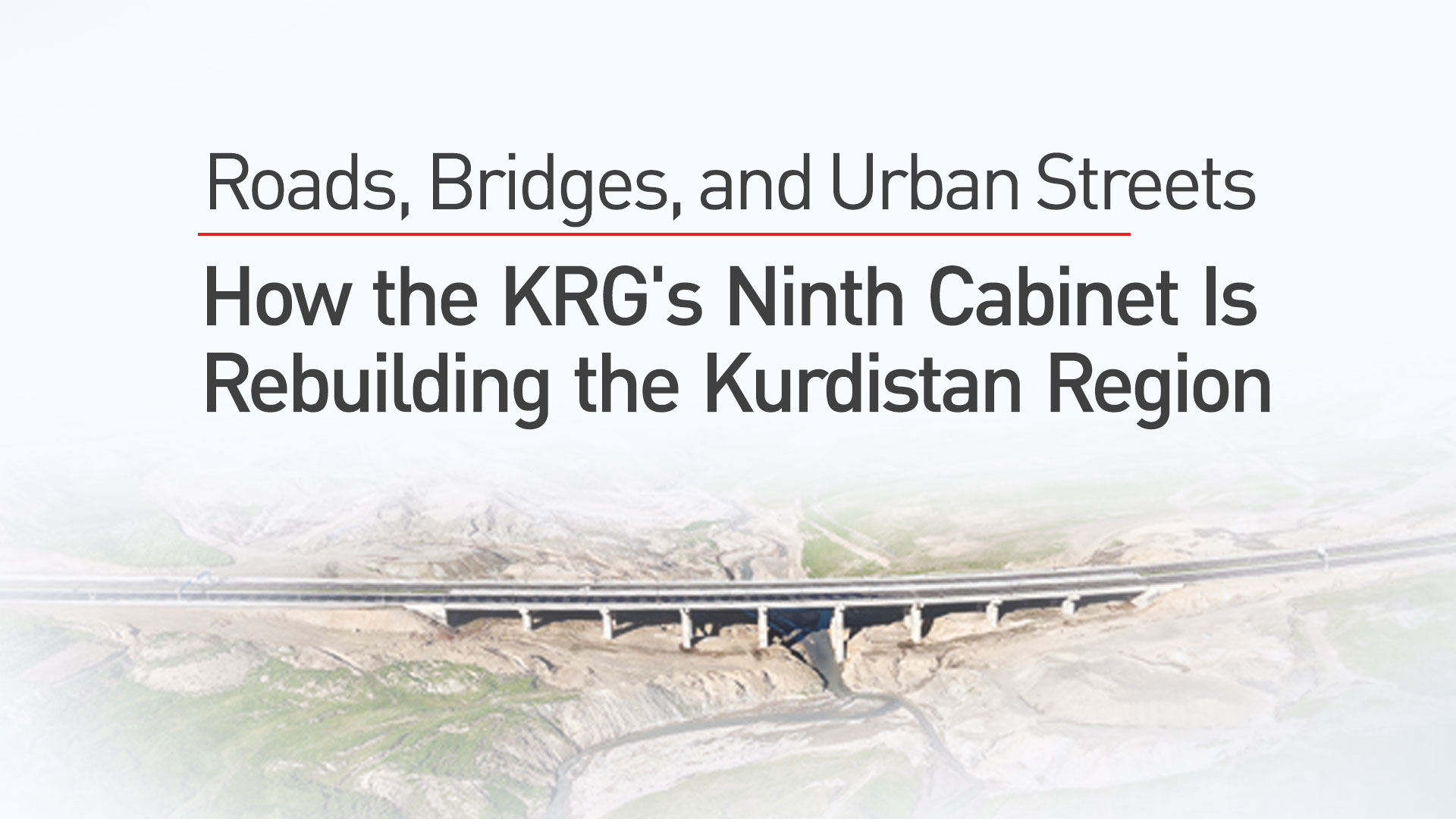
ERBIL (Kurdistan24) - Across the mounts of Sulaimani, the plains of Erbil, the hills of Duhok, and the valleys of Halabja, the Kurdistan Regional Government's ninth cabinet has been quietly transforming the ground beneath its citizens' feet.
In a sweeping infrastructure drive that stretches from major highways to neighborhood streets, the cabinet has delivered a program of road and urban development that dwarfs previous administrations in both scale and ambition.
The ninth cabinet has executed a total of 1,119 external road projects at a combined cost of 4.3 trillion Iraqi dinars, spanning 5,126 kilometers of roadway.
Sulaimani province leads all areas with 395 projects, followed by Erbil with 271, Duhok with 127, and Halabja with 40,
The Raparin administration contributed 97 projects, Soran 102, Garmian 69, and Zakho 13 — reflecting a broad geographic reach across the Region's diverse administrative landscape.
Inside Kurdistan's cities, the effort has been no less significant. A total of 2,168 urban street and bridge projects have been completed under the ninth cabinet, backed by a budget of 2 trillion dinars.
These works have targeted the repair and construction of roads and bridges within city limits, delivering improved connectivity and quality of life across urban centers throughout the Region.
At the level of municipal authorities, the cabinet's infrastructure footprint expands further still.
Erbil's municipality alone has overseen 2,519 projects — the highest of any area.
Duhok follows with 1,450 projects and Sulaimani with 772.
Soran recorded 144 municipal projects, Zakho 91, and Halabja 94, bringing the total number of municipal-level works across the Kurdistan Region to an extensive combined figure.
Alongside construction, the ninth cabinet has invested in traffic safety and engineering infrastructure.
The program includes 59 overpasses and underpasses, 45 kilometers of railway barriers, and 883 kilometers of road and street markings.
Pedestrian safety has also been prioritized through the installation of 296 pedestrian crossing lines, 1,500 speed-reduction barriers, and 16,000 traffic signs — measures aimed at reducing accidents and safeguarding civilians across the Region's road network.