Araghchi Says Iran Opposes Nuclear Weapons, Pledges Hormuz Security
Iranian Foreign Minister Abbas Araghchi said Tehran is not seeking nuclear weapons and pledged that the Strait of Hormuz would be secure for international shipping once U.S. pressure subsides, linking maritime stability directly to de-escalation with Washington.
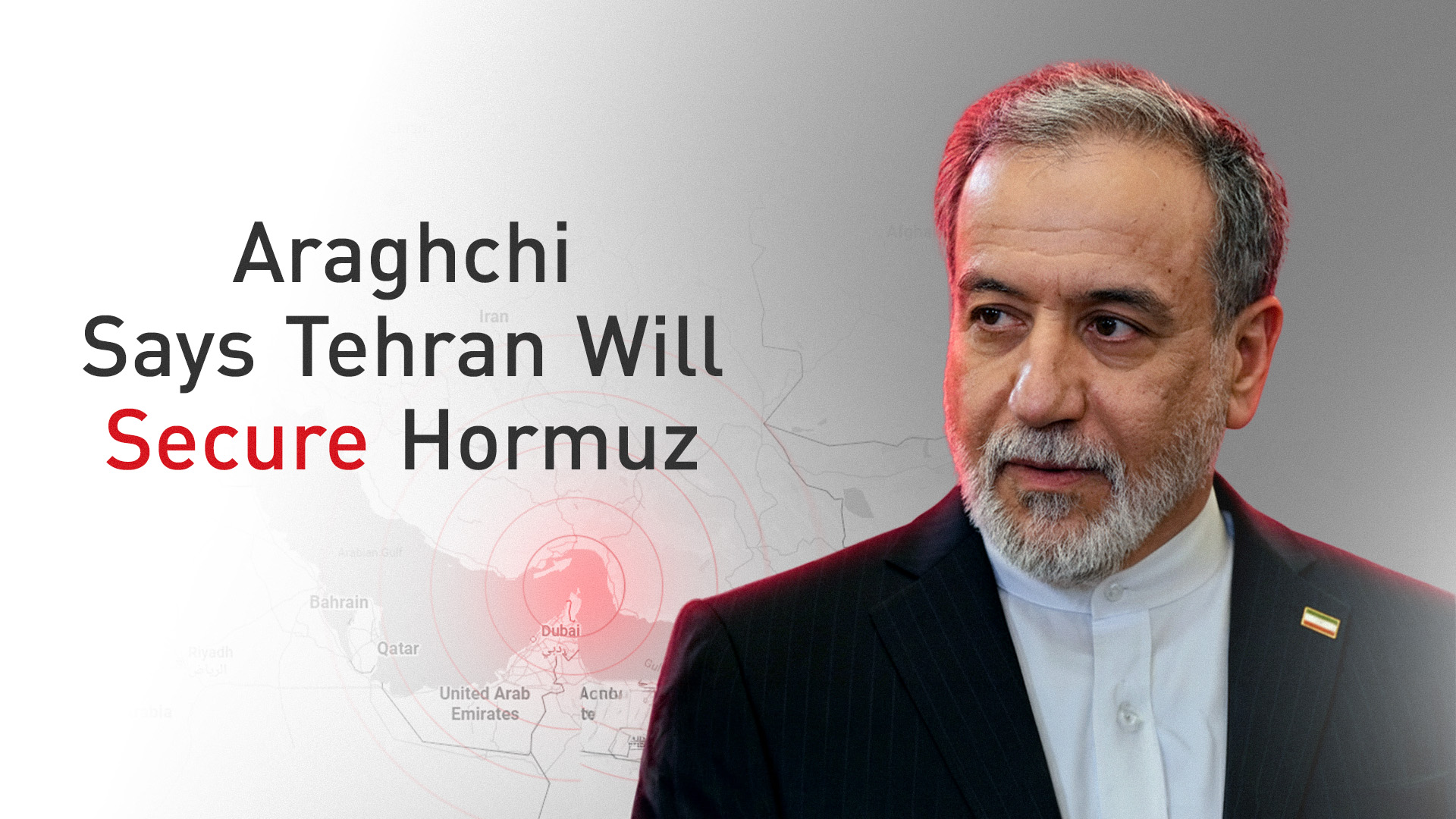
ERBIL (Kurdistan24) - Iranian Foreign Minister Abbas Araghchi has publicly reiterated Tehran's official stance that the Islamic Republic is not seeking to acquire a nuclear arsenal, characterizing the country’s atomic program as strictly peaceful.
Speaking on Friday, Araghchi also addressed international concerns regarding maritime transit, asserting that the Strait of Hormuz will be secured for all global shipping once perceived U.S. military and diplomatic pressures conclude.
The statements by the top Iranian diplomat attempt to clarify Tehran's strategic posture amid a period of acute regional instability.
Araghchi's remarks regarding nuclear intentions and maritime security reflect a broader effort by the Iranian government to manage international scrutiny while positioning the United States as the primary source of regional friction.
The assurances arrive at a time when the security of the Strait of Hormuz, a vital chokepoint for the global energy market, remains compromised by ongoing tensions.
The diplomatic messaging occurs in parallel with sharp military rhetoric and complex international maneuvering.
This ongoing standoff involves a multifaceted deterrence strategy by Iran, supported by diplomatic framing from allies such as Russia.
While Iranian military leaders like Army Commander-in-Chief Amir Hatami emphasize Tehran's capacity to penetrate U.S. defense networks in the region, Russian Foreign Minister Sergey Lavrov has advocated for a diplomatic resolution that addresses what Moscow views as the underlying causes of the conflict.
Lavrov argues that U.S. military intervention and systemic pressure complicate the Middle Eastern security landscape, suggesting that any durable peace agreement must account for the root dynamics driving the current crisis.
Iran Rejects Nuclear Weapons
Foreign Minister Araghchi’s comments on Friday directly addressed the most persistent international concern regarding Iran's strategic trajectory. The Iranian official stated unequivocally that acquiring nuclear weapons is not a component of state policy.
"We do not want to become owners of nuclear weapons and this is not our policy," Araghchi said, according to the primary report. He emphasized instead that Iran possesses a "peaceful nuclear program."
The explicit rejection of nuclear armament by the foreign minister comes at a time when international pressure on Iran's nuclear activities continues to mount.
Diplomatic observers note that these assurances are frequently utilized by Tehran to signal a willingness to engage in dialogue, even as the broader geopolitical environment remains fraught with tension.
Focus on Strait of Hormuz Security
In addition to nuclear policy, Araghchi addressed the immediate economic and security crisis in the Persian Gulf.
The Iranian diplomat stated that the disruption of international shipping in the Strait of Hormuz is a temporary condition linked to what he described as American aggression.
According to Iranian remarks, Araghchi asserted that "when American aggressions end, everything will return to its normal state."
The strategic importance of the Strait of Hormuz cannot be overstated, as a significant portion of the world's traded oil passes through the narrow waterway.
Concerns over regional shipping and energy transit have spiked following the outbreak of hostilities and the subsequent restriction of maritime movement.
Araghchi emphasized that Tehran is currently making the necessary preparations to guarantee a "safe corridor" for all types of vessels. However, according to the report, the Iranian official conditioned this maritime security guarantee on the normalization of the regional situation and the cessation of U.S. pressures.
This diplomatic framing effectively ties the resumption of normal global energy transit to a reduction in the U.S. military and economic posture against Iran.
Military and Diplomatic Messaging
While the foreign ministry focused on diplomatic conditions for normalization, Iranian military leaders projected a posture of defiance and deterrence.
According to a separate report, Amir Hatami, the Commander-in-Chief of the Iranian Army, issued a message on Friday emphasizing the ideological and operational strength of Iranian forces.
Hatami stated that the "power of faith and belief" enables Iranian military assets, specifically citing an 'F-5' fighter jet, to penetrate the airspace of American bases in Kuwait.
According to the Iranian military leader, this occurs despite the presence of highly advanced U.S. air and land defense systems in the region. Hatami further asserted that this operational capability confuses adversarial forces, claiming it occasionally leads them to mistakenly target their own aircraft.
The military remarks were intended to reassure the domestic Iranian population of the armed forces' commitment to defending the state's sovereignty and the Islamic Republic system "until the last drop of blood." This rhetoric contrasts with statements from U.S. military officials regarding the efficacy of recent operations.
According to the report, CENTCOM Commander Brad Cooper testified before the U.S. Senate Armed Services Committee that U.S. attacks had achieved their objectives, asserting that 90% of Iran's defense industry had been destroyed.
Cooper also noted that Iran-affiliated groups had attacked American personnel more than 350 times in the 30 months preceding the current U.S. operation.
Russia Calls for Broader Understanding
The diplomatic standoff is being actively interpreted by international actors, notably the Russian Federation.
Russian Foreign Minister Sergey Lavrov, speaking at a press conference in New Delhi on Friday, outlined Moscow's perspective on resolving the crisis. According to Lavrov, a resolution to the Iran problem requires an understanding of the "root of the issue."
The Russian foreign minister argued that the military actions undertaken by the United States and Israel against Iran are "unjustified."
Lavrov stated that Western efforts aimed at military intervention or regime change in the Middle East and Africa serve only to deepen crises and complicate the regional situation further.
According to the report, Lavrov emphasized the urgent need to conclude the war and reach a diplomatic agreement that also removes the current obstacles facing navigation in the Strait of Hormuz.
The Russian diplomat also suggested that international partners, specifically pointing to India, could play a constructive mediating role between Iran and Arab countries to help calm the regional situation.
This perspective aligns with Iranian diplomatic framing regarding international institutions.
According to the report, Araghchi stated that illegal U.S. wars have weakened the global system, arguing that fundamental changes must be implemented within the United Nations Security Council to address these systemic imbalances.
Regional and International Implications
The dual messaging from Tehran, offering maritime security guarantees while projecting military resilience, highlights the complex calculus driving the current conflict.
The international community continues to monitor the situation closely, as the linkage between diplomatic negotiations and the physical security of the Strait of Hormuz directly impacts global economic stability.
The statements from Iranian and Russian officials indicate a concerted effort to shift the diplomatic narrative, placing the onus for de-escalation on the United States.
However, the starkly differing assessments of military damage and strategic posture between Washington and Tehran suggest that significant hurdles remain before any normalization can be achieved.