White House Posts 'James Bond'-Style Image of Trump Amid Regional Security Tensions
The White House intensified its digital-era political messaging Sunday by posting a stylized image of U.S. President Donald Trump as fictional agent James Bond, as Washington simultaneously maintained a heightened military posture near the Strait of Hormuz amid ongoing tensions with Iran.
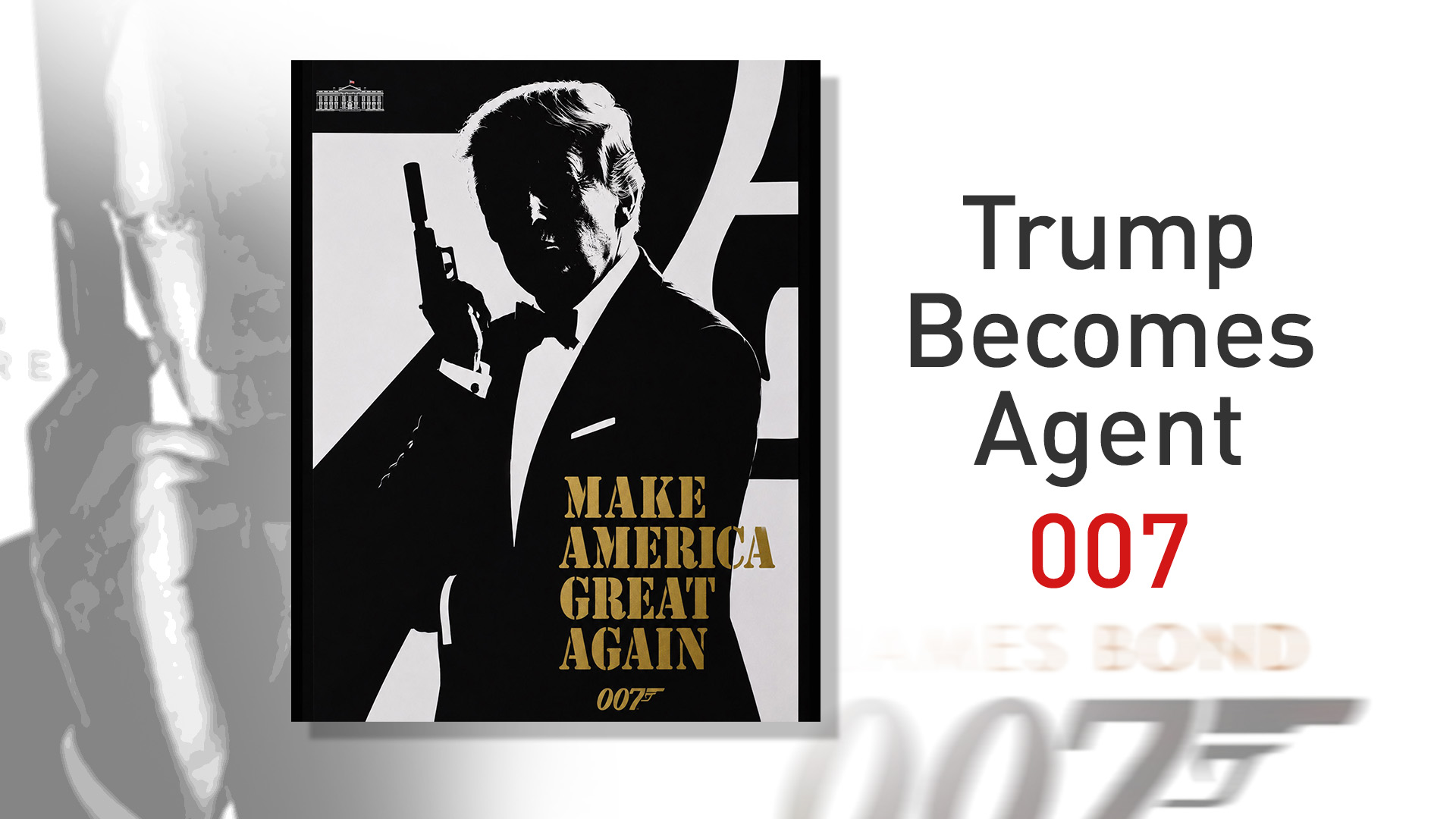
ERBIL (Kurdistan24) - The official White House social media presence has adopted an increasingly cinematic tone in its political messaging, recently publishing a stylized image depicting U.S. President Donald Trump as the fictional British agent James Bond.
The post, which appeared on the X platform on Sunday morning, showcased the president as "Agent 007," accompanied by the administration's signature slogan, "Make America Great Again."
👀 https://t.co/k8RYZ3XSDW pic.twitter.com/FEnJjOvmWS
— The White House (@WhiteHouse) May 16, 2026
The decision by the White House to employ pop-culture symbolism occurred alongside a series of assertive statements from the president and comes at a moment of significant diplomatic and military volatility.
According to the reporting, Trump utilized his Truth Social platform simultaneously to post an image of himself standing against a backdrop of warships and a gathering storm, bearing the caption, "It was the calm before the storm."
This visual and rhetorical signaling has drawn immediate international attention, as geopolitical observers parse the integration of digital branding and military posturing during ongoing high-stakes negotiations with Iran.
The current diplomatic environment is deeply intertwined with these public communications.
As the White House projects resolve, the U.S. military is actively managing a highly sensitive security environment in the Middle East.
According to official statements from U.S. Central Command (CENTCOM) and the U.S. Naval Forces Central Command/5th Fleet, American forces remain engaged in enforcing a naval blockade and monitoring commercial traffic near the Strait of Hormuz.
The fusion of aggressive political imagery and visible military readiness highlights how the administration is utilizing both digital media and physical deterrence to shape the narrative surrounding the stalled Iran ceasefire.
Presidential Messaging and Political Branding
The publication of the "James Bond" image reflects a broader trend in modern political communication, where administrations increasingly leverage stylized, highly produced digital assets to communicate strength and strategic intent to domestic and international audiences.
By adopting the iconography of a globally recognized intelligence operative, the White House post appeared designed to project an aura of control and specialized capability.
This digital branding strategy was reinforced by the president's own comments regarding the ongoing diplomatic standoff.
According to a remark made to the French channel BFM, Trump indicated that while he believes Iranian officials desire a diplomatic resolution, he is prepared to reject any unfavorable terms immediately.
"Well, I looked at it, and if I don't like the first sentence, I just throw it away," Trump was quoted as saying, warning that Tehran must either reach an agreement or face severe consequences.
Military Posture and Strategic Communications
The political optics generated by the White House are directly supported by synchronized messaging from the U.S. military command.
CENTCOM has maintained a steady stream of public updates regarding its operations in the region.
According to a statement posted by CENTCOM on X on Saturday, U.S. Army helicopters continue to conduct surveillance flights over commercial vessels near the Strait of Hormuz to ensure compliance with the ongoing maritime blockade against Iran.
The military updates have been precise regarding the scale of the operation.
CENTCOM stated that as of Saturday, U.S. forces had successfully redirected 78 commercial ships and disabled four others that failed to adhere to the blockade orders.
A U.S. Army helicopter observes commercial ships while flying over regional waters near the Strait of Hormuz during U.S. enforcement of the maritime blockade against Iran.
— U.S. Central Command (@CENTCOM) May 16, 2026
As of May 16, 78 commercial ships have been redirected, and 4 have been disabled to ensure compliance. pic.twitter.com/VYV8idzhuU
These actions fall under the administration's broader "Economic Fury" campaign, which is designed to paralyze illicit Iranian trade and target the logistical networks supporting the country's oil exports.
Furthermore, CENTCOM utilized social media to highlight the logistical reach of the U.S. military, posting images of Air Force personnel maintaining KC-135 Stratotanker refueling aircraft, which are essential for extending the operational range of regional assets.
U.S. Air Force maintainers work on a KC-135 Stratotanker refueling aircraft. Refueling aircraft extend the operational reach of U.S. military assets employed across the Middle East. pic.twitter.com/yVTyN9Blie
— U.S. Central Command (@CENTCOM) May 16, 2026
Naval Operations and High-Level Oversight
The U.S. naval presence in the region has also been featured prominently in recent strategic communications.
According to the official X account of the U.S. Naval Forces Central Command/U.S. 5th Fleet, Vice Admiral Curt Renshaw recently visited the USS George H.W. Bush (CVN 77) as the aircraft carrier conducted patrols in support of the blockade operations.
The 5th Fleet account noted that during his May 15 visit, Vice Adm. Renshaw addressed the sailors directly, utilizing the ship's public address system to emphasize the critical nature of their ongoing mission.
The publicization of this high-level visit serves to reinforce the narrative of military readiness projected by the White House.
Vice Adm. Curt Renshaw, NAVCENT/5th FLEET commander, visited USS George H.W. Bush (CVN 77), May 15, as the aircraft carrier patrolled regional waters in support of the U.S. blockade operations against Iran. While on board, he interacted with Sailors and addressed them on the 1MC… pic.twitter.com/5tidCC0NC0
— U.S. Naval Forces Central Command/U.S. 5th Fleet (@US5thFleet) May 16, 2026
Broader Context of U.S.-Iran Tensions
The stylized imagery and military updates arrive amid reports of extensive preparations for potential future operations.
According to The New York Times, which cited Middle Eastern officials, the United States and Israel have undertaken significant preparations that could facilitate a resumption of military activity if the current ceasefire collapses.
The reporting noted that U.S. Secretary of Defense Pete Hegseth recently testified before Congress that the military maintains contingency plans to expand attacks if required.
The operational options reportedly discussed in military circles range from intensive airstrikes on Iranian infrastructure to highly specialized operations targeting nuclear materials at facilities such as Isfahan.
The current geopolitical standoff remains focused on the naval blockade imposed by the U.S. on Apr. 13 and Iran's retaliatory restrictions on navigation through the Strait of Hormuz, a critical artery for global energy transit.
The conflict, which initially escalated on Feb. 28, has resulted in thousands of casualties, according to statistics provided by Tehran and independent reporting.
The White House's publication of stylized imagery occurred alongside continued regional security messaging from military commands, reflecting the growing fusion of political branding and digital-era communication strategies during complex international standoffs.