Erbil Airport Logs 758 Flights Since the Ceasefire as International Routes Return to Normal
The airport's director confirmed full resumption of services to destinations across the Middle East, Europe, and beyond, though Eurowings, Austrian Airlines, and a Greek carrier have yet to restart operations
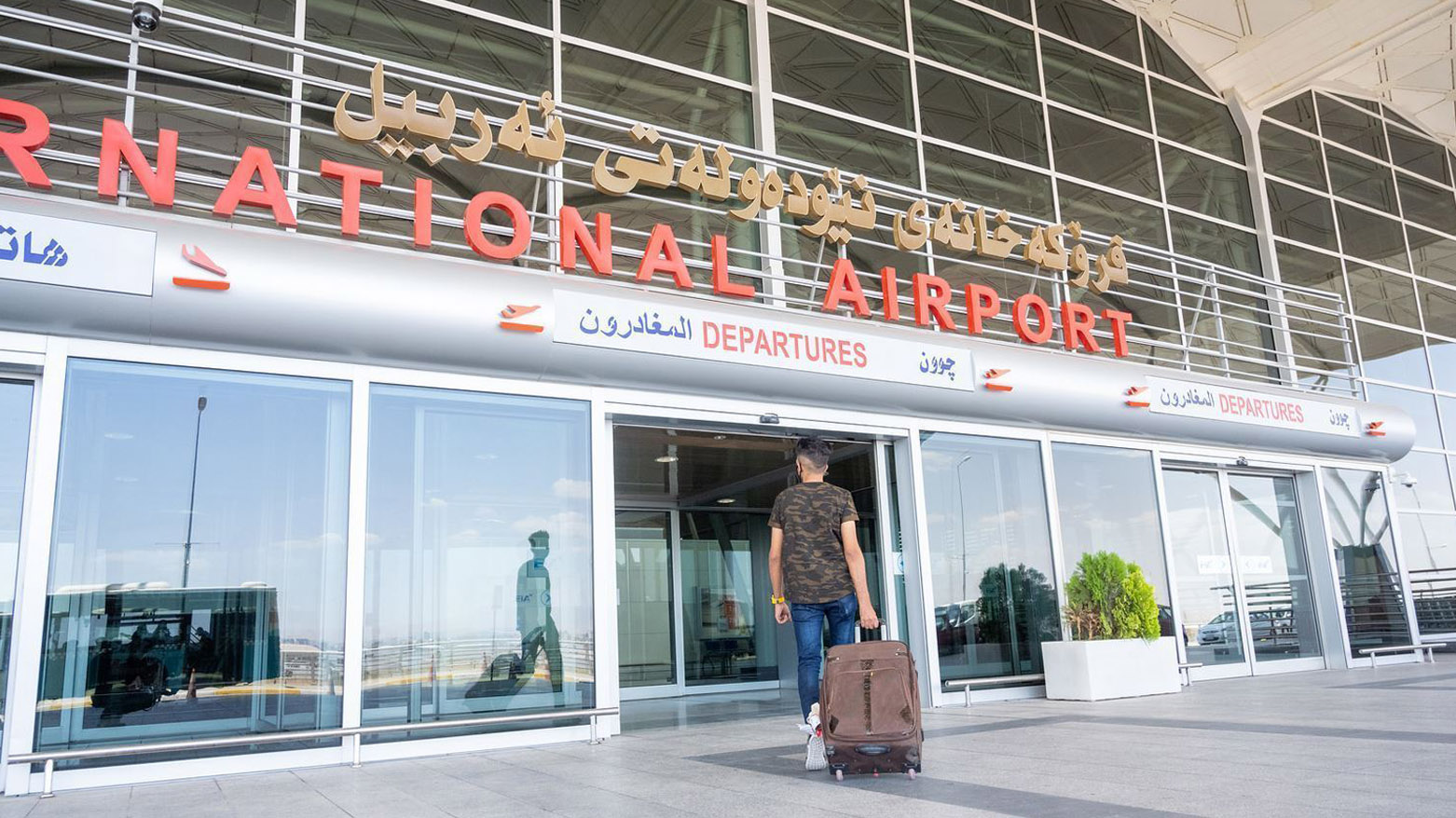
ERBIL (Kurdistan 24) - More than 758 flights have been completed at Erbil International Airport since aviation across the Kurdistan Region and the broader area returned to normal following the Iran war ceasefire, the airport's director-general told Kurdistan 24 exclusively on Sunday.
Ahmed Wushyar, General Manager of Erbil International Airport, confirmed that all routes in both directions, arrivals and departures, have been operating regularly since the resumption of flights, covering a wide range of international and domestic destinations. "Flights between Erbil airport and several countries and cities have fully returned to normal, including Qatar, Istanbul, Ankara, Dubai, Sharjah, Lebanon, Syria, Amman, Iran, Germany, and Egypt," Wushyar said. "At the same time, domestic flights to Baghdad and Basra airports are continuing normally."
Three airlines are yet to resume
Despite the broad recovery, Wushyar noted that three carriers have not yet reinstated their services to Erbil: Germany's Eurowings, Austria's Austrian Airlines, and a Greek airline. When asked about the reasons for the delay and an expected restart date, the director-general said: "So far, we have not received any confirmed timeline or new information regarding those three airlines."
He added that, in the near future and under the supervision of Iraq's Civil Aviation Authority, the reception and dispatch of flights at Erbil International Airport will formally recommence under the authority's oversight framework.
Forty days of silence in the skies
The disruption began on Feb. 28, when military hostilities between the US and Israel on one side and Iran on the other led to Iraqi airspace being used by both warring parties. As a precautionary measure to protect passenger safety, all flights were suspended, and Iraqi airports were closed to civilian traffic. The conflict lasted more than 38 days, during which all scheduled flights were cancelled. A ceasefire took effect on April 8, and on April 8, Wushyar had told Kurdistan 24 in an earlier exclusive statement that all Iraqi airports were ready to resume operations following the decision to reopen Iraqi airspace.
A gateway with deep roots
Erbil International Airport was established in 2003, receiving its first commercial flight on Jan. 15 of that year. It was formally inaugurated on April 29, 2005, and received its ICAO code-ORER-on May 26, 2005. Its runway stretches 4,800 metres in length and 75 metres in width, placing it among the ten longest runways in the world. The passenger terminal has a capacity of 4.5 million travellers per year, supported by a CIP lounge for first-class and business passengers and a dedicated VIP terminal for senior officials and diplomatic visitors. A cargo terminal also operates within the airport complex.
To date, Erbil International Airport has served 18 million passengers and recorded 206,360 aircraft movements to 270 destinations worldwide. Currently, nearly 20 airlines operate domestic and international services from the airport to destinations including Baghdad, Basra, Najaf, Dubai, Doha, Sharjah, Cairo, Tehran, Jeddah, Medina, Kuwait, Beirut, Amman, Istanbul, Trabzon, Ankara, Aleppo, Hanover, Vienna, Frankfurt, Düsseldorf, Copenhagen, Berlin, Munich, Cologne, Amsterdam, Baku, and Tbilisi.
During the war against ISIS, Erbil International Airport played a vital role in supplying military equipment to Iraqi air forces and coalition forces operating in the region.