Iran’s Mohsen Rezaei Warns Oman Sea Could Become “Graveyard” for U.S. Forces
Trump Says “Time Is Running Out” for Tehran Amid Escalating Hormuz Tensions
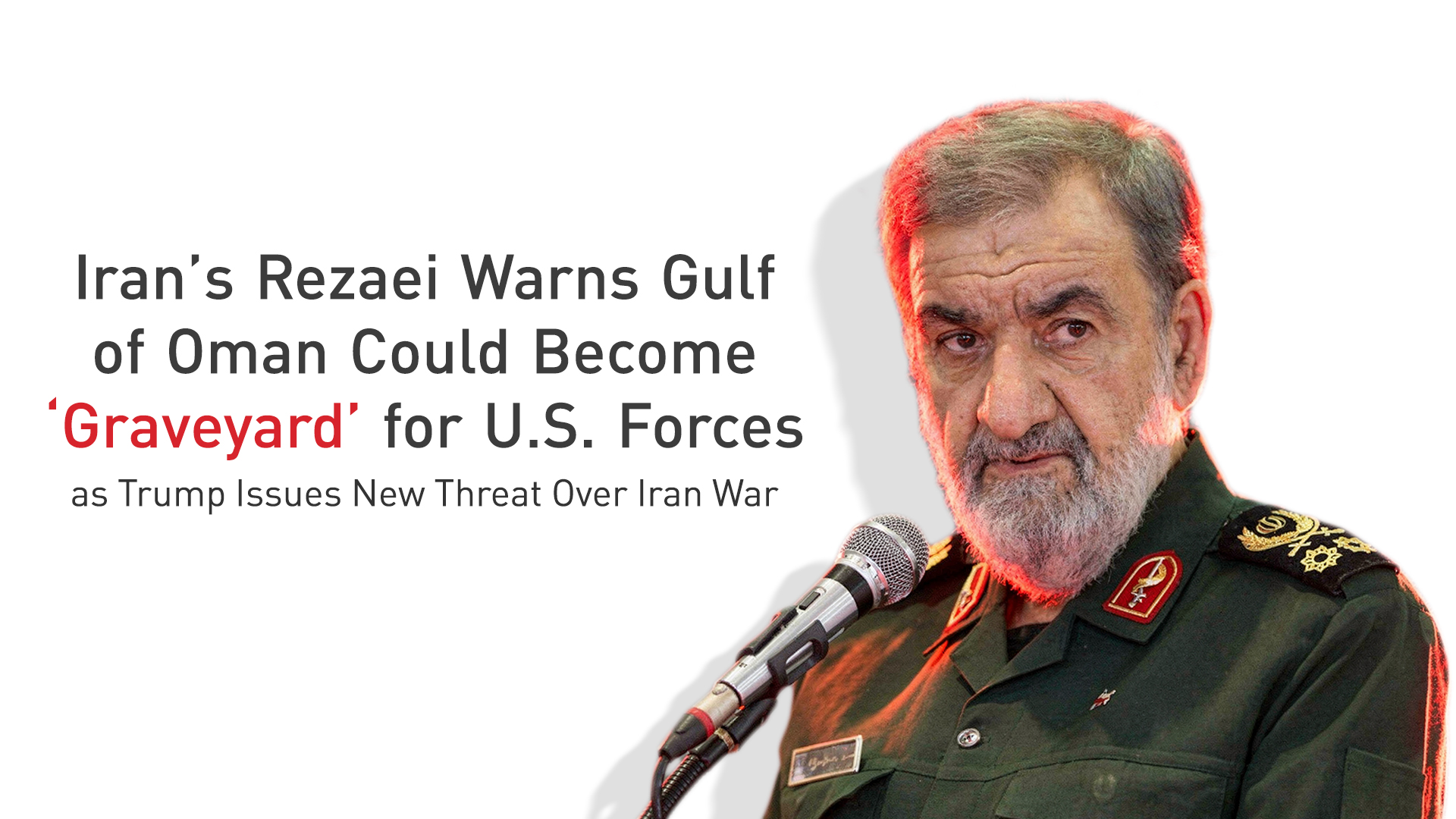
ERBIL (Kurdistan24) — Mohsen Rezaei, a senior Iranian military adviser and former commander of the Islamic Revolutionary Guard Corps (IRGC), warned late Sunday that the Gulf of Oman could become a “graveyard” for U.S. forces if Washington’s naval pressure on Iran continues.
Iranian state television quoted Rezaei as saying that the Strait of Hormuz was intended for commercial navigation rather than military confrontation, amid rising tensions between Tehran and Washington over security in the strategic waterway.
“A naval blockade means war, and we consider confronting it our legitimate right,” Rezaei said, according to Iranian media, warning that Iran’s patience “has limits.”
He further threatened to break what he described as a U.S. maritime blockade and said Iranian armed forces were preparing the necessary military measures.
Rezaei also sharply criticized the United Arab Emirates over "its alignment with Israel" during the conflict, accusing Abu Dhabi of making “a very big mistake” by supporting Israeli policies in the region.
“The UAE’s behavior amounts to approval of Israel’s plan to reshape the map of West Asia,” Rezaei said, while claiming Iran had kept “the door of friendship” open toward the Gulf state. He nevertheless warned that the UAE should avoid becoming involved in what he described as Israeli strategic planning.
According to Rezaei, Israeli Prime Minister Benjamin Netanyahu is attempting to draw the UAE deeper into the conflict to convince Trump that Israel is not isolated in its confrontation with Iran.
On the diplomatic front, Rezaei revealed that Iranian Foreign Minister Abbas Araghchi had proposed including China in ongoing negotiations related to the conflict and regional security tensions.
“Iran has no objection to the participation of China and Russia because the proposal comes from a friendly perspective,” Rezaei said, suggesting Tehran remains open to broader international mediation efforts despite escalating military tensions.
He also claimed that Washington had previously accepted 10 Iranian negotiation points during recent talks before later reversing its position. Rezaei stressed that Tehran remains serious about diplomacy but warned that Iran is equally prepared for military confrontation if necessary.
“We are serious in negotiations,” he said, “but the enemy must understand that we are even more serious in war and defense.”
The remarks come as tensions remain high following months of confrontation surrounding the Strait of Hormuz, a vital global energy corridor through which a significant portion of the world’s oil shipments pass.
Recent disputes have involved threats of restrictions on maritime traffic, U.S. naval deployments, and accusations from Tehran that Washington seeks to militarize the waterway.
Rezaei also accused Israel of attempting to expand the regional conflict to persuade U.S. President Donald Trump to continue supporting military pressure against Iran.
“Trump has no legitimacy to continue the war, neither inside the United States nor at the regional and international levels,” Rezaei said.
His comments followed a sharply worded warning issued Sunday by US President Donald Trump on his Truth Social platform, where the U.S. president reportedly told Tehran that “time is running out” and urged Iran to move quickly toward an agreement or face severe consequences.
Trump has repeatedly warned Iran over the Strait of Hormuz dispute in recent weeks and previously threatened military action if shipping through the strategic passage is disrupted.
Trump on Sunday issued a stark warning to Iran, saying “there won’t be anything left of them” if Tehran fails to quickly reach a peace agreement with the United States amid rising regional tensions.
The warning came shortly after Trump held a phone call with Israeli Prime Minister Benjamin Netanyahu earlier in the day, during which the two leaders reportedly discussed the possibility of coordinating renewed military operations if diplomatic efforts collapse.