Asian Stocks Retreat as Oil Surges After Trump Warns Iran “Clock Is Ticking”
Investors grow increasingly nervous as U.S.-Iran talks stall and fears mount over Strait of Hormuz disruptions
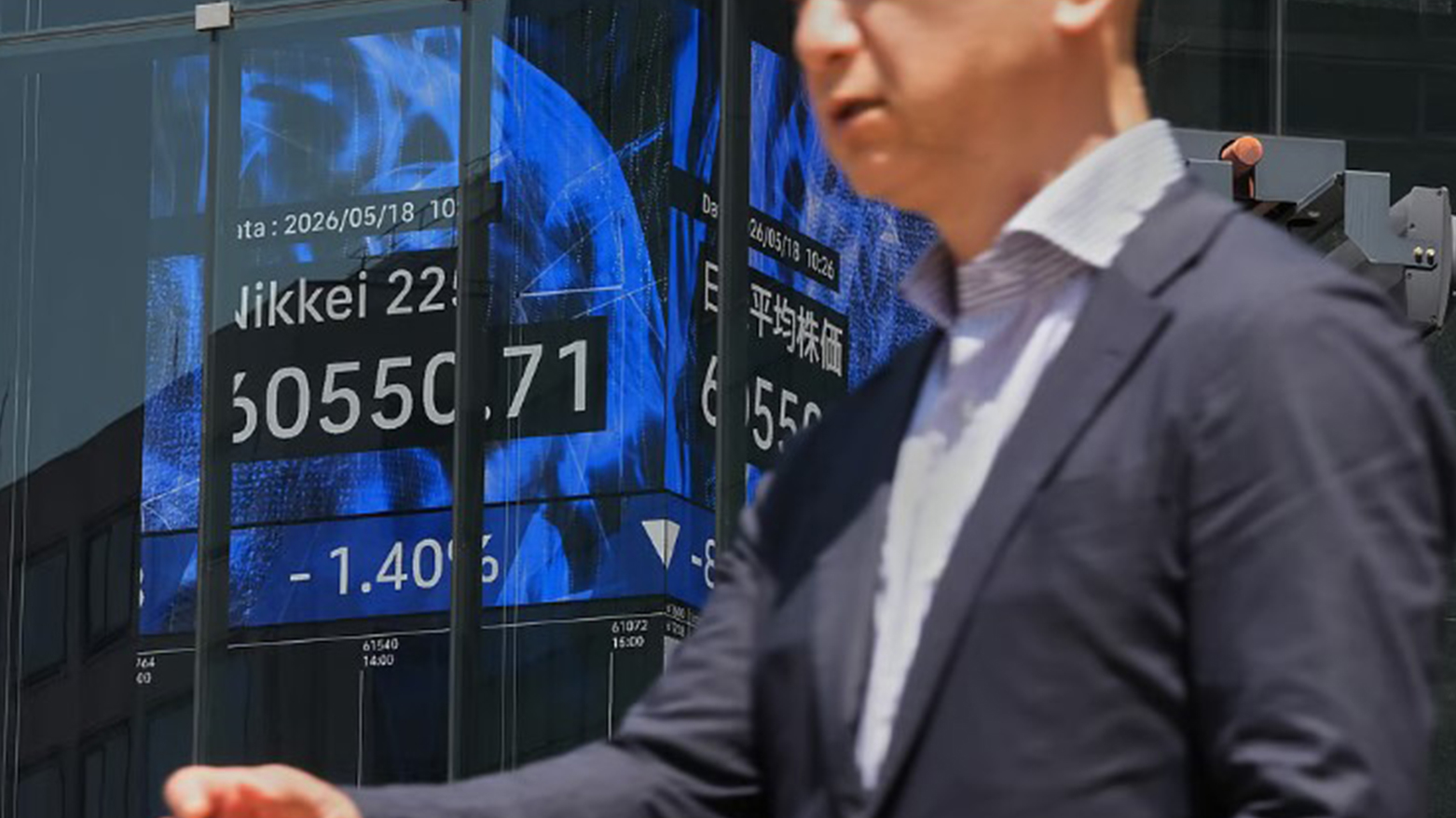
ERBIL (Kurdistan24) — Asian stock markets mostly declined Monday while oil prices climbed sharply after U.S. President Donald Trump issued a fresh warning to Iran amid stalled negotiations over a permanent end to the ongoing regional conflict.
Investor sentiment weakened across major Asian markets after Trump said in a social media post that “the Clock is Ticking” for Tehran, warning Iranian leaders to “get moving, FAST, or there won’t be anything left of them” following a phone call with Israeli Prime Minister Benjamin Netanyahu.
The remarks intensified concerns over the security situation in the Strait of Hormuz, a critical global shipping route for oil and gas exports, as the waterway remains largely closed and the United States continues enforcing a maritime blockade on Iranian ports imposed last month.
Oil prices extended gains on fears that any further escalation could severely disrupt global energy supplies. Brent crude, the international benchmark, rose 1.9% to $111.31 per barrel, while U.S. benchmark crude climbed 2.3% to $107.83 per barrel. Before the outbreak of the Iran war earlier this year, Brent crude had traded near $70 per barrel.
Market analysts warned that geopolitical risks in the Gulf remain elevated despite ongoing diplomatic efforts.
“Re-escalation risks are increasing,” ING commodities strategists Warren Patterson and Ewa Manthey said in a research note, cited by AP, adding that shipping activity around the Strait of Hormuz had improved slightly in recent days but could deteriorate rapidly if tensions worsen.
The market reaction also reflected disappointment over the lack of tangible progress following last week’s high-profile summit in Beijing between Trump and Chinese President Xi Jinping.
Although the White House said both Washington and Beijing agreed the Strait of Hormuz must remain open, investors remain uncertain about whether China can successfully mediate between Tehran and Washington.
Trump said last week that Xi had expressed willingness to help negotiate an end to the conflict, though Beijing has yet to outline any concrete diplomatic initiative.
Additional anxiety spread through global markets after a reported drone strike over the weekend targeted a nuclear power plant in the United Arab Emirates, raising fears that the conflict could expand further across the region.
In financial markets, U.S. futures fell more than 0.6%, following losses on Wall Street Friday when the S&P 500 dropped 1.2%, the Dow Jones Industrial Average fell 1.1%, and the Nasdaq Composite declined 1.5%.
Japan’s Nikkei 225 lost 0.9% to 60,843.09, retreating from record highs reached last week, with technology shares leading the decline. Meanwhile, yields on Japan’s 10-year government bonds surged to 2.8%, their highest level since the late 1990s, amid growing inflation concerns linked to higher energy prices and expectations of further interest rate increases by the Bank of Japan.
Hong Kong’s Hang Seng index fell 1.6%, Australia’s S&P/ASX 200 dropped 1.4%, Taiwan’s Taiex declined 1.1%, and India’s Sensex slipped 0.6%.
South Korea’s Kospi index managed to recover from earlier losses to close 0.9% higher at 7,558.50, supported by continued investor interest in technology and artificial intelligence-related shares despite recent profit-taking.
Meanwhile, China’s Shanghai Composite edged 0.1% lower after weaker-than-expected retail sales data added to concerns about slowing economic momentum in the world’s second-largest economy.
Currency markets also reflected heightened caution, with the U.S. dollar strengthening to 159.02 Japanese yen, while the euro traded slightly higher at $1.1626.
Analysts said markets are likely to remain volatile in the coming days as investors closely monitor developments in the Gulf, diplomatic efforts involving China, and the possibility of further disruptions to global energy flows.