Karkuki Says KDP Ready to Reactivate Kurdistan Parliament
KDP officials say the party is prepared to reactivate the Kurdistan Parliament as politicians warn regional instability and internal deadlock are increasing the urgency of restoring parliament and forming a government.
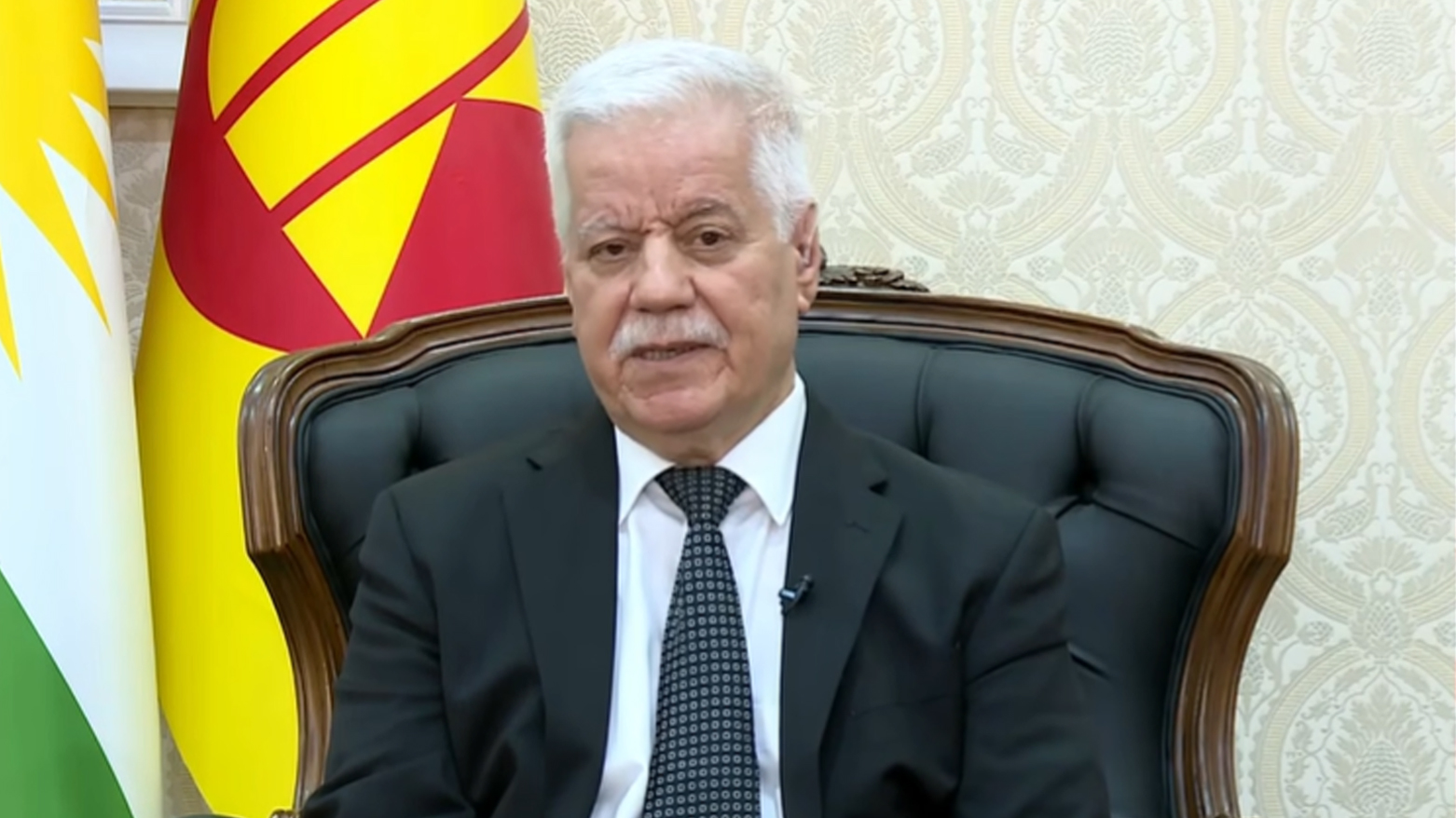
ERBIL (Kurdistan24) - Dr. Kamal Karkuki, a member of the Kurdistan Democratic Party (KDP) Politburo and former Speaker of the Kurdistan Parliament, issued a stark warning regarding the ongoing legislative paralysis in the Kurdistan Region, stating that the KDP is fully prepared to reactivate the parliament and form a new government.
In remarks provided to Kurdistan24 on Tuesday, Karkuki emphasized that in all democratic systems globally, the parliament serves as the highest constitutional institution, entrusted with protecting political legitimacy and granting confidence to the executive branch.
He framed the continued absence of a functioning legislature not merely as a political delay, but as a severe abdication of constitutional duty.
“The parliament must not be delayed for any reason; that is a great crime being committed today,” Karkuki told Kurdistan24.
He asserted that while the KDP and its allied factions are ready to fulfill their institutional roles, political actors who refuse to enter the parliamentary hall have effectively betrayed their oaths to serve the people and protect their rights.
The urgency of Karkuki's remarks highlights a profound political crisis within the Kurdistan Region.
Nearly a year and a half has passed since the Oct. 2024 parliamentary elections, yet the major Kurdish political factions have failed to form a new cabinet or resume normal legislative operations.
Disputes between the KDP and the Patriotic Union of Kurdistan (PUK) have obstructed institutional normalization, generating growing public and political pressure for parliament to resume its oversight and legislative functions.
Recent failures to convene political dialogues, coupled with warnings from veteran politicians regarding regional instability, have intensified concerns that this institutional stagnation is severely damaging the Kurdistan Region's constitutional standing and economic health.
Parliament as Constitutional Authority
During his interview, Karkuki leaned heavily on constitutional arguments to press for the immediate return of the legislature.
He categorized the parliament as the ultimate guarantor of the Kurdistan Region's legal rights within the broader framework of federal Iraq.
According to the KDP official, the legislative body is essential for enforcing oversight mechanisms, passing necessary regional laws, and formally establishing a government capable of addressing the needs of the population.
“If the Kurdistan Parliament is not active, it will be impossible to defend those constitutional articles established in the Iraqi Constitution to protect the rights of the people of Kurdistan,” Karkuki told Kurdistan24.
He called on all political parties to demonstrate sincerity by entering the parliament, establishing a presidency, reactivating the dormant committees, and passing legislation, rather than avoiding their responsibilities while continuing to draw government salaries.
Political Paralysis and Responsibility
The institutional paralysis has bred significant political friction.
Karkuki directed specific criticism at factions demanding alternative power-sharing arrangements outside the electoral framework.
Addressing the “50-50” power-sharing demand frequently associated with the PUK, Karkuki rejected its applicability within the legislative chamber.
“That is a political matter between the delegations of both sides, but within the parliament, there is no 50-50, because the KDP has 39 seats and the PUK has 23 seats, and other parties hold their seats according to the people's votes,” Karkuki explained to Kurdistan24.
He noted that with 49 seats now functioning as a functional majority, due to three parliamentarians losing their rights after failing to take the legal oath, the KDP is positioned to move forward.
Karkuki stated that the KDP is never in favor of paralyzing the parliament, has not closed the door to dialogue with any party, and possesses its own plan for every step, which it will announce at the appropriate time.
The PUK has publicly responded to the broader atmosphere of political gridlock.
Derbaz Kosrat Rasul, a member of the PUK Politburo, stated in remarks to Kurdistan24 that no party, including the PUK, has the right to discuss a "dual-administration" scenario, which would effectively split the region.
Rasul clarified that the Kurdistan Region is the product of immense historical sacrifice, and his party fully supports reactivating the political process to better serve citizens.
Failed Political Coordination and Institutional Breakdown
Despite these stated commitments to the political process, practical efforts to convene dialogue have frequently stalled.
According to Kurdistan24 reporting, a major parliamentary conference scheduled to take place in Erbil on Tuesday collapsed due to the sudden absence of representatives from the PUK and the New Generation Movement.
A special source in the Kurdistan Parliament told Kurdistan24 that the event's agenda had been fully prepared and agreed upon until late the previous night, when organizers were notified of the withdrawals.
The failure of this conference underscores the deep mistrust and lack of consensus preventing the resumption of institutional activity.
The collapse of the conference prompted a stark warning from Adnan Mufti, a veteran politician and former Speaker of the Kurdistan Parliament.
Mufti warned in comments to Kurdistan24 that no single party can succeed in isolation. “The first and primary step is for the parties to sit together, open a new page, and quickly reactivate the Kurdistan Parliament.
The parliamentary presidency must be elected, and then a strategy must be formulated on how to deal with events,” Mufti said.
Regional Sensitivity and Stability Concerns
Mufti also tied the internal political fragmentation directly to the broader, highly volatile regional security environment.
Referencing the recent conflicts involving Iran, the United States, and Israel, Mufti noted that while the Kurdistan Region was not a party to those equations, cities like Erbil and Sulaymaniyah were still targeted.
“If this war continues and we do not organize our own internal house, the situation will never turn in our favor,” he warned.
This geopolitical context amplifies Karkuki's assertion that a functioning parliament is essential to protect the supreme interests of the region.
Public Pressure and Governance Consequences
The political deadlock has generated severe economic and administrative consequences.
Kurdistan24 previously reported that citizens and business owners are increasingly frustrated by the market stagnation caused by the failure to form a government.
Residents noted that the delay in legislative activity and salary distributions has disrupted daily livelihoods and suppressed investment confidence.
Election experts have also criticized the prolonged inactivity.
Yad Karwan, an election expert, told Kurdistan24 that if the parliament had maintained a basic schedule of one session per week over the past year and a half, it should have conducted at least 76 meetings to amend or implement essential laws.
This void in governance highlights the disparity between campaign promises and administrative reality, fueling public demands for immediate political compromise.
Historical and Symbolic Importance of Parliament
The current crisis coincides with the 34th anniversary of the Kurdistan Region's first parliamentary elections, held on May 19, 1992.
The KDP faction utilized the anniversary to issue a statement framing the parliament's return as a constitutional imperative.
According to a statement issued by the KDP faction in parliament, the institution is a primary foundation for ensuring that the will of the citizens remains the source of power and legitimacy.
The faction stated that protecting the parliament is synonymous with protecting the region's constitutional entity, honoring the sacrifices made for its establishment.
The reactivation of parliament and the formation of a functioning government are increasingly being framed by political actors, experts, and citizens as essential steps toward restoring institutional continuity, safeguarding constitutional legitimacy, and securing public confidence in the Kurdistan Region.