Tankers Seized, Straits Threatened: The Iran-US Crisis Enters Dangerous New Territory
Tehran warns oil prices could surge to $250 a barrel if conflict escalates; Washington intercepts fifth vessel since April amid stalled nuclear talks
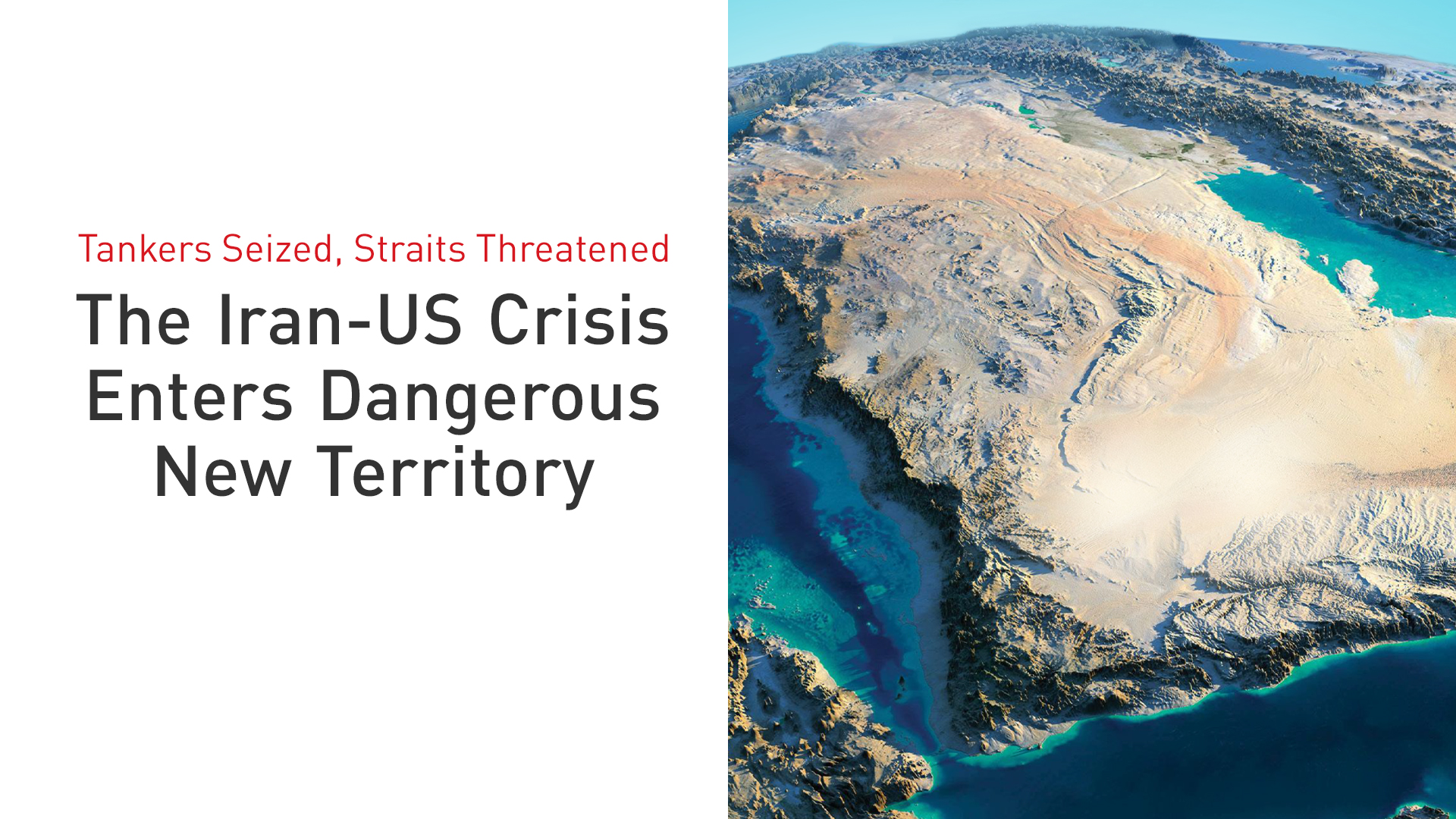
ERBIL (Kurdistan24) - Iran has issued its most pointed warning yet that a military confrontation with the United States could trigger the closure of the Bab al-Mandeb strait, threatening to choke off global energy supplies and send oil prices soaring to $250 a barrel — even as the US military announced it had seized yet another Iranian-flagged oil tanker in the Gulf of Oman.
The twin developments, unfolding within hours of each other on Thursday, signal a dangerous new phase in the Iran-US standoff, one in which the battle over Persian Gulf shipping lanes is expanding outward toward the Red Sea, with consequences that could reverberate across global markets.
Mohammad Hassan Nami, an adviser to Iran's interior minister, warned in a televised interview that the straits of Hormuz, Malacca, and Bab al-Mandeb represent the world's most strategically vital transit corridors — and that any shift in their status carries immediate consequences for oil prices and international security.
"We have so far, for a range of strategic and tactical reasons, relied primarily on the Strait of Hormuz," Nami said. "But this does not mean we have set aside other options."
He went further: "If we are one day forced into a military war and are attacked, the Bab al-Mandeb strait will also be drawn into the equation. In such a scenario, oil prices would rapidly breach the $200 barrier and could reach $250."
Nami added that activating Bab al-Mandeb alongside Hormuz would cause a complete disruption of global energy supply chains and trigger a fundamental shift in the economic and military balance of power across the region.
Nami's remarks were not issued in isolation. Mohammad al-Bukhaiti, a member of the political bureau of Yemen's Ansarallah movement, had previously signaled that the group could move to close the Bab al-Mandeb — the waterway linking the Red Sea to the Gulf of Aden — if hostilities intensified, stipulating that the measure would target only those states the movement considers aggressors.
The warnings come as tensions in the Middle East have deepened and maritime traffic through the Strait of Hormuz — the single most critical sea route for Gulf oil and gas exports — has already been disrupted.
Fifth tanker seized in weeks
On the same day, US Central Command (CENTCOM) announced it had boarded and redirected the oil tanker M/T Celestial Sea in the Gulf of Oman after it was found sailing under an Iranian flag toward an Iranian port in apparent violation of US sanctions. The interception marks at least the fifth commercial vessel seized since mid-April — coming within days of a ceasefire announcement, as the Trump administration has escalated its maritime blockade of Iranian shipping with the stated aim of pressuring Tehran to reopen the Strait of Hormuz and accept a final agreement to end the conflict.
The seizures form part of a broader enforcement campaign that has ensnared 1,550 vessels from 87 countries currently operating in the Gulf, all caught in the crossfire of the US blockade.
The escalating maritime campaign has drawn sharp analysis from Scott Olinger, a former CIA officer, who told an interviewer on Thursday that one of the central challenges in reading Tehran's intentions lies in distinguishing between the statements of its various power centers.
"The remarks of parliament speaker Mohammad Baqer Qalibaf, or commanders of the Islamic Revolutionary Guard Corps, or civilian figures, create a picture full of contradictions and confusion — especially when tough rhetoric about igniting war is issued at the same time as negotiations are underway," Olinger said.
He argued that this combative language indirectly reflects the pressure Iran is feeling from the US naval blockade, and that its presence in Iran's official discourse signals that Washington's campaign is achieving its core objective of weakening Tehran's economic capacity.
"The blockade has been an effective and decisive tool," Olinger said, "even if its results are not emerging as quickly as Washington would like. Iran's economy is sustaining serious damage, and the continuation of this situation will intensify its effects in the coming period."
A deal remains elusive
Olinger expressed pessimism about the prospects for a near-term agreement, noting that Iran's demands remain heavy: the lifting of sanctions and the linking of any nuclear deal to regional files, including Lebanon — terms he said Donald Trump would be unlikely to accept easily.
He added that Iran may be attempting to use Pakistani mediation as a way to string out negotiations and buy time, and that Tehran's political history gives cause for serious doubt about the sincerity of its intentions in the region.
On the question of US policy independence, Olinger was direct: "Any decision the American president takes on the region must be based on America's interests and diplomatic standards — not solely on the demands of Benjamin Netanyahu."
Nearly three months have passed since the conflict began with US and Israeli airstrikes on Feb. 28. In that time, Iran has maintained tight control over the Strait of Hormuz even as the US has progressively tightened its blockade — extending it to Iranian-linked vessels far beyond the Gulf itself.