US-Iran Negotiations Stall as Trump Alters Schedule to Review Options
President Donald Trump returned to Washington after U.S.-Iran negotiations failed to secure a breakthrough, amid reports the White House is weighing renewed military action. U.S. officials described the talks as "exhausting," while Tehran said its focus remains on ending the war.
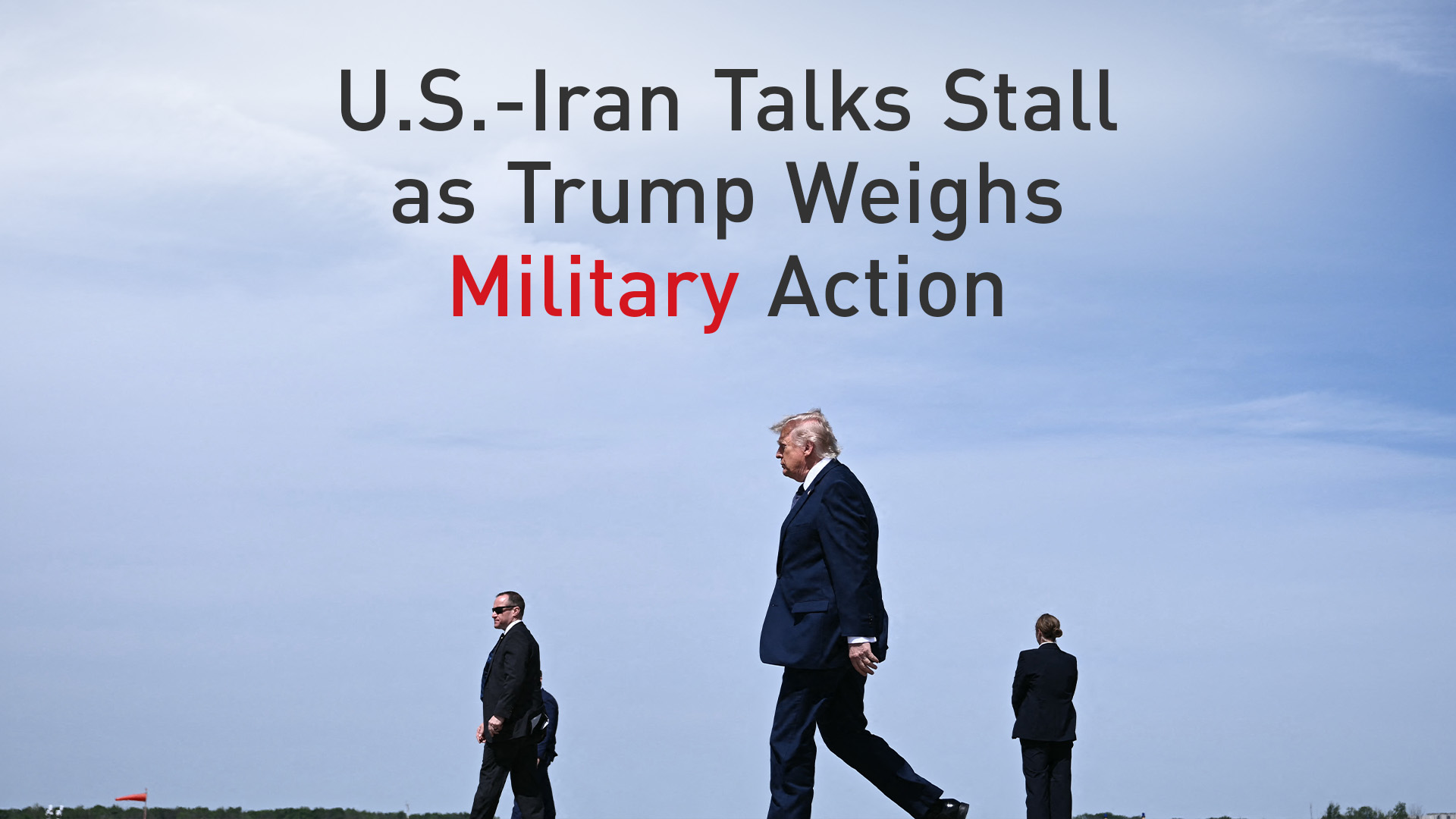
ERBIL (Kurdistan24) - Negotiations between the United States and Iran have failed to secure a diplomatic breakthrough, prompting U.S. President Donald Trump to cancel weekend travel and return urgently to Washington amid internal discussions over potential renewed military action.
According to Iranian state media and a source close to the Iranian negotiating team, talks over disputed issues continue, but no final agreement will be reached until all outstanding matters are resolved.
Iran's semi-official Tasnim news agency reported that Tehran's current focus is strictly on ending the war.
On the American side, U.S. officials told Axios the negotiations are "very exhausting" and "agonizing," noting that daily draft proposals between Washington and Tehran have yielded no real progress.
Trump Alters Schedule Amid Frustration
Following a recent return from China, Trump altered his weekend schedule to remain in the capital.
The White House announced that after a speech in New York on Friday evening, the president would return to Washington rather than staying at his Bedminster Golf Club in New Jersey.
Trump also stated on Truth Social that he would skip the wedding of his eldest son, Donald Trump Jr., citing "circumstances pertaining to Government" and the importance of remaining at the White House.
White House Deliberations on Military Options
According to reporting by Axios journalist Barak Ravid, Trump convened a high-level meeting with his senior national security team Friday morning.
U.S. officials told Axios the session included Vice President JD Vance, Secretary of War Pete Hegseth, CIA Director John Ratcliffe, and White House Chief of Staff Susie Wiles.
Secretary of State Marco Rubio and Joint Chiefs Chairman Gen. Dan Caine were absent due to travel and a graduation ceremony.
Sources close to the administration indicated Trump has grown increasingly frustrated with the diplomatic pace.
Although Trump told Israeli Prime Minister Benjamin Netanyahu on Tuesday he wanted to give negotiations another chance, sources noted that by Thursday night he leaned toward ordering a strike.
Trump has raised the possibility of a final "decisive" military operation to conclude the war and declare victory.
Regional Mediation and Conflict Background
The impasse coincides with last-minute mediation efforts. Pakistan's Chief of Army Staff, Field Marshal Asim Munir, and a Qatari delegation arrived in Tehran on Friday.
Munir is scheduled to meet with Gen. Ahmad Vahidi, commander of Iran's Islamic Revolutionary Guard Corps.
However, Iranian Foreign Ministry spokesperson Esmaeil Baqaei stated Munir's visit is unconnected to the Washington negotiations.
Speaking in Sweden, U.S. Secretary of State Marco Rubio tempered expectations regarding a possible agreement with Iran, stating, "We're not there yet," while affirming Washington's core demands include resolving Iran's nuclear enrichment and reopening the Strait of Hormuz.
Conversely, Baqaei stated that differences remain deep and that Tehran has entirely frozen detailed nuclear file discussions due to "excessive American demands."
Baqaei emphasized that Iran's immediate priority is solely ending the war across its various fronts, including Lebanon and the Strait of Hormuz.
The crisis stems from a war that began on Feb. 28, 2026, with U.S. and Israeli airstrikes against Iran that killed senior Iranian leaders.
Tehran retaliated by striking U.S. bases and closing the strategic Strait of Hormuz. In response, the U.S. blockaded Iranian ports on April 8, while the shipping lane remains closed.
Continued Uncertainty
Significant uncertainty remains over potential military escalation.
While sources close to the negotiations indicate a 24-hour window for a breakthrough remains, and Trump appears inclined toward military action barring an unexpected development, U.S. officials emphasize that no final or decisive decision to resume the war has been made.