Kurdistan Region Enters Eid Holiday While Hajj Unfolds Under Shadow of Conflict
The Kurdistan Region announced a five-day Eid al-Adha holiday beginning Tuesday, May 26, as over 1.5 million Muslims gathered in Mecca for the 2026 Hajj amid extreme heat and lingering regional tensions linked to the fragile U.S.-Iran ceasefire.
ERBIL (Kurdistan24) - The streets of the Kurdistan Region have transformed into a vibrant tapestry of color and tradition as families crowd local markets and prepare for the sacred rituals of the coming days. Amid the hum of festive preparations and the anticipatory joy of communal gatherings, the Kurdistan Regional Government has formally established the schedule for the holiday season.
On Monday, the Kurdistan Region's Media and Information Department announced in an official statement that all institutions across the Kurdistan Region will observe a public holiday for Eid al-Adha. The break is set to begin on Tuesday, May 26, and will continue through Saturday, May 30.
While the majority of the public sector will be closed, the department emphasized that service-oriented departments will remain active on a standby basis to ensure that essential public needs and emergency services are maintained throughout the festivities.
Following the conclusion of the five-day break, official working hours across all government offices are scheduled to resume on Sunday, May 31, 2026.
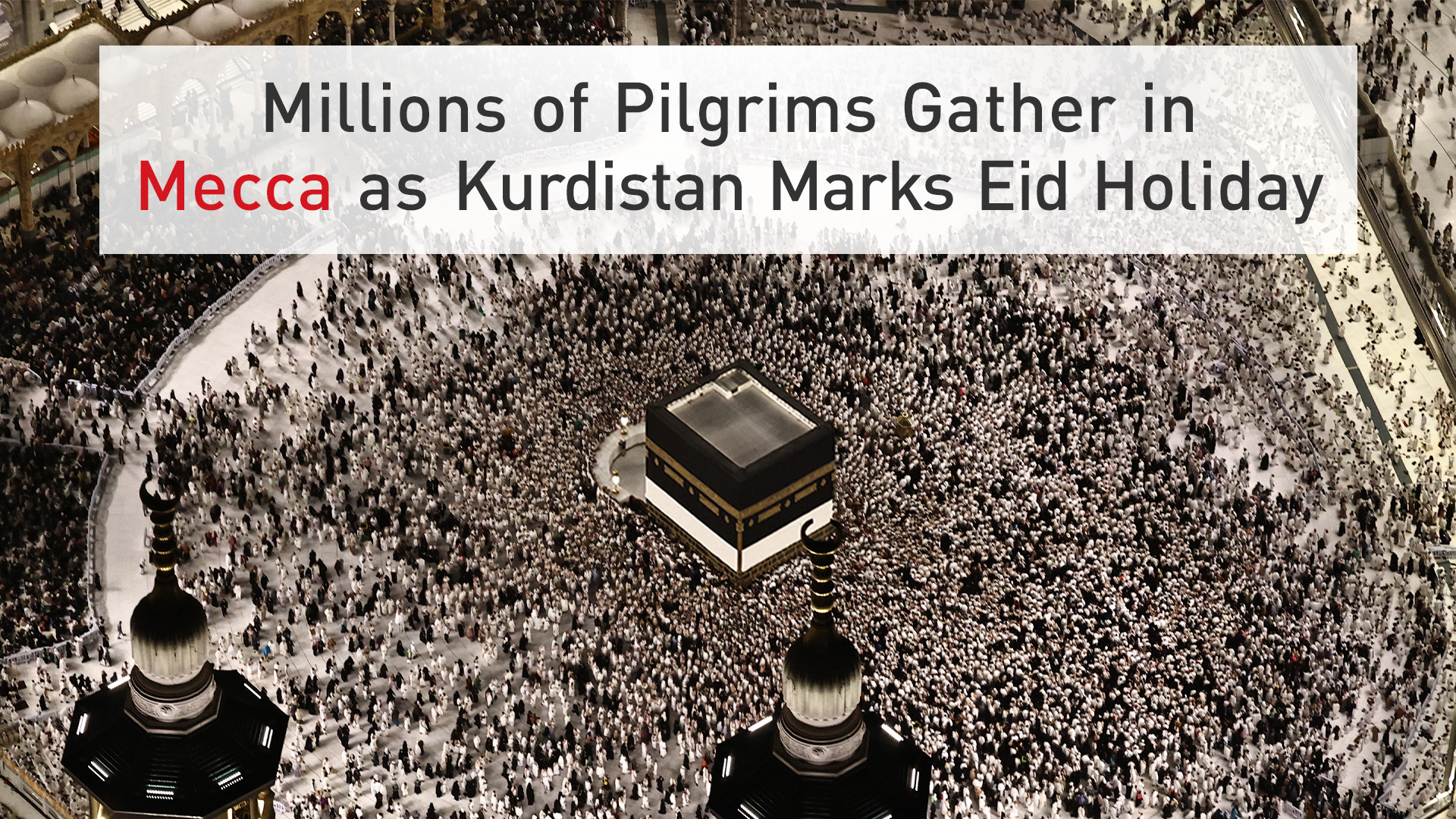
While Erbil prepares for its local festivities, the focus of the global Muslim community has shifted to the holy city of Mecca, where more than 1.5 million pilgrims have gathered for a Hajj season defined by a profound contrast between spiritual devotion and regional geopolitical volatility.
As the faithful embark on their journey of a lifetime, they do so under the shadow of an uneasy ceasefire between the United States and Iran, alongside record-breaking summer temperatures.
For the worshippers, the journey represents a once-in-a-lifetime spiritual obligation, yet the shadow of recent hostilities serves as a stark reminder of the volatile landscape surrounding the world's largest religious gathering.
Pilgrims Gather Under Shadow of Regional Tensions
The 2026 Hajj season follows a period of unprecedented instability.
According to reporting by Agence France-Presse (AFP), the pilgrimage began as the international community monitored a tenuous ceasefire reached in April. This followed a significant escalation that began on Feb. 28, 2026, characterized by U.S. and Israeli strikes on Iranian targets.
Despite these anxieties, Saudi officials reported that international participation has surpassed 2025 levels.
Saleh bin Saad Al-Murabba, commander of the Hajj passport forces, told The Associated Press (AP) that over 1.5 million pilgrims arrived from outside the Kingdom.
The atmosphere in Mecca is one of a "blessing and happiness," according to Egyptian pilgrim Samya Abdul Moneim, who told the AP that her feeling of arrival was "indescribable."
Mina Fills With Worshippers
On Monday, the sprawling white-robed crowds began their movement toward Mina, a vast valley located roughly five kilometers from the Grand Mosque.
Before departing, pilgrims performed the tawaf, the ritual of circling the cube-shaped Kaaba seven times.
As reported by AFP's Haitham El-Tabei, the sea of believers transitioned from the marble floors of the Grand Mosque to the sprawling tent city of Mina, where they will spend the night in prayer and meditation.
The men, draped in the traditional ihram, two seamless white garments, and women in loose-fitting attire, move in a synchronized display of unity that transcends social and economic divides.
Following the tawaf, many performed the sa'i, walking seven times between the hills of Safa and Marwa, reenacting the biblical and Quranic search for water by Hagar.
These ancient rites continue despite the modern technological and military infrastructure currently encircling the holy sites.
Heat and Faith
The spiritual endurance of the pilgrims is being tested by more than just political anxiety.
Sweltering temperatures, forecast to exceed 40°C throughout the week, have turned the outdoor rituals into a grueling physical challenge.
AP reporters Baraa Anwer and Mariam Fam noted that pilgrims have resorted to handheld fans, umbrellas, and battery-operated misters to combat the midday sun.
Volunteers across the holy sites are distributing thousands of water bottles, while large overhead misting fans have been deployed to cool the open-air pathways.
For many, the physical hardship is a necessary component of the spiritual cleansing they seek.
Moroccan pilgrim Jreish Mohammed, 68, told AFP that after waiting 50 years to perform the Hajj, the realization of his dream outweighed the environmental and regional pressures.
Diplomacy and the Strait of Hormuz
The geopolitical backdrop of the 2026 Hajj is inextricably linked to the global energy crisis.
On Sunday, U.S. President Donald Trump signaled via social media that a "Memorandum of Understanding pertaining to PEACE" had been largely negotiated with Iran.
A central component of this proposed deal is the reopening of the Strait of Hormuz, a critical waterway through which one-fifth of the world's oil supply normally flows.
Tehran effectively closed the waterway following the February attacks, triggering a global spike in energy costs.
The Associated Press reported that the U.S. naval blockade of Iranian ports remains in effect, with Trump emphasizing that the restrictions will continue until a certified agreement is signed.
This economic tension has trickled down to the pilgrims themselves; in India, home to a large Muslim minority, high fuel prices linked to the conflict have significantly pushed up the cost of Hajj travel.
Security Measures Around the Holy Sites
Saudi Arabia has taken extensive measures to ensure that regional hostilities do not breach the sanctity of the pilgrimage.
While the Kingdom remains a central player in regional diplomacy, its domestic priority is the protection of the "guests of God." AFP reported that the Saudi defense ministry recently shared footage of advanced air-defense batteries positioned on the outskirts of Mecca.
These forces are tasked with protecting the skies over the holy sites and mitigating any potential aerial threats.
The presence of these batteries, while discreet to most pilgrims, underscores the gravity of the regional situation.
Authorities in Riyadh have emphasized their readiness to maintain the Hajj as a sanctuary of peace, insulated from the strikes and counter-strikes that have defined the early months of 2026.
A Pilgrimage of Hope and Prayer
The international nature of the Hajj, bringing together believers from Indonesia, Morocco, Egypt, and beyond, serves as a rare moment of pan-Islamic solidarity.
In Indonesia, home to the world's largest Muslim population, authorities had to implement contingency planning for the season to ensure that rising logistical costs did not disenfranchise those holding permits.
As the pilgrims prepare for Tuesday's climax, the gathering at the plain of Mount Arafat, the mood remains one of profound supplication.
At Arafat, pilgrims will stand in the heat to praise God and plead for forgiveness. For many, like Egyptian pilgrim Mohammed Chahada, these prayers will inevitably include a plea for the end of the war. "Nobody wants wars or harm to countries and peoples," he told AFP.
The 2026 Hajj stands as a testament to human endurance and religious conviction.
As the faithful raise their hands toward the Meccan sky, their prayers carry the weight of a region longing for the "bright horizon" of stability, even as the trajectory of war remains in a delicate, undecided balance.
Rituals will continue through the week, concluding with the symbolic stoning of the devil in Mina and the celebration of Eid al-Adha.