President Barzani Marks 50 Years Since Gulan Revolution
Commemorating the 50th anniversary, the Kurdish leader highlights the 1976 uprising as a decisive turning point that revived national hope following historical setbacks.
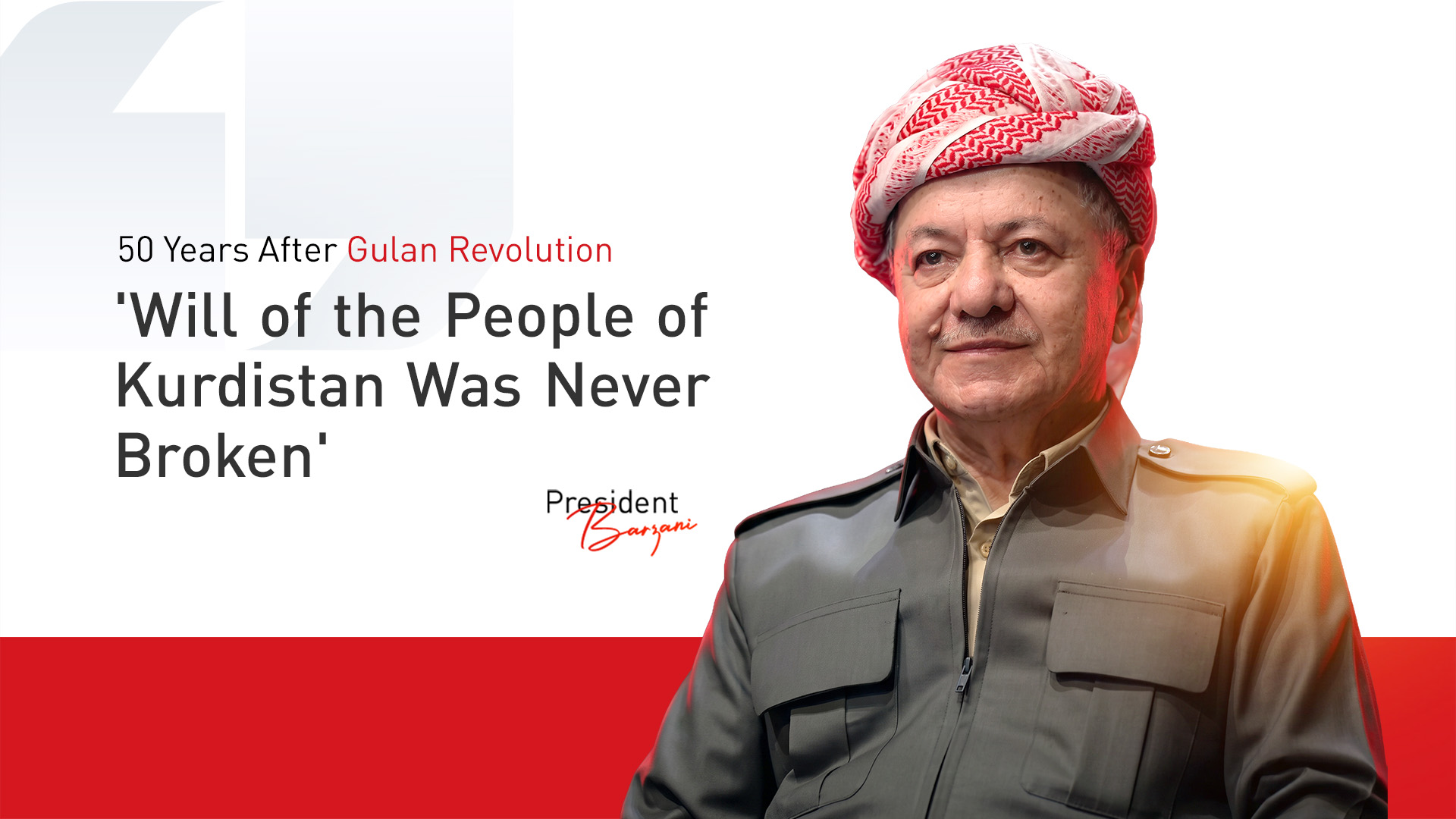
ERBIL (Kurdistan24) - President Masoud Barzani on Tuesday marked the 50th anniversary of the Gulan Revolution, characterizing the 1976 uprising as a "fateful" and transformative stage in the history of the Kurdish national movement.
In a commemorative message, President Barzani emphasized that the revolution served as a vital bridge of resilience, ensuring the continuity of Kurdish aspirations following a period of intense geopolitical hardship.
The anniversary carries profound symbolic weight in the Kurdistan Region, representing the moment the Kurdish struggle was revitalized after the collapse of the Great September (Eylul) Revolution in 1975.
President Barzani's message underscored that the Gulan Revolution provided a definitive answer to those who believed the Kurdish will had been permanently suppressed, demonstrating that the movement remained capable of achieving its "sacred goals" despite temporary pauses.
Reviving the Kurdish Struggle
The Gulan Revolution was launched on May 26, 1976, emerging from the shadows of the 1975 Algiers Agreement, which had led to a significant military and political setback for the Kurdish leadership against the Baathist Iraqi state.
President Barzani noted that this period was essential in proving to the international community and regional actors that the "will of the people of Kurdistan was never broken."
Instead of succumbing to defeatism, the movement reorganized with "new hope and strength."
President Barzani described the uprising as an organic extension of the September Revolution, carrying forward the same messages and objectives while adapting to a new era of resistance.
This transition is viewed by historians as the catalyst that preserved the organizational structure of the Kurdish leadership and paved the way for the eventual establishment of the Kurdistan Regional Government (KRG) decades later.
A Legacy of Continuity
A central theme of the President's anniversary message was the concept of historical continuity.
By framing the Gulan Revolution as a direct successor to the Eylul era, President Barzani highlighted the ideological persistence of the Kurdish national movement.
He attributed the victory of the Gulan uprising to four primary pillars: the heroism of the Peshmerga forces, the resilience of the Kurdish masses, a disciplined political organization, and the clarity of its slogans and goals.
The revolution's success was not merely military but also administrative and psychological.
It succeeded in mobilizing Kurds both inside the country and within the diaspora, recording what President Barzani described as a "bright history full of pride."
This collective effort allowed the movement to withstand the pressure of the Iraqi state's centralizing and often repressive policies during the late 20th century.
Peshmerga and Political Memory
President Barzani dedicated a significant portion of his message to the role of sacrifice and the symbolic importance of the Peshmerga.
He specifically honored the memory of Sayyid Abdullah Haji Omarani, recognized as the first martyr of the Gulan Revolution, as well as the countless others who fell during the decades of conflict.
"Freedom and the other achievements of our people are the product of the blood of the martyrs," President Barzani stated, linking contemporary political status directly to the labor and loyalty of the 1976 generation.
This focus on martyrdom remains a cornerstone of Kurdish political memory, serving as a reminder that the current federal status and institutional gains of the Kurdistan Region were secured through sustained armed and political resistance.
Fifty Years After Gulan
As the Kurdistan Region commemorates five decades since the outbreak of the uprising, the legacy of the Gulan Revolution continues to inform the Region's current political landscape.
President Barzani's message served as both a historical reflection and a call for continued national unity and organizational strength.
The commemoration highlights the enduring relevance of the Peshmerga as a national institution and the importance of public resilience in the face of ongoing regional challenges.
By revisiting the lessons of 1976, the Kurdish leadership emphasizes that the spirit of the Gulan Revolution remains a fundamental component of the Region's identity, providing the historical foundation for its continued pursuit of stability and self-determination within a complex Middle Eastern environment.
The text of President Barzani's message:
In the name of God, the Most Gracious, the Most Merciful
The Gulan Revolution was an important and fateful stage in the struggle of the people of Kurdistan. This revolution was an extension of and carried the messages and goals of the Great September Revolution. The Gulan Revolution proved to all sides that if the struggle of the people of Kurdistan suffered a brief halt at one stage, the will of the people of Kurdistan was never broken; rather, it continued in its struggle and fight with new hope and strength to reach its sacred goals. The Gulan Revolution achieved victory because it relied on the heroism of the Peshmerga, the resilience of the masses, a strong organization, and clear slogans and goals.
On the fiftieth anniversary of the outbreak of the Gulan Revolution, I express my appreciation to the people of Kurdistan and all those fighters, Peshmerga, and patriots who played a heroic role in the Gulan Revolution both inside and outside Kurdistan and recorded a bright history full of pride for their people.
On this anniversary, we send greetings to the soul of the first martyr of the Gulan Revolution, Martyr Sayyid Abdullah Haji Omarani, the martyrs of the Gulan Revolution, and all the martyrs of the Kurds and Kurdistan. Freedom and the other achievements of our people are the product of the blood of the martyrs, the heroism of the Peshmerga, and the labor and loyalty of the Gulan Revolution fighters and all the revolutions of the people of Kurdistan.