Iran's Revolutionary Guards Strike US Air Base in Tit-for-Tat Escalation
Iran's IRGC launched a retaliatory strike on a US air base on Thursday after American forces attacked a site near Bandar Abbas airport
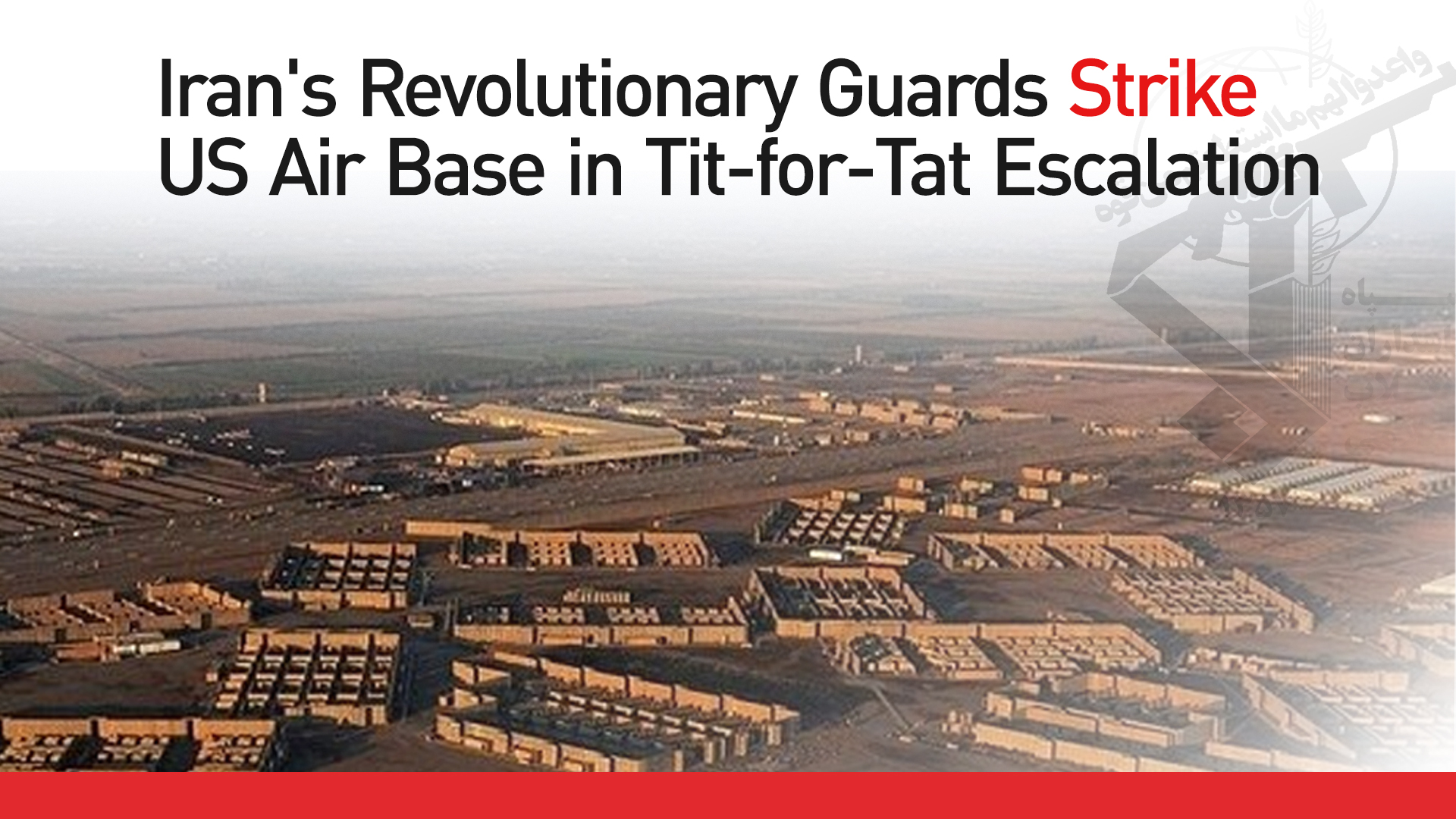
ERBIL (Kurdistan 24) - In the pre-dawn hours of Thursday, Iran's Islamic Revolutionary Guard Corps launched a strike against a US air base, dramatically escalating a cycle of mutual military action even as diplomats from both sides raced to salvage a nuclear agreement they described as within reach.
The IRGC announced the strike in an official statement broadcast by Iranian state television, framing the operation as a direct response to what it described as an early-morning attack by US forces on a site near Bandar Abbas airport.
The IRGC statement, invoking Quranic verse, said its forces targeted the American air base — identified as the origin point of the Bandar Abbas strike — at precisely 4:50 a.m. local time. The Guards did not name the base.
"This response is a serious warning," the statement read, "so the enemy knows that aggression will not go unanswered, and if it is repeated, our response will be decisive."
The IRGC placed responsibility for any further consequences squarely on what it called "the aggressor," signaling that Tehran retained both the will and the capacity to escalate further.
The military exchange unfolded against the backdrop of a broader and increasingly complex diplomatic confrontation. Just hours before the strike, senior Iranian and American officials had delivered near-simultaneous messages — hardening red lines even as they spoke of progress.
Ali Bagheri Kani, Deputy Secretary of Iran's Supreme National Security Council, told reporters on the sidelines of a security conference in Moscow that Iran's stockpile of enriched uranium was entirely off the negotiating table.
"The issue of Iran's enriched uranium stockpile is in no way part of our current negotiations agenda," he said, describing it as one of Tehran's "red lines."
Bagheri Kani also warned that the Strait of Hormuz — through which a significant share of the world's energy supply flows — would not return to its pre-conflict operating norms.
He said Iran and Oman were jointly developing a new mechanism to govern shipping through the waterway, adding that "shipping procedures in the Strait of Hormuz after the war will be completely different from the procedures that existed before the outbreak of the armed conflict."
He also underscored Tehran's all-or-nothing negotiating posture: "Until we agree on everything, we have not agreed on anything."
Washington's simultaneous signals
At a White House cabinet meeting on Wednesday — the 12th of Trump's second term — US officials offered a picture that was, depending on the speaker, either encouraging or defiant.
President Donald Trump ruled out sanctions relief in exchange for Iran surrendering its highly enriched uranium, drawing his own red line directly parallel to Tehran's.
"Tehran wants a deal because it has no other choice," he said, adding that he was dissatisfied with Iran's current proposals and that no final agreement had been reached.
Trump compared his approach to Iran to the pressure campaign his administration had applied to Venezuela — patient, sustained, and unyielding.
He also dismissed any suggestion that US midterm elections might soften his position. "They are betting on my desire to end the war because of the elections, but I don't care about that," he said. "My decisions are tied exclusively to American interests and regional security."
Secretary of State Marco Rubio, however, offered the most optimistic assessment yet from Washington.
He told the cabinet that "significant progress" had been made and that negotiators were working intensively.
"I believe progress toward an agreement has been made," Rubio said. "Our representatives are working intensively, and we will see results within the coming hours or days."
War Secretary Pete Hegseth delivered the starkest military appraisal, declaring that US operations had comprehensively degraded Iran's armed forces.
"Their naval forces are confined to the Persian Gulf basin, their air force and air defenses have been dismantled," he said, adding that Iran could no longer produce new drones, ships, or missiles because its industrial and defense infrastructure had been destroyed and the country was operating
under severe global sanctions.
The cabinet meeting was not without its lighter moments. Trump introduced Hegseth by describing him as "the perfect embodiment of a secretary of war" — a man who was "competent and loves war" — drawing laughter from those present, even as critics have long accused Hegseth of
adopting an excessively aggressive posture in both military strategy and public messaging.
With Iranian missiles striking a US military installation on Thursday morning and American diplomats declaring a deal imminent in the same breath, the conflict between Washington and Tehran has entered a paradoxical phase — military action and diplomatic outreach proceeding in parallel,
each side signaling both willingness to talk and willingness to fight.
Whether the pre-dawn exchange near Bandar Abbas accelerates or derails those talks remains to be seen. What is clear is that both sides are pressing hard against the limits of what the other will accept — and that the distance between a deal and a disaster remains perilously thin.