PM Barzani Congratulates New Chaldean Patriarch, Reaffirms Kurdistan Coexistence
As a new patriarch is elected, a message from Erbil frames the moment as more than ceremonial—linking ecclesiastical change to a broader political project, where coexistence is not only invoked, but continually constructed in policy and practice.
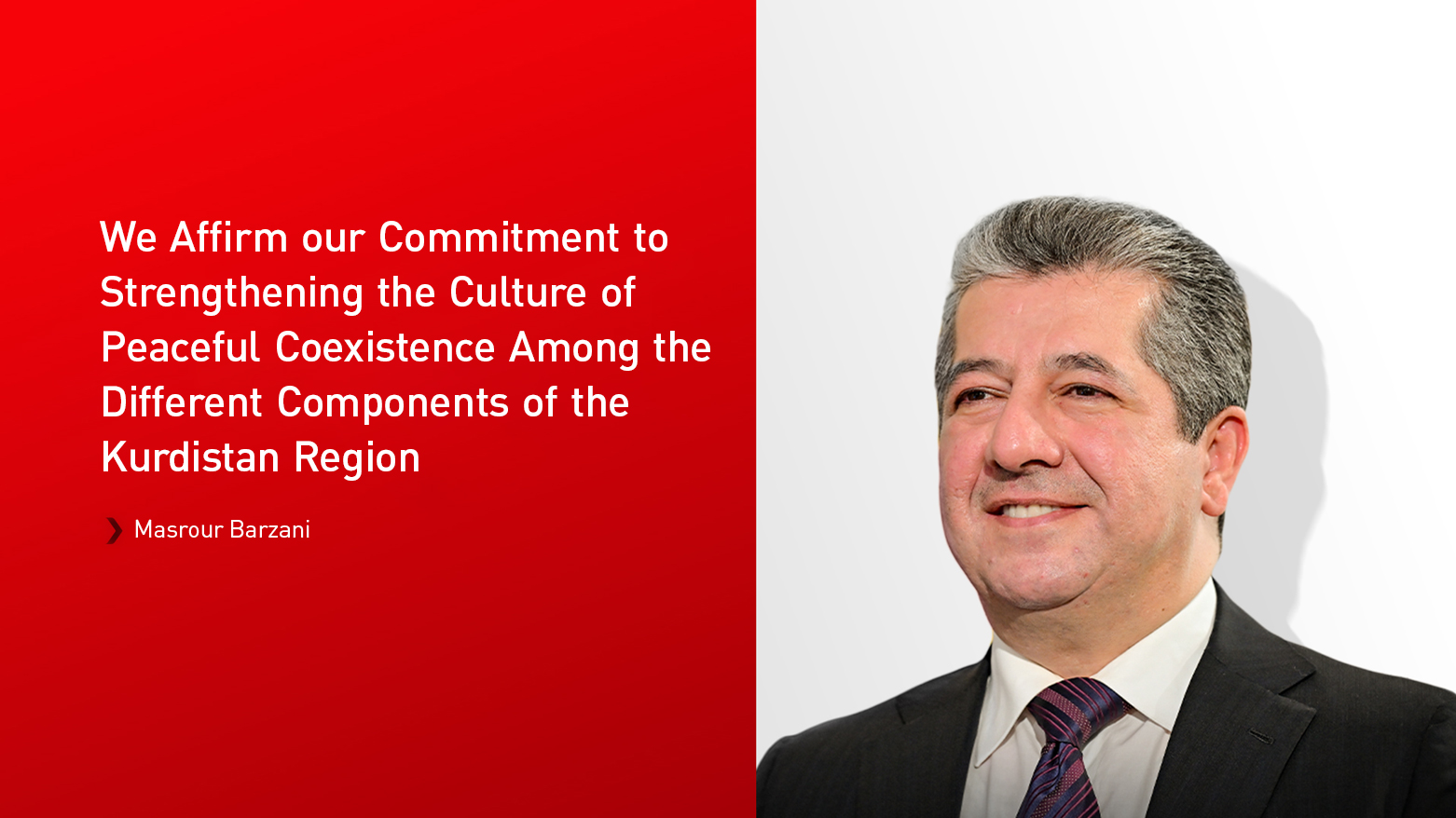
ERBIL (Kurdistan24) - Kurdistan Region Prime Minister Masrour Barzani on Sunday congratulated Mar Paul III Nona on his election as Patriarch of the Chaldean Church, underscoring the Kurdistan Regional Government’s continued emphasis on religious coexistence and minority inclusion.
Prime Minister Masrour Barzani extended “warmest congratulations” to the newly elected patriarch, expressing confidence in his leadership “in this great duty and responsibility,” according to the official text of the statement. The message placed particular emphasis on the position of Christian communities within the Kurdistan Region, describing them as an integral component of the Region’s social fabric.
“The Kurdistan Region is proud of the position of our Chaldean sisters and brothers and all the Christians of Kurdistan,” PM Barzani stated, adding that the government reaffirms “our unwavering commitment to strengthening the culture of peaceful coexistence among the different components of the Kurdistan Region.”
The statement follows the formal election of Mar Paul III Nona as head of the Chaldean Catholic Church, a global institution with historical roots in Mesopotamia and a substantial presence among Iraqi and diaspora communities.
Nona, 58, brings to the role a clerical trajectory shaped by conflict and displacement. He previously led the Chaldean Archdiocese of Mosul until 2014, when the city fell to Islamic State militants, forcing his departure into exile, according to church accounts.
He was subsequently appointed by the late Pope Francis to oversee the Chaldean Church in Australia and New Zealand, before assuming leadership of the diocese in Sydney, where he currently serves, according to church records.
His election follows a period of transition within the Church after the resignation last month of Cardinal Louis Raphael Sako, who said his departure had been accepted by Pope Leo, according to statements issued at the time.
The selection process culminated in a synod of Chaldean Catholic bishops convened at the Vatican, where participants also met with Pope Leo during deliberations to elect a new patriarch, according to church officials. Nona is widely regarded within ecclesiastical circles as a pastor with extensive administrative and pastoral experience, and he has maintained a notable following among the global Chaldean diaspora, estimated at roughly one million people.
His appointment comes amid sustained demographic pressures on Iraq’s Christian population.
According to data cited by Erbil’s Chaldean Archbishop Bashar Warda, the number of Christians in Iraq has declined sharply from more than 1.5 million in 2003 to approximately 300,000 in recent years, with some estimates suggesting the figure may be lower.
Analysts and church officials attribute much of this contraction to successive waves of instability, particularly the 2014 offensive by Islamic State across historically Christian مناطق, which accelerated migration and long-term displacement.
PM Barzani’s message is consistent with a pattern of official communications that link religious occasions and leadership milestones to broader policy frameworks centered on pluralism.
In recent weeks, the prime minister issued separate statements marking Easter and the Assyrian-Babylonian New Year (Akitu), each reiterating the Kurdistan Regional Government’s commitment to coexistence, according to statements posted on his official platform.
On April 5, PM Barzani extended Easter greetings to Christian communities in the Kurdistan Region, Iraq, and globally, stating that the government remains committed to “peace and the protection of all our communities.” The statement coincided with administrative measures designating April 5–7 as public holidays for Christians across government institutions, enabling religious observance without workplace constraints, according to official KRG announcements.
Similarly, on April 1, the prime minister marked Akitu by addressing “Chaldean, Assyrian, and Syriac brothers and sisters,” highlighting the historical continuity of these communities and their cultural significance. Officials have framed such messages as part of a broader institutional effort to reinforce inclusion and recognize the Region’s multi-ethnic and multi-religious composition.
This policy orientation is codified in legal and administrative frameworks. Law No. 5 of 2015 on the Protection of the Rights of Communities establishes guarantees for cultural and religious preservation, prohibits discrimination, and affirms political representation for recognized groups, according to official documentation.
Additional mechanisms—including reserved parliamentary quota seats and designated government positions for minority affairs—are intended to institutionalize participation within the Region’s governance structure.
Implementation of these policies is overseen by bodies such as the Ministry of Endowment and Religious Affairs, whose Directorate of Religious Affairs and Coexistence manages interfaith initiatives and supports religious education programs. These include Syriac-language instruction, reflecting the linguistic heritage of Christian communities in the Region.
Senior Kurdish officials have repeatedly framed coexistence as both a historical legacy and a contemporary governance principle. During the 2025 National Prayer Breakfast, attended by domestic and international participants, Kurdish leaders emphasized the role of diversity in shaping the Region’s political identity.
Kurdistan President Nechirvan Barzani described religious and cultural plurality as “a source of our strength, stability, and pride,” while President Masoud Barzani highlighted the longstanding roots of tolerance within Kurdish society.
These assertions are frequently linked to the Region’s response during the 2014 displacement crisis, when Islamic State attacks forced large-scale population movements across Iraq.
Kurdish officials have stated that mosques, schools, and public institutions were opened to accommodate displaced Christians and Yezidis, with the Region hosting more than two million individuals at the height of the crisis.
Beyond policy frameworks, the coexistence narrative is also reflected in everyday social dynamics, particularly in urban centers such as Erbil.
Mixed neighborhoods, shared commercial spaces, and intercommunal social ties are frequently cited by residents as evidence of a lived culture of mutual respect. Public religious observances—including Easter services and Akitu celebrations—are held openly, often with visible participation or support from regional authorities and security forces.
At the same time, officials acknowledge that coexistence is maintained through continuous administrative and political effort. Government statements routinely link symbolic gestures—such as holiday greetings and leadership congratulations—to structural measures aimed at sustaining minority presence and participation.
PM Barzani’s message to the newly elected patriarch thus operates at both a ceremonial and institutional level. By recognizing the leadership of the Chaldean Church, the statement affirms the role of Christian communities within the Region while reinforcing the government’s stated commitment to a pluralistic model of governance.
As the new patriarch assumes his role, the interaction between ecclesiastical leadership and regional political frameworks is likely to remain a point of engagement, particularly in areas related to community stability, cultural preservation, and representation within Iraq’s evolving political landscape.