Washington Unmasks Iranian Network Allegedly Defrauding U.S. Tech Firms to Arm Tehran's Military
The U.S. Treasury Department has sanctioned an Iranian procurement network accused of impersonating American small businesses to obtain restricted military-grade technology. Part of "Economic Fury" campaign, the move targets entities funneling hardware to Tehran's defense ministry.
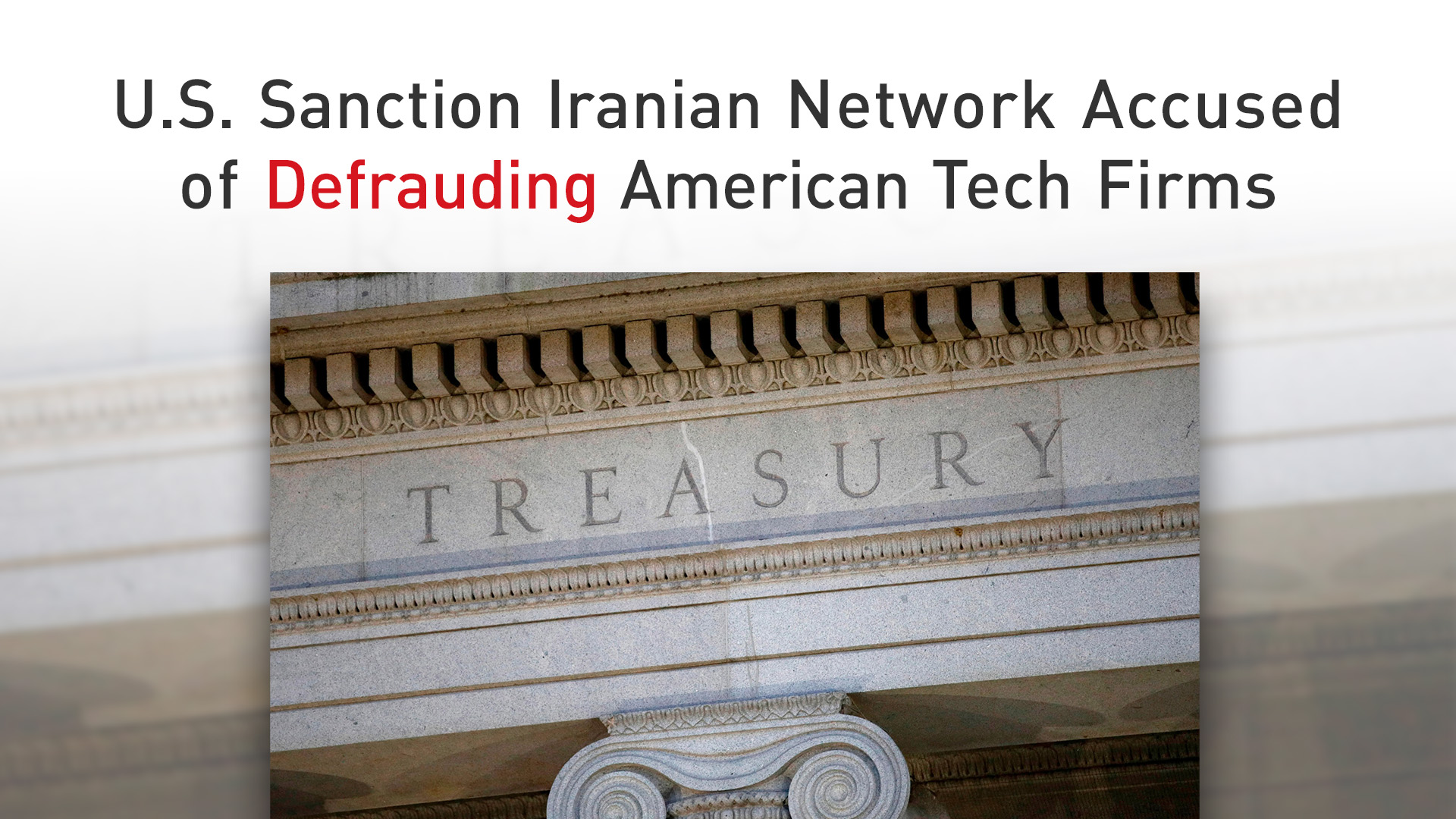
ERBIL (Kurdistan24) - The U.S. Department of the Treasury on Friday unveiled a sweeping set of sanctions against a sophisticated procurement network based in Iran, accusing its operatives of impersonating American businesses to illicitly acquire restricted technology for the Iranian military.
The action, coordinated with the U.S. Department of Commerce and the FBI's Los Angeles Field Office, is the latest salvo in the Trump administration's "Economic Fury" campaign.
This initiative seeks to dismantle the financial and logistical pipelines that sustain Tehran's defense industry and its regional proxies.
According to a Treasury statement, the network utilized a web of front companies and deceptive identities to defraud dozens of U.S. information technology firms, resellers, and vendors.
The goal was to secure sensitive encryption software, network security hardware, and other dual-use goods for Iran's Ministry of Defense and Armed Forces Logistics (MODAFL).
"The Iranian military's brazen efforts to target and deceive American businesses demonstrate just how far the regime is willing to go to support its malign activities," Treasury Secretary Scott Bessent said in a statement.
He emphasized that the Treasury would continue to utilize every available legal authority to sever the Iranian regime's access to the international financial system.
A Procurement Network Under Scrutiny
At the heart of the alleged scheme is Ali Majd Sepehr and his Iran-based firm, Sorena Hushmand Samaneh Company, known as Sorena.
According to U.S. authorities, Sepehr orchestrated a campaign of corporate identity theft, creating digital domains that mimicked legitimate U.S. small businesses.
By posing as domestic buyers, the network bypassed stringent export controls designed to prevent advanced technology from reaching sanctioned nations.
The Treasury alleges that Sepehr successfully defrauded U.S. companies of millions of dollars' worth of equipment, specifically targeting spectrum analyzers and non-linear junction detectors.
These tools, while common in high-end IT sectors, are critical for the development of secure military communications and electronic warfare capabilities.
The Office of Foreign Assets Control (OFAC) noted that these goods were ultimately intended for the Sairan Information Exchange Space Security Industries Company (SAAFTA), an entity controlled by MODAFL.
As the primary body responsible for Iran's military research and manufacturing, MODAFL has long been a focal point of U.S. counter-proliferation efforts.
Logistical Maneuvers through Global Intermediaries
The Treasury's investigation highlights the transnational nature of modern sanctions evasion. To move the restricted goods from American warehouses to Iranian laboratories, the network allegedly relied on a chain of intermediaries stretching from Dubai to Italy.
Mohammadali Mansour Darehshiri, an Iranian national based in the United Arab Emirates, is accused of serving as a primary logistics hub.
Darehshiri allegedly managed Dubai-based front companies, including Green Light Computer Co LLC and Al Kawther Neon LLC, to receive shipments from U.S. freight forwarders before re-exporting them to Iran.
The reach of the network extended into Europe, where Saied Zahedi, an Iranian national residing in Italy, allegedly used a U.S. financial account to pay for the fraudulent web domains used in the impersonation schemes.
By utilizing third-country intermediaries, the network attempted to mask the final destination of the hardware, creating a "shadow" supply chain that bypassed standard compliance checks.
The Strategy of 'Economic Fury'
This latest enforcement action is part of a broader "maximum pressure" strategy intended to dry up Tehran's revenue streams. Under the "Economic Fury" banner, the Treasury Department has reported the disruption of tens of billions of dollars in potential revenue.
Officials say the campaign has expanded beyond traditional oil sanctions to target the regime's evolution into digital and shadow banking sectors.
This includes the freezing of nearly half a billion dollars in cryptocurrency linked to the regime and a crackdown on the "shadow fleet" of tankers that facilitate illicit oil sales, often destined for independent "teapot" refineries in China.
The Treasury also reiterated its warning to foreign financial institutions. Those found facilitating significant transactions for the designated entities, including those involved in the recent procurement scheme, risk "secondary sanctions."
This legal mechanism can effectively cut off a foreign bank from the U.S. financial system, a risk that has historically forced many international firms to sever ties with Iranian interests.
Legal Framework and Practical Implications
The sanctions were issued under Executive Order 13224, a powerful counter-terrorism authority. MODAFL was previously designated under this order for providing material support to the Islamic Revolutionary Guard Corps-Qods Force (IRGC-QF).
Parallel to the Treasury's financial restrictions, the U.S. State Department's Rewards for Justice program continues to offer up to $15 million for information that disrupts the IRGC's financial mechanisms.
The immediate impact of Friday's designation is the total freezing of any assets held by the named individuals and companies within U.S. jurisdiction. Furthermore, any entity owned 50 percent or more by these individuals is now also blocked.
Beyond the immediate asset freezes, the Treasury's action serves as a "red flag" for the global private sector.
By naming specific individuals like Roudabeh Sarmadi, the chairperson of Sorena, and various sales managers involved in the logistics, Washington is signaling to global freight forwarders and tech vendors that these actors are toxic partners.
Seeking a Shift in Behavior
While the sanctions are punitive in nature, the Treasury Department maintains that the ultimate objective is strategic.
"The ultimate goal of sanctions is not to punish, but to bring about a positive change in behavior," the Department stated.
By systematically dismantling procurement channels like the Sepehr network, Washington aims to raise the cost of military modernization for Tehran to an unsustainable level.
For U.S. businesses, the case serves as a stark reminder of the risks of digital fraud and the necessity of robust "know your customer" protocols in an era of increasingly sophisticated state-sponsored economic espionage.
As the "Economic Fury" campaign continues, U.S. officials indicate that further actions against both traditional smuggling routes and emerging digital asset exploits remain a top priority for the administration.