Kataeb Hezbollah Vows to Continue Armed Resistance as Iraq Pushes State Control Over Weapons
Iran-aligned faction says it will maintain “jihadist action” and offers to oversee weapons transfers as Baghdad pursues state control over arms
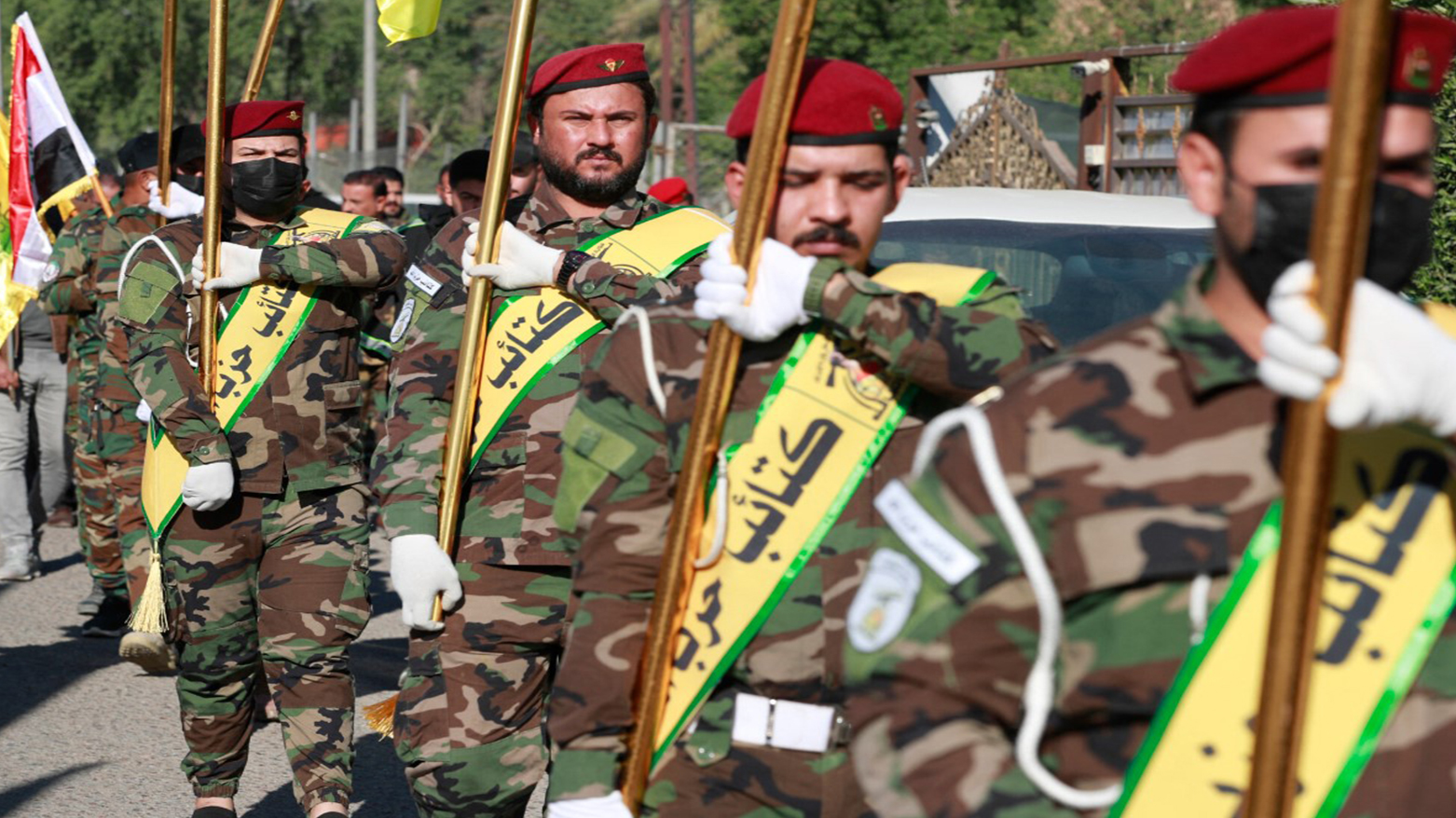
ERBIL (Kurdistan24) — The Iran-aligned Iraqi armed faction Kataeb Hezbollah pledged on Saturday to continue its “jihadist action,” underscoring ongoing divisions among Iraq’s powerful armed groups as the government reportedly faces increasing pressure from the United States to bring all weapons under state control.
The statement came amid renewed debate over the future of pro-Iran factions operating in Iraq, following months of heightened regional tensions and growing calls from both Baghdad and Washington to limit the influence of armed groups outside official state institutions.
In a statement released on Saturday, Abu Mujahid al-Assaf, the security chief of Kataeb Hezbollah, said armed resistance remained a “collective duty” and indicated that his group would continue military activities even as some allied factions consider deeper integration into state structures.
“Jihadist action is today a collective duty, and we will carry it out on behalf of the brothers who have decided to abandon it,” Assaf said.
His remarks highlighted differing approaches among factions affiliated with the so-called “Islamic Resistance in Iraq,” an umbrella network of armed groups that has claimed responsibility for attacks against American interests in Iraq.
Following the outbreak of the U.S.-Israeli conflict with Iran at the end of February, groups operating under the resistance banner launched a series of drone and rocket attacks targeting U.S. military facilities and interests across Iraq.
The attacks prompted retaliatory American strikes against facilities and bases linked to the armed factions, including Kataeb Hezbollah, resulting in the deaths of dozens of fighters.
Since assuming office in mid-May, Iraqi Prime Minister Ali al-Zaidi has repeatedly pledged to strengthen state authority and ensure that weapons remain exclusively in the hands of official security institutions.
While several factions have signaled a willingness to operate under state authority, Kataeb Hezbollah has remained resistant to discussions of disarmament.
Assaf suggested that his group could work alongside other factions that choose to relinquish their weapons, stating that Kataeb Hezbollah would be prepared to purchase arms they no longer required.
He also said the organization was ready to “cooperate and play a constructive role” in supervising the transfer and storage of weapons. According to Assaf, the group could additionally receive and manage advanced weapons systems, including cruise missiles, arguing that Iraqi state agencies currently lack sufficient expertise to handle such equipment.
The comments come as Washington continues to press Baghdad to curb the influence of Iran-backed armed groups. Earlier this month, a senior U.S. State Department official called on Iraq to take “concrete actions” against pro-Iran factions, linking future American support to efforts aimed at removing what Washington describes as terrorist militias from state institutions and ending financial support for them.
The issue remains one of the most sensitive challenges facing Iraq’s new government, which is attempting to balance domestic political realities, the influence of powerful armed factions, and growing international demands to consolidate security authority under the state.
Meanwhile, Iraqi Prime Minister al-Zaidi met with a senior delegation from the Shiite National Movement in Baghdad on Saturday and agreed to establish a joint committee tasked with implementing an initiative by Muqtada al-Sadr to integrate the Saraya al-Salam force into Iraq’s official security institutions and transfer its weapons to the government.
The meeting, held in the Iraqi capital and attended by the Deputy Commander of the Joint Operations Command, focused on developing what officials described as an appropriate and scientific mechanism for carrying out Sadr’s proposal, according to a statement from the Prime Minister’s Media Office.
Al-Sadr announced on Wednesday the complete separation of Saraya al-Salam from the National Shiite Movement, ordering its full integration into state military structures and calling for an end to partisan affiliation of armed groups.
In a statement framed around what he described as “public interest” and the need to avoid “looming dangers” facing the country, al-Sadr said the decision aims to place all military formations under official state authority.
He declared that Saraya al-Salam units would no longer operate under any independent or political structure, instead becoming part of Iraq’s formal security system.