Kurdistan Region's Leading Parties Signal Readiness to Resume Government Formation Talks
The Kurdistan Democratic Party and Patriotic Union of Kurdistan are ready to resume talks on forming the new government. During a visit to PUK headquarters in Sulaimani on Monday, KDP official Ari Harsin and parliamentary delegates stressed unity and political stability for the Kurdistan Region.
ERBIL (Kurdistan24) - The Kurdistan Region's two predominant political forces, the Kurdistan Democratic Party (KDP) and the Patriotic Union of Kurdistan (PUK), are poised to resume formal negotiations regarding the formation of the next Kurdistan Regional Government (KRG). The renewed engagement signals a vital effort to maintain institutional stability and overcome recent partisan hurdles.
On Monday, diplomatic coordination between the leading factions took a highly visible step forward when Ari Harsin, head of the KDP's Fourth Branch, led a delegation to the PUK's First Organizational Headquarters in the city of Sulaimani.
The visit, officially organized to deliver a congratulatory message marking the PUK's 51st founding anniversary, served as a crucial platform to reaffirm the continuity of political dialogue between Erbil and Sulaimani.
Addressing the press during the visit, Harsin sought to alleviate public concerns regarding inter-party friction, emphasizing that bilateral relations remain firmly stabilized.
Highlighting the symbolic and practical importance of the diplomatic exchange, he stated, "If relations between the PUK and KDP were not on normal footing, what would we be doing here today?"
The KDP official's remarks reflect a calculated strategy to project political cohesion amid the ongoing government formation efforts.
According to Harsin, the specialized negotiating delegations representing both the KDP and the PUK are prepared to return to the bargaining table to finalize the structure of the incoming KRG.
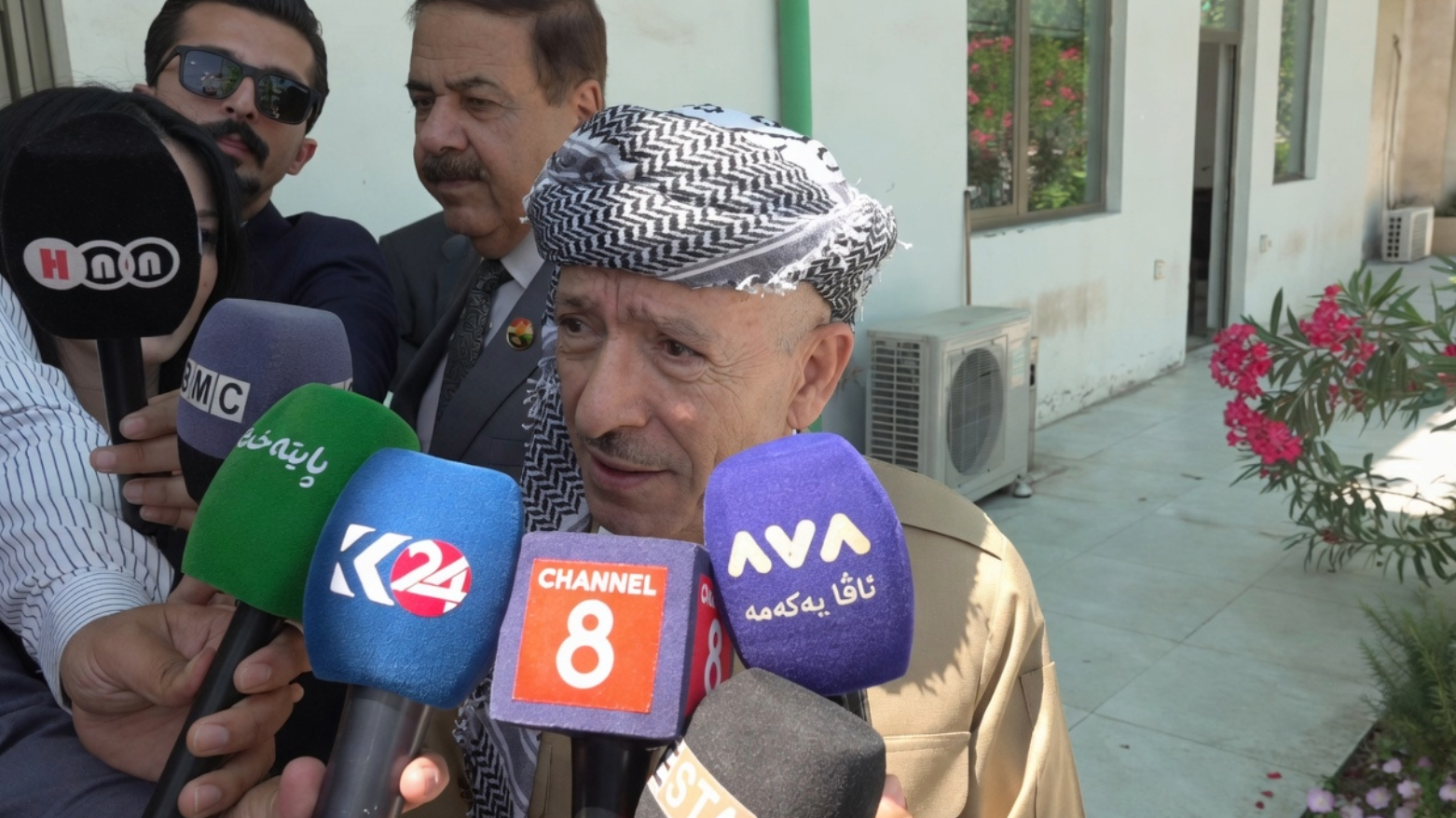
Underscoring the immense weight of their shared administrative responsibility, he framed both factions as foundational pillars of regional governance, asserting that the parties act strictly as "instruments for serving the homeland; they must fulfill their duties and must not remain fragmented."
This high-level executive outreach was seamlessly mirrored within the legislative arena. In a parallel effort to bolster party coordination, representatives from the KDP parliamentary bloc held dedicated meetings with their PUK legislative counterparts to extend formal anniversary congratulations.
Rozh Sheikh Salar, a Member of Parliament representing the KDP, utilized the occasion to highlight the urgent necessity of elevating the national interest above narrow partisan divisions.
"As the KDP bloc, we congratulated the PUK on its founding anniversary," Salar informed reporters.
He explicitly invoked the overarching political vision of Kurdish leader President Masoud Barzani to guide the ongoing transition.
"We hope that on this day, everyone reflects on the message of President Barzani, who called on all parties to set aside narrow partisan interests and prioritize the interests of our people and our region. We hope all sides can sit together and truly focus on the national interest," Salar stated.
The simultaneous diplomatic maneuvers by KDP executives and lawmakers underscore the critical reliance on KDP-PUK cooperation to ensure unified governance across the Kurdistan Region.
Both political establishments recognize the deep sensitivity of the current climate.
Salar candidly acknowledged these complex dynamics, noting that the region is navigating a highly delicate phase and expressing optimism that the renewed engagement will successfully yield "unity, solidarity, and the reactivation of our parliament."
Ultimately, the synchronized outreach in Sulaimani signals an encouraging buildup of momentum in the government formation process.
By engaging in parallel diplomatic and parliamentary coordination, the leaderships of both parties are proactively constructing the framework necessary to bypass persistent institutional delays.
As the Kurdistan Region confronts a myriad of domestic challenges, the resumption of sustained, constructive dialogue remains the most vital prerequisite for securing long-term political stability.