US House Backs Resolution to Halt Iran Military Action in Setback for Trump
Symbolic vote underscores congressional opposition as nuclear talks with Tehran remain deadlocked
ERBIL (Kurdistan24) — The U.S. House of Representatives on Wednesday approved a resolution seeking to halt American military action against Iran, delivering a political setback to President Donald Trump as diplomatic efforts to end the conflict and reach a broader agreement with Tehran remain stalled.
The resolution passed by a narrow 215-208 margin, with four Republican lawmakers joining Democrats in supporting the measure. While largely symbolic and unlikely to immediately alter U.S. policy, the vote reflects growing concern in Congress over continued military engagement with Iran and the absence of a negotiated settlement.
The measure still requires Senate approval and could ultimately be vetoed by Trump, limiting its practical impact. Nevertheless, Democrats portrayed the vote as a clear signal of public opposition to further military escalation.
“This is a loud and unambiguous message to Donald Trump on behalf of the American people: it's time to end his deeply unpopular and illegal war of choice in Iran,” Democratic lawmakers said in a statement posted on X.
The congressional vote comes amid stalled negotiations between Washington and Tehran aimed at ending hostilities and restoring stability in the Gulf region.
Despite weeks of intensive diplomacy, progress has remained elusive. Iranian officials said Wednesday that discussions had yielded “no tangible progress,” while Trump expressed optimism that a breakthrough could still be achieved.
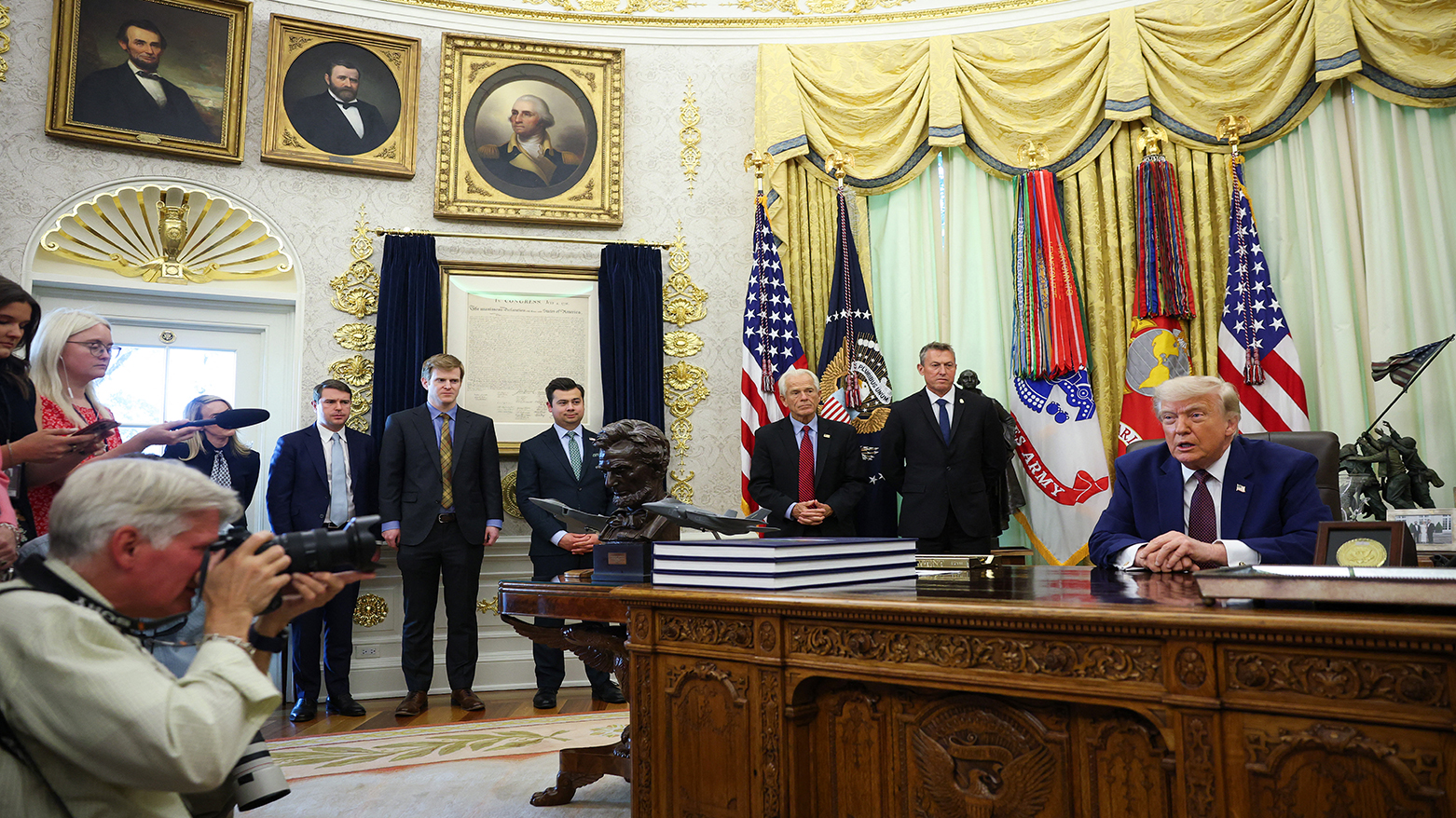
“It could happen... over the weekend,” Trump told reporters at the White House.
At a congressional hearing, U.S. Secretary of State Marco Rubio said Iran’s stockpiles of highly enriched uranium remain a central issue in negotiations. Washington has insisted that Tehran surrender its near-weapons-grade uranium, restrict its nuclear activities, and meet other conditions before a comprehensive agreement can be reached.
"I don't have the classified information the President has," Senator John Kennedy conceded, while exclusively speaking to Kurdista24 on Wednesday. Kennedy nonetheless offered one of the sharpest formulations yet heard from Capitol Hill on the question of Iranian nuclear ambitions.
"The people of Iran are good people, but the government that's in control are a bunch of religious zealots," Kennedy said. "They want to obtain a nuclear weapon. That would be like giving Charles Manson a nuclear weapon. We can't allow that to happen, and that's why we're there."
Also, exclusively talking to Kurdistan24 on the same day, Senator Tim Kaine offered a verdict that was equally unequivocal, but pointed in the opposite direction. For Kaine, the central question is not how to prosecute the confrontation with Iran but whether the United States has any legal or moral right to be prosecuting it at all.
"The war is illegal, it's unwise, it's unnecessary, it needs to stop," Kaine said. "And I'm doing everything I can in the Senate to bring this war to a close."
Iranian Foreign Minister Abbas Araghchi said communication channels with the United States remain open but acknowledged that negotiations have failed to achieve meaningful progress.
“Communications with the Americans have not been cut off, and messages have been exchanged regarding the need to stop aggression against Beirut, but no tangible progress has been made in the negotiation process,” Araghchi said in remarks carried by Iranian media.
He also warned that any Israeli attack on Beirut would trigger a major escalation.
“Any attack on Beirut will have grave consequences and will lead to a full-scale resumption of the war,” he said, adding that Iranian forces were prepared to respond if Israel expanded its military operations.
The latest developments highlight the challenges facing diplomatic efforts to end the conflict, with significant differences remaining between Washington and Tehran over nuclear issues, regional security, and the conditions required for a lasting agreement.
As negotiations continue, the House vote underscores growing political pressure on the Trump administration to pursue a diplomatic solution and avoid deeper military involvement in the region.