'No Force Will Remain Outside the Iraqi Army': Joint Operations Command Unveils Sweeping Militia Integration Plan
Iraq's deputy commander of Joint Operations announced that all formerly independent armed factions will be absorbed into the state military
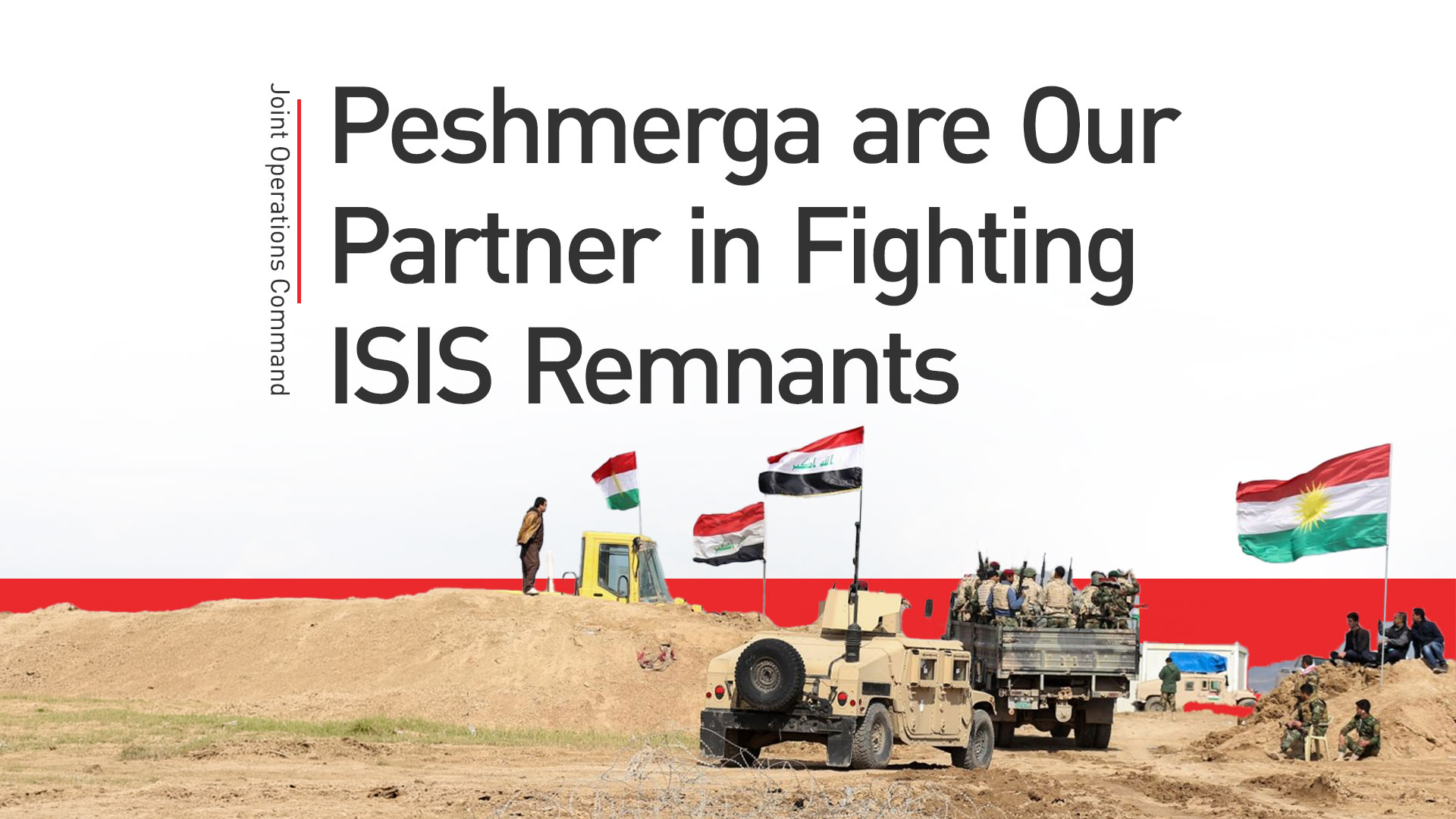
ERBIL (Kurdistan24) - In the clearest and most unambiguous statement yet from Iraq's military establishment on the future of the country's armed landscape, the deputy commander of the Joint Operations Command declared Thursday that the era of independent armed factions operating outside the formal chain of command is over.
Speaking at a press conference on Thursday, Qais al-Muhammadawi announced the Iraqi government's new plan for the unification of all armed forces under the state military umbrella, and left no room for ambiguity about what that means. "No force will remain outside the structure of the Iraqi army," he said.
al-Muhammadawi outlined the mechanics of the integration with a specificity that went beyond previous political declarations.
All divisions and armed groups formerly affiliated with the Popular Mobilization Forces (PMF) or holding political loyalties, he said, would be incorporated into the ranks of the Iraqi army.
To manage the logistics of that transition, a dedicated committee has been established with a single mandate: to receive all light, medium, and heavy weapons from those groups.
The language al-Muhammadawi used was carefully balanced between respect and firmness. "We honor the past role of those forces in defending Iraq," he said, "but from now on they must operate only under the name of the Iraqi army."
The formulation acknowledged the history of the PMF, forged in the crisis of ISIS's rise in 2014, while making equally clear that history does not confer permanent license to bear arms outside state authority.
In a remark that carries particular significance for the Kurdistan Region, al-Muhammadawi addressed the status of the Peshmerga, the Kurdistan Regional Government's (KRG) armed forces, directly and in terms that distinguished them clearly from the PMF factions at the center of the integration drive.
The Peshmerga, he said, are a force belonging to the Kurdistan Region, and they maintain continuous and strong coordination with the Iraqi army, particularly in confronting the remnants of ISIS across various areas.
He expressed hope that this joint work would continue as a national endeavor for the protection of all of Iraq's territory.
al-Muhammadawi also confirmed that discussions have already taken place with two of the most significant factions in the PMF ecosystem: Kata'ib al-Imam Ali and Asa'ib Ahl al-Haq.
Both groups have in recent days signaled varying degrees of readiness to surrender their weapons, signals that the Joint Operations Command is now treating as the basis for active negotiation rather than passive observation.
He also extended explicit praise to Muqtada al-Sadr for his initiative to integrate three Saraya al-Salam divisions into the Iraqi army, the move that, earlier Thursday, produced the first physical weapons handover by any PMF faction in Samarra.
al-Muhammadawi's public acknowledgment of Sadr's role underscores how central that initiative has been to unlocking the broader momentum now building across the militia landscape.
Whether the factions that have so far refused — among them the Nujaba movement, Hizbollah Iraq, and Kata'ib Sayyid al-Shuhada — will ultimately be brought into compliance, or whether they will harden into a resistant core that undermines the entire project, is the question that Baghdad's new plan has not yet answered.