Putin Asserts U.S. Distracted by Iran Conflict as Ukraine Seeks Direct Peace Talks
As Ukraine slips down Washington's priority list, a new question is emerging: could events in the Middle East reshape the course of Europe's biggest war? The report explores the growing link between the two conflicts.
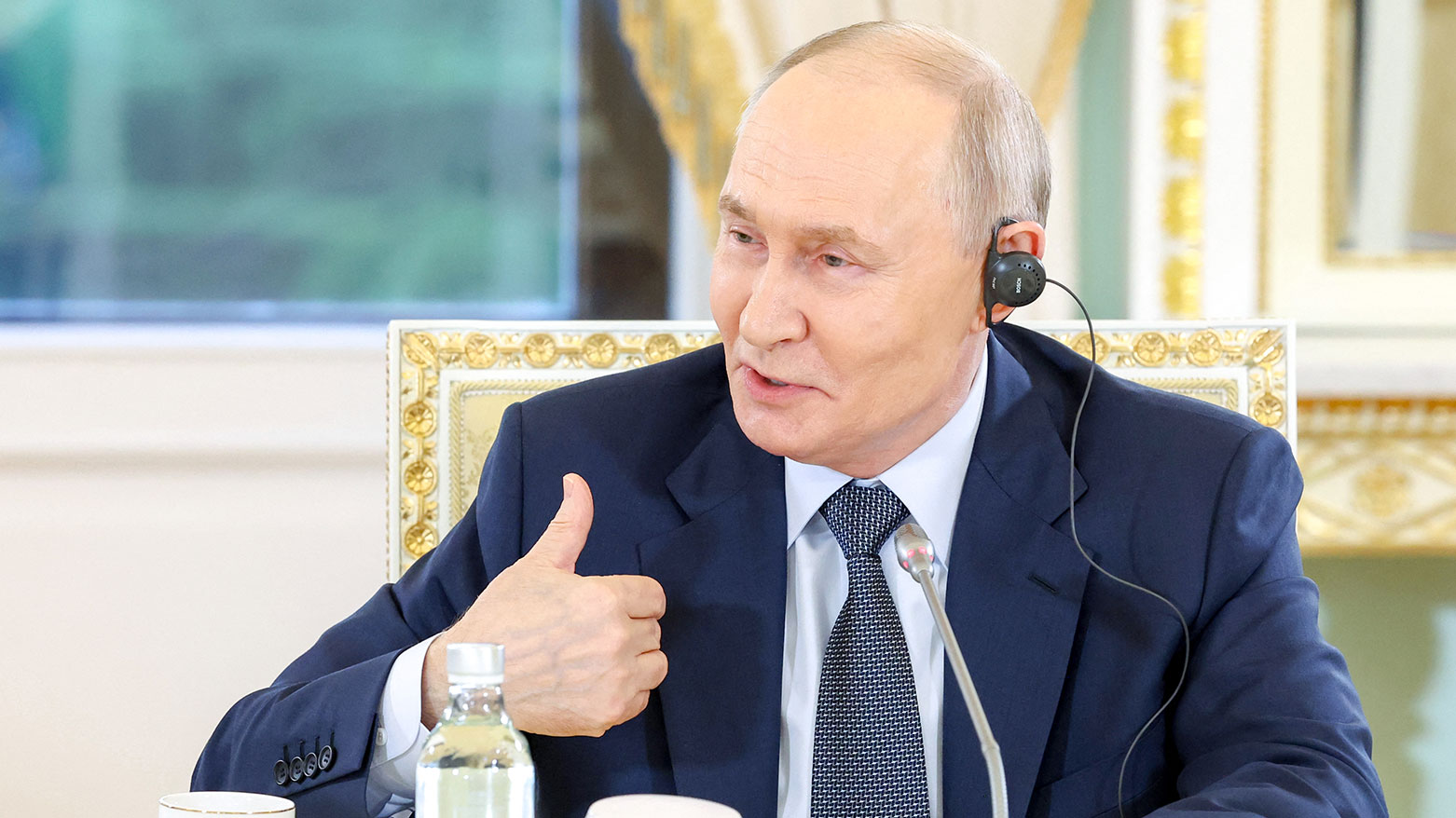
ERBIL (Kurdistan24) - Russian President Vladimir Putin stated on Thursday that the United States has been forced to divert its diplomatic and strategic attention away from the ongoing war in Ukraine, increasingly focusing its energy on the escalating conflict involving Iran. The remarks underscore how crises in the Middle East are actively reshaping the diplomatic calculations and battlefield realities of Eastern Europe.
"Right now, the issue of resolving another crisis, the one on the Iranian front, is particularly acute," Putin told a gathering of foreign journalists, including Agence France-Presse (AFP), in St. Petersburg. "And naturally, we all see this. We understand that the U.S. administration is distracted, as it is forced to deal primarily with this... this issue."
Putin's comments highlight a growing perception in both Moscow and Kyiv: the Trump administration's intense preoccupation with Iran has significantly reduced Washington's diplomatic bandwidth for Ukraine.
This shift comes at a critical juncture, as both Russian and Ukrainian forces remain locked in a grueling war of attrition with no immediate military resolution in sight.
A Waning U.S. Focus
The shifting priorities in Washington have become increasingly apparent.
According to reporting by Maria Danilova of AFP, U.S. Secretary of State Marco Rubio recently testified before four different congressional panels regarding America's global posture, yet the war in Ukraine was barely discussed.
This diminishing American focus has prompted expressions of frustration in Kyiv.
Ukrainian President Volodymyr Zelensky, speaking alongside NATO Secretary General Mark Rutte earlier this week, acknowledged the changing diplomatic environment.
"Today we are not in focus," Zelensky remarked, according to AFP. "Iran is the number one issue for the United States of America, and then comes the issue of Ukraine. Unfortunately, we are in the queue of these wars."
The lack of U.S. engagement is particularly notable given the Trump administration's initial promises to rapidly end the conflict. However, as Rubio conceded during his congressional testimony, U.S.-led negotiations between Moscow and Kyiv have effectively reached a stalemate.
"Unfortunately... neither side has been willing to make concessions, particularly on the Russian side, necessary in order to bring peace about," Rubio stated, as reported by AFP.
He emphasized that the devastating conflict has no viable military solution, though the diplomatic route has proven "unfruitful."
Furthermore, Zelensky recently lamented in an interview with CBS that while key envoys from the Trump administration, including Steve Witkoff and Jared Kushner, have made multiple trips to Moscow, they have yet to visit Kyiv.
Zelensky Proposes Direct Talks
Facing the reality of reduced U.S. involvement, Zelensky has initiated a new diplomatic push. In a rare direct appeal, the Ukrainian leader published an open letter to Putin on Thursday proposing face-to-face negotiations to end the war.
"Ukraine proposes ending this war through direct engagement between us, and you. I am proposing a meeting," Zelensky wrote, according to AFP.
Crucially, he offered a "full ceasefire for the duration of the negotiations" and suggested an all-for-all exchange of prisoners of war as a prologue to ending the hostilities.
The proposal marks a significant shift for Zelensky, who has previously maintained that direct talks with the Russian leader would only be viable once a comprehensive peace agreement was ready to be signed.
However, as Elina Beketova, a fellow at the Center for European Policy Analysis, noted to AFP, the Kremlin may have little genuine interest in negotiations unless the battlefield dynamics shift fundamentally or Russia becomes significantly exhausted.
Russia's Military Posture and Demands
While diplomatic overtures are being made, the military reality on the ground remains volatile.
According to reporting by James Jordan and Harriet Morris of The Associated Press, Putin used his appearance at the St. Petersburg International Economic Forum to address recent Ukrainian drone strikes deep inside Russian territory, including an attack that hit an oil terminal and a naval base near St. Petersburg just hours before the forum opened.
"To our regret, some of them break through," Putin acknowledged regarding the drone attacks, according to the AP. "Russia has an air defense system, we need to improve it, strengthen it, and we will do that."
The strikes underscore Kyiv's growing capability to project force into Russia, even as Moscow intensifies its own missile and drone barrages against Ukrainian cities. Yet, despite these vulnerabilities, Putin maintained a hardline stance on negotiations.
According to the AP, Putin stated that Russia is open to a compromise based on understandings previously reached with President Trump in Anchorage, Alaska.
However, he insisted that Moscow seeks a comprehensive settlement rather than a temporary truce, directly countering Zelensky's offer of a ceasefire during talks.
"There is no need to suspend the hostilities to start negotiations," Putin said, per the AP report. "Naturally, the Ukrainian side would like us to suspend the advances made by Russian troops. But it would be better to end the war by agreeing to the compromises that were discussed in Anchorage."
Putin also reiterated Russia's objective of establishing full control over the eastern Donetsk region, emphasizing that Russian forces are continuing to advance along the entire line of contact.
He further dismissed the possibility of European Union countries mediating the conflict, questioning their neutrality given their long-standing support for Ukraine.
A Complex Geopolitical Interplay
The intertwined nature of these global conflicts is becoming increasingly complex.
The war in Ukraine is no longer occurring in isolation; its trajectory is now heavily influenced by the escalating confrontation in the Middle East.
As the U.S. directs its diplomatic and military resources toward managing the Iran crisis, the vacuum left in Eastern Europe is forcing both Kyiv and Moscow to adjust their strategies.
For Zelensky, the challenge lies in securing continued international support and leverage in negotiations without the full diplomatic weight of Washington behind him.
His call for direct talks with Putin reflects an urgent need to explore new avenues for peace as external backing becomes less predictable.
For Putin, the distraction of the United States presents a strategic opportunity to press his military advantage in eastern Ukraine while waiting for Kyiv to accept Moscow's terms for a settlement.
As the geopolitical landscape continues to shift, the fate of Ukraine may depend as much on developments in the Middle East and the diplomatic priorities of Washington as on the immediate realities of the battlefield.
|
Summary Russian President Vladimir Putin asserted that the U.S. has lost focus on Ukraine due to the escalating Iran conflict. As U.S. diplomatic engagement wanes, Ukrainian President Volodymyr Zelensky has proposed a direct meeting and ceasefire, highlighting the shifting geopolitical landscape. |