Iran Confirms Strait of Hormuz Tolls Now Operational, Charging up to $2 Million Per Vessel
Tehran enters execution phase of its Hormuz management plan, with payments accepted in cash, cryptocurrency, goods, and barter as the Islamic Republic asserts financial control over the world's most vital sh
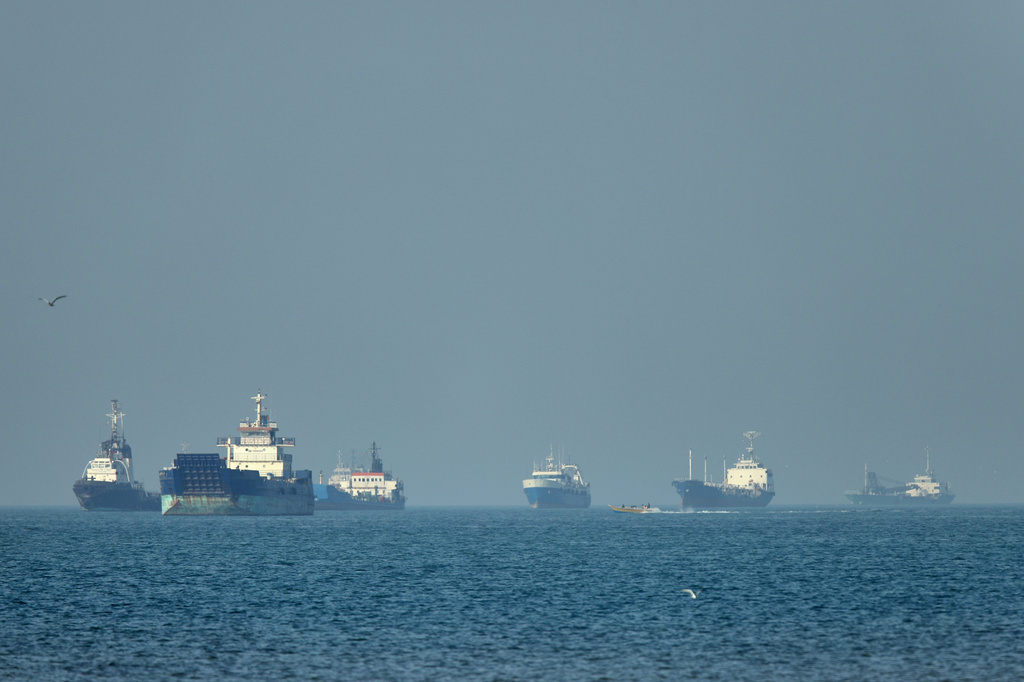
ERBIL (Kurdistan 24) - Iran has confirmed that its toll system for vessels transiting the Strait of Hormuz has entered a full operational phase, with an Iranian parliamentary official revealing that ships are now being charged an average of between $1.5 million and $2 million per crossing, and that a formal management framework overseen by the Supreme National Security Council is now in place to administer the programme.
Zanganeh, a member of Iran's parliamentary Planning and Budget Commission, announced the development in an interview with Fars News Agency on Sunday, confirming that the collection of transit fees from vessels passing through the strait has moved from a policy proposal into active implementation.
A 12-Point Management Framework
The disclosure confirmed an earlier announcement made in April 2026, when Nikzad, First Deputy Speaker of the Iranian parliament, revealed during a visit by members of the Infrastructure Commission to Bandar Abbas and the Strait of Hormuz that a 12-point management plan for the strait had been drafted. That visit, which took place in the Iranian calendar month of Ordibehesht, laid the groundwork for the administrative structure now in operation.
According to Zanganeh, a dedicated body has been established in cooperation with the Ministry of Economy and under the supervision of the Supreme National Security Council to implement the plan. Revenue collected from vessels is deposited into the national treasury in accordance with the budget law and allocated to designated expenditure lines.
Cryptocurrency, Goods, and Barter Accepted
Among the most striking details of the new system is its payment structure. Not all transit fees are collected in cash. Zanganeh confirmed that a portion of payments are made in Tether, the US dollar-pegged cryptocurrency, while others are settled in goods or through barter arrangements. Under this model, some vessels deliver cargo or services instead of a monetary payment, with the assessed value of those goods deducted from the fee owed.
The use of cryptocurrency and barter mechanisms reflects the economic constraints facing both Iran and many of the shipping operators dealing with its toll system. For Iran, operating under heavy US sanctions and a financial blockade, accepting Tether or goods offers a practical route to value extraction without relying on dollar-denominated banking channels. For shipping operators, particularly those from countries maintaining informal economic ties with Tehran, non-cash settlement may offer a degree of political insulation from the transactions.
From Improvised Toll Booth to Institutional Structure
Iran's Islamic Revolutionary Guard Corps (IRGC) began rerouting ships from the normal transit lanes through the Strait of Hormuz to an alternate path close to the Iranian coastline between the islands of Qeshm and Larak in mid-March 2026, according to Lloyd's List Intelligence, effectively turning the world's most important shipping lane into a checkpoint. Ships' nationalities, ownership, cargo, and crew are checked before passage is granted, according to Foreign Policy on March 26, 2026.
Iranian lawmaker Alaeddin Boroujerdi told state broadcaster Islamic Republic of Iran Broadcasting (IRIB) in March 2026 that the toll system marked a new approach to controlling the waterway. "Collecting $2 million as transit fees from some vessels crossing the strait reflects Iran's strength," Boroujerdi said, according to Fox News on March 22, 2026.
Experts have noted that for many shipping operators, paying the toll is economically rational. "There is no doubt that paying Iran is cheaper than a continuous blockade because a sitting tanker bleeds money," Nader Habibi, an Iranian-American economist, told Al Jazeera on May 21, 2026, noting that stranded vessels continue accumulating crew wages, loan repayments, repair costs, and war risk insurance premiums while anchored.
Legal Questions Remain Unresolved
The toll system faces significant legal challenges under international maritime law. The United Nations Convention on the Law of the Sea (UNCLOS) enshrines the principle of transit passage through international straits, with Article 44 stating that countries bordering such straits "shall not hamper transit passage," a right that cannot be suspended for any reason, according to a Lawfare analysis published in March 2026. Iran signed UNCLOS in 1982 but has never ratified it, a distinction Tehran places at the centre of its legal argument for the toll system.
Iran International reported on April 14, 2026, that estimates circulating in public debate suggesting Iran could earn between $40 billion and $100 billion annually from the tolls do not withstand scrutiny. A more rigorous analysis of shipping volumes and pricing norms suggests potential annual revenues closer to between $1 billion and $2 billion, even under optimistic assumptions, far below the figures promoted in some Iranian political commentary.
The confirmation that the toll system has entered its execution phase, backed by a formal institutional structure and a flexible payment framework, signals that Iran views control of the Strait of Hormuz not as a temporary wartime measure but as a permanent feature of its economic and strategic posture, one it intends to codify in law and sustain regardless of how the broader conflict with the United States ultimately resolves.
|
BRIEF: |