Houthis Ban Israeli Shipping in Red Sea as Iran and Israel Exchange Fire Amid Diplomatic Push
Tehran suspends flights, targets Israeli air bases, while regional mediators intensify efforts to prevent wider conflict
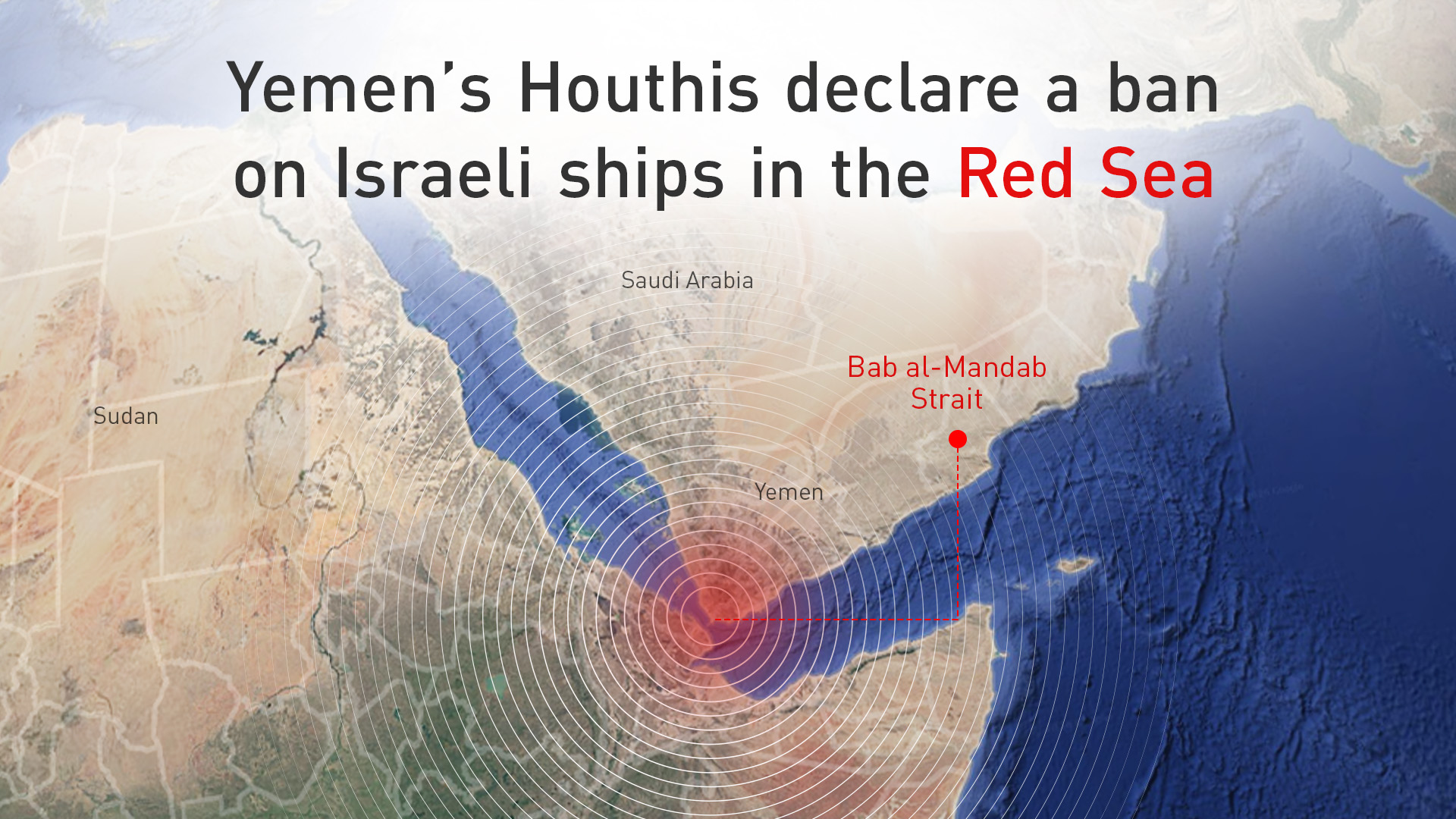
ERBIL (Kurdistan24) — Yemen's Iran-backed Houthi movement announced on Monday a complete ban on Israeli maritime navigation in the Red Sea and confirmed a missile attack on Israel, signaling a sharp escalation in regional tensions and raising fears of renewed disruption to one of the world's most important shipping routes.
In a statement, the Houthis' armed forces declared a "complete and total ban on Israeli maritime navigation in the Red Sea," while also confirming what they described as their first missile attack against Israel since early April.
The announcement came as Iran and Israel exchanged fire in the most significant escalation since a ceasefire took effect in April.
Iran's Islamic Revolutionary Guard Corps (IRGC) said it had targeted Israel's Nevatim and Tel Nof air bases in response to what it described as Israeli missile attacks on radar facilities inside Iran.
"The operation was carried out in response to a missile attack launched by the Zionist regime... against several radar sites in three different places" in Iran, the IRGC said in a statement.
The latest exchange of strikes has fueled concerns that the conflict could broaden further, despite ongoing diplomatic efforts to preserve the fragile ceasefire and prevent a return to full-scale regional war.
As tensions mounted, Iranian authorities suspended all incoming flights to Tehran's Imam Khomeini International Airport. According to the Mehr news agency, Iran's civil aviation authority announced that flights bound for the airport would remain suspended until further notice.
The airport, one of the capital's two main international gateways, had only resumed operations in April after being closed for weeks during earlier phases of the conflict.
Diplomatic activity also intensified over the weekend as Iranian Foreign Minister Abbas Araghchi held a series of telephone conversations with senior regional and international officials.
According to Iran's foreign ministry, Araghchi discussed the latest developments with the foreign ministers of Britain, France and Turkey, as well as with Qatari Prime Minister and Foreign Minister Sheikh Mohammed bin Abdulrahman Al Thani and members of a Pakistani mediation team seeking to facilitate an agreement between Tehran and Washington.
The talks reportedly focused on Iran's response to what Tehran described as Israel's repeated violations of the ceasefire in Lebanon, including recent Israeli strikes on Beirut's southern suburbs that triggered Iranian missile launches against Israel.
Meanwhile, Qatar and Saudi Arabia coordinated efforts to support ongoing mediation initiatives aimed at de-escalating the crisis.
In a statement, Qatar's Ministry of Foreign Affairs said Prime Minister and Foreign Minister Sheikh Mohammed bin Abdulrahman Al Thani received a phone call from Saudi Foreign Minister Prince Faisal bin Farhan. The two officials reviewed bilateral relations and discussed mediation efforts between the United States and Iran.
The ministers also examined ways to coordinate regional efforts to reduce tensions and strengthen security and stability across the Middle East.
During the call, Al Thani stressed the importance of all parties responding positively to ongoing mediation initiatives in order to address the root causes of the crisis through dialogue and peaceful means and to secure a lasting agreement that would prevent further escalation.
The Houthi decision to prohibit Israeli-linked shipping through the Red Sea is likely to heighten concerns among global energy and shipping markets. The waterway serves as a critical corridor connecting Europe and Asia through the Suez Canal and has previously been the target of Houthi attacks that disrupted international trade and forced shipping companies to reroute vessels around southern Africa.
With military exchanges continuing between Iran and Israel and regional actors intensifying diplomatic engagement, the latest developments underscore the growing challenge facing mediators seeking to prevent the conflict from expanding across the Middle East.