Trump Says Middle East Peace Deal Could Be Reached Within Days as Iran-Israel Hostilities Subside
US president signals breakthrough in negotiations while warning that renewed fighting could derail diplomatic efforts
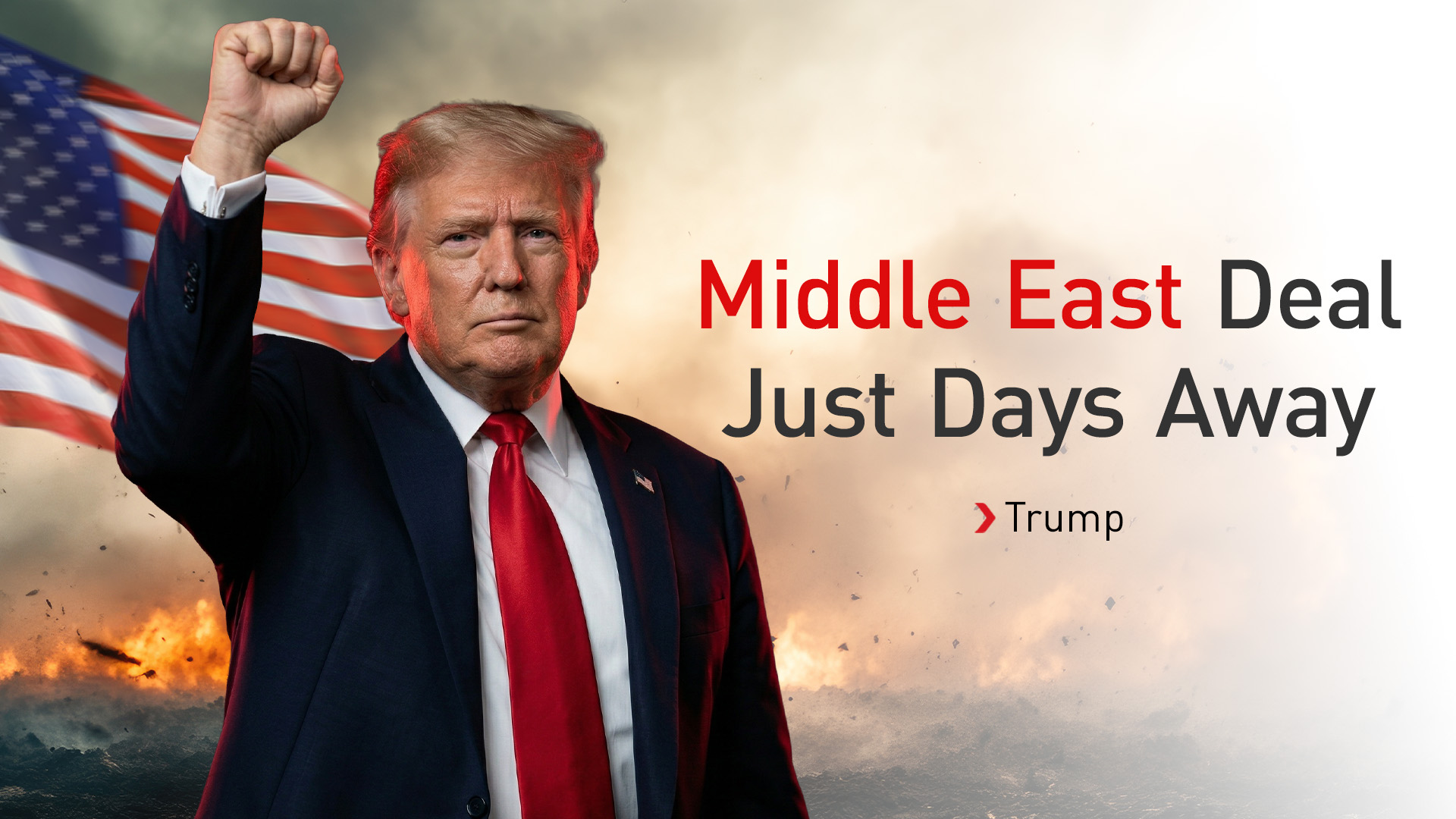
ERBIL (Kurdistan24) — U.S. President Donald Trump said on Tuesday that a major Middle East peace agreement could be reached within days, expressing optimism that negotiations aimed at ending the latest escalation between Iran and Israel were nearing completion.
"We're in the final throes of what will be a very, very good deal," Trump told reporters upon returning from an NBA Finals game. Asked whether an agreement was a matter of days or weeks, he replied that it could take "two or three days."
Trump's remarks came a day after Iran and Israel announced a halt in hostilities following a brief but dangerous exchange of missile strikes that raised fears of a broader regional war.
Israeli Prime Minister Benjamin Netanyahu said Monday that "the fire on that front is contained," hours after Tehran declared it had ceased military operations against Israel.
The latest confrontation began when Iran launched missiles at Israel on Sunday, linking its actions to Israel's ongoing military campaign against Hezbollah in Lebanon. Israel responded with strikes on targets inside Iran despite reported efforts by Trump to dissuade Netanyahu from escalating the conflict further.
The exchange triggered another wave of Iranian missile launches before Tehran announced a ceasefire. Iranian officials have repeatedly tied the sustainability of their truce with the United States—maintained since April 8 despite periodic attacks—to developments in Lebanon, warning that continued Israeli strikes against Hezbollah could prompt renewed military action.
On Monday, Tehran warned it would resume attacks if Israel persisted with operations in Lebanon. Netanyahu responded by warning that if Iran "makes the mistake of resuming attacks against us, we will respond with full force."
Israeli Defense Minister Israel Katz signaled that military operations against Hezbollah would continue regardless of the ceasefire with Iran, stating that Israel would strike Hezbollah-controlled areas in Beirut's southern suburbs in response to attacks on northern Israel.
Trump, who has reportedly become increasingly frustrated with Netanyahu's handling of the conflict, earlier urged all parties to stop "shooting" and said that final negotiations toward peace would move forward, provided they were not obstructed by "ignorance or stupidity."
Netanyahu, however, defended Israel's position, saying in a televised address that he had informed Trump that "Israel has a full right to self-defense, and we are exercising it as required."
Deadly Violence Continues in Lebanon
While direct hostilities between Iran and Israel appeared to have subsided, violence continued in Lebanon. According to the Lebanese Health Ministry, Israeli airstrikes killed five people in the coastal city of Tyre, seven others in the Nabatieh district, and two more in Marwanieh on Monday.
The Israeli military said projectiles had been launched toward its forces operating in southern Lebanon. Some were intercepted, while one landed near troops without causing casualties.
Israel also reported intercepting what it described as a "suspicious aerial target" launched from Yemen, with no injuries reported.
Iran fired nearly 30 missiles at Israel overnight, according to the Israeli military, while Israel targeted military sites inside Iran. No casualties were reported in either country following the latest exchange.
Uneasy Calm in Tehran and Israel
Despite the ceasefire announcement, uncertainty remained palpable among civilians.
In Tehran, cafés and restaurants appeared busy, but residents expressed concern over the fragility of the situation. Traffic was lighter than usual and long queues formed at petrol stations as some residents prepared for the possibility of renewed conflict, according to AFP.
"There is a sense of uncertainty and confusion," Maryam, a 41-year-old accountant in Tehran, told AFP. "You don't know if there's going to be a war, nor do you know if the peace agreement will last. Nothing is clear. People are frustrated."
In Tel Aviv, residents sought shelter as warning sirens sounded during the latest missile alerts.
"I hope it will be short, but you can never know," Jonathan Ariel, 30, told AFP. "Last time we thought it would be short, and then it was a month."
Iranian media reported early Tuesday that Tehran's international airport, which had been temporarily closed during the missile exchanges, had reopened and resumed receiving flights carrying Hajj pilgrims returning from Saudi Arabia.
Diplomatic Efforts Continue
The latest flare-up came at a critical stage in diplomatic efforts involving regional mediators, particularly Pakistan, which has sought to help prevent a wider conflict.
Iranian Foreign Ministry spokesman Esmaeil Baqaei said diplomacy remained active but acknowledged that ongoing military tensions could affect negotiations.
As Baqaei addressed reporters in Tehran on Monday, a large explosion reportedly shook the vicinity of the Foreign Ministry, followed by repeated blasts believed to be linked to air defense activity.
Pakistan's Interior Minister Mohsin Naqvi visited Tehran to deliver what he described as a "special letter" to Iranian Supreme Leader Mojtaba Khamenei, according to Iranian state television. Pakistani officials later confirmed that Naqvi had returned to Islamabad.
Iranian President Masoud Pezeshkian sought to reassure international observers by declaring on social media that Tehran remained "at the negotiating table."
Economic Concerns Persist
Financial markets reacted nervously to the renewed confrontation. Global oil prices surged by more than five percent during Asian trading hours amid concerns that the conflict could escalate further and threaten energy supplies.
Prices later moderated, with Brent crude and West Texas Intermediate ending the day higher by 1.3 percent and 0.8 percent, respectively.
The conflict has already disrupted regional energy flows, with Iran significantly reducing oil and gas shipments through the strategically vital Strait of Hormuz. The United States has also maintained a blockade on Iranian ports, adding further pressure on global energy markets.
As negotiators race to secure a broader agreement, Trump's prediction that a deal could emerge within days has raised hopes that the latest ceasefire may evolve into a more durable framework for regional stability, though significant tensions remain unresolved across Lebanon, Israel, and Iran.