Kuwait Elevates Airport Strike Dispute With Iran to U.N. Aviation Watchdog
The formal complaint to the International Civil Aviation Organization highlights the increasing vulnerability of civilian infrastructure as Gulf tensions escalate.
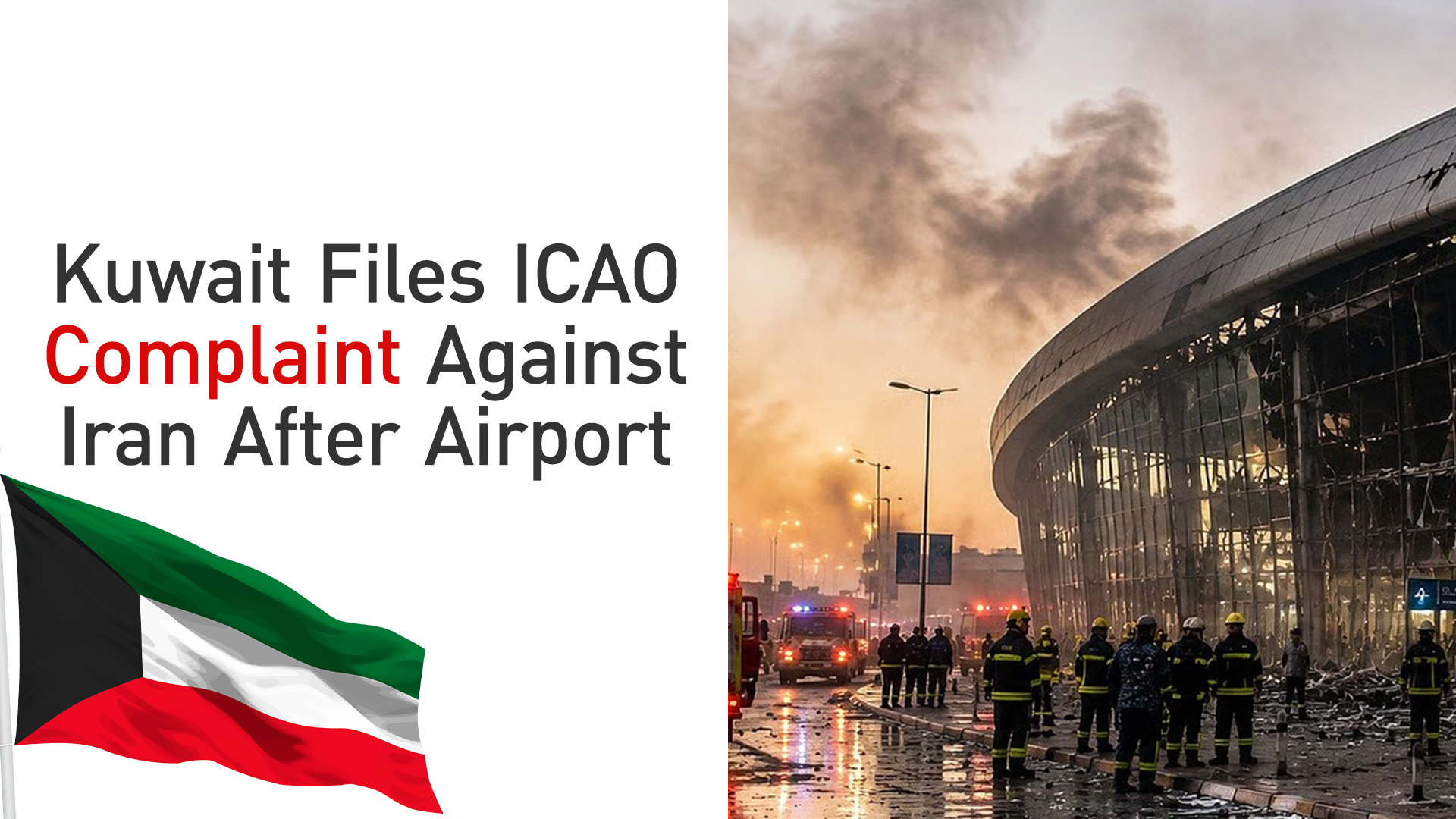
ERBIL (Kurdistan24) - Kuwait has formally escalated its diplomatic standoff with Iran, filing a protest with the United Nations' aviation watchdog after a series of military strikes damaged critical radar systems at the country's sole international airport. The move underscores the growing threat that widening regional conflicts pose to global air travel corridors.
The Kuwaiti Directorate General of Civil Aviation announced that it had submitted a formal complaint to the International Civil Aviation Organization (ICAO), accusing Tehran of severely imperiling the safety of passengers, flight crews, and ground personnel.
By directly targeting infrastructure dedicated to air navigation, Kuwaiti officials argue, Iran is in flagrant violation of the 1944 Chicago Convention, the foundational treaty that governs international civil aviation.
The legal maneuver follows a Thursday morning strike that forced Kuwaiti authorities to initiate a temporary, precautionary suspension of all commercial flights.
According to reporting by Agence France-Presse, the attack injured several individuals and inflicted substantial material losses on the airport's radar and air traffic management equipment.
The Kuwaiti military reported that its air defense systems had engaged hostile aerial targets following a fresh wave of American strikes against Iran.
While Kuwait was able to normalize its commercial flight schedules shortly after the initial shutdown, the disruption laid bare the fragility of the nation's airspace.
Kuwait's civil aviation authority has now called on ICAO to document the ongoing violations and launch a comprehensive investigation into their repercussions for regional and international air traffic security.
The targeting of civilian transit hubs has become an increasingly alarming feature of the broader military confrontation enveloping the Middle East. AFP reported that Thursday's incident marked the second time Kuwait International Airport had been struck by Iranian fire in just over a week.
On June 3, a devastating drone strike at the airport killed an Indian national and injured 63 others.
Authorities reported that victims of that earlier assault suffered from severe trauma, including brain hemorrhaging and amputations. As AFP noted, the June 3 attack represented the Gulf's first deadly strike since a tenuous ceasefire took effect between the United States and Iran in early April.
The attacks on Kuwait are inextricably tied to the broader geopolitical confrontation involving Iran, Israel, the United States, and allied Gulf states. As the conflict has dragged on, Tehran has repeatedly accused neighboring Arab nations of enabling American military operations.
According to AFP, Iran recently alleged that both Kuwait and Bahrain permitted the United States to use their territories to launch operations against an Iranian island and a tanker.
While Tehran publicly claimed to have targeted the Ali Al Salem Air Base in Kuwait, alongside the U.S. Navy's Middle East headquarters in Bahrain, its official statements notably omitted any mention of striking the civilian airport.
Kuwait has vehemently denied the Iranian accusations, pushing back against Tehran's narrative of complicity with U.S. operations.
In response to the geopolitical pressure and the ongoing bombardment, Kuwait demanded the expulsion of two Iranian embassy staff members, AFP reported. Furthermore, a statement from the Kuwaiti foreign ministry strongly denounced the "continued sinful and repeated Iranian attacks."
The decision to bring the matter before ICAO represents a significant diplomatic escalation for Kuwait, which stated it reserves all legal rights to respond under international law.
Taking the grievance to a specialized international body highlights a chilling reality for the Gulf states: as the confrontation between Washington and Tehran escalates, the demarcation between legitimate military targets and vital civilian infrastructure is rapidly dissolving.
For international airlines and global regulators, the deliberate damage to Kuwait's radar systems signals that commercial aviation is increasingly caught in the crossfire.
As diplomatic efforts to restore the ceasefire stall, the international community is left scrambling to protect the foundational safety of air travel in one of the world's most critical economic regions.
|
Summary Kuwait has filed a formal complaint with the UN aviation watchdog, accusing Iran of violating international law after military strikes damaged radar systems at its international airport. The unprecedented move highlights the growing vulnerability of civilian infrastructure amid Gulf conflicts. |