Prime Minister Barzani Urges Swift Parliamentary Reactivation in Talks With U.S. Envoy
"The first step in forming the government is the reactivation of the Parliament," Prime Minister Barzani said, adding that the institution "belongs to no one," specifically noting it is not the property of either the Patriotic Union of Kurdistan (PUK) or the Kurdistan Democratic Party (KDP).
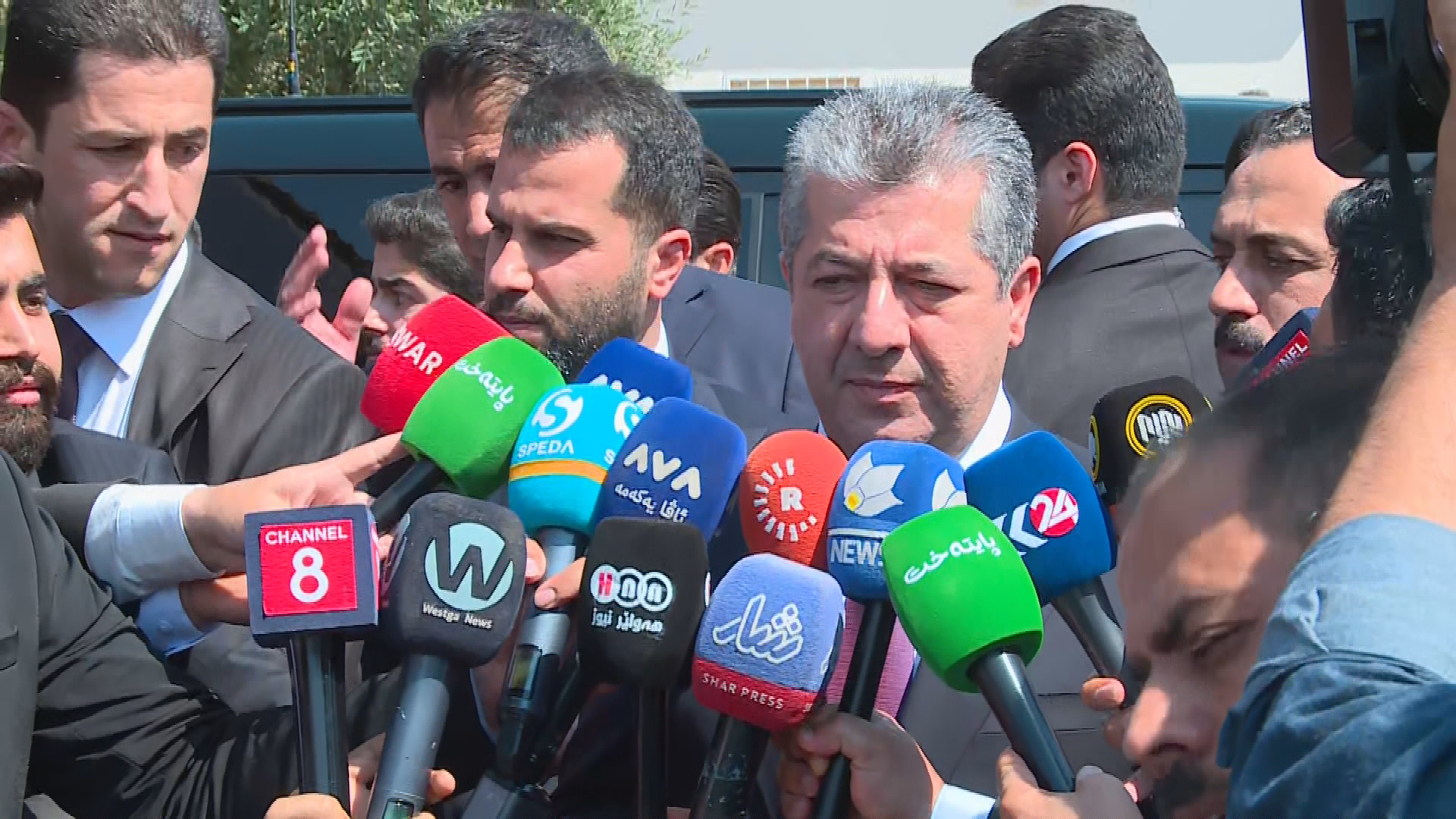
ERBIL (Kurdistan24) - Kurdistan Regional Government (KRG) Prime Minister Masrour Barzani on Tuesday issued his most forceful call yet for the restoration of the region's legislative functions, characterizing the continued suspension of the Kurdistan Parliament as "highly inappropriate" and a barrier to the will of the people.
The Prime Minister's remarks came during a high-stakes diplomatic summit in Erbil with Tom Barrack, the U.S. Presidential Special Envoy for Iraq and Syria.
The meeting, which touched on everything from domestic political gridlock to the shifting geopolitical sands of the Middle East, signaled a renewed push by both Erbil and Washington to stabilize the Kurdistan Region's institutional framework.
Breaking the Domestic Deadlock
The central pillar of the discussion remained the protracted delay in forming the next KRG cabinet. Prime Minister Barzani was unequivocal in his assessment that the path forward must begin within the halls of the legislature.
He pushed back against partisan maneuvering, asserting that the Parliament is a sovereign institution that transcends party politics.
"It is highly inappropriate that the Parliament has not yet been reactivated," Prime Minister Barzani stated following the meeting. "From day one, our position has been clear: the Parliament belongs to the people of the Kurdistan Region, not to any single political party. No one has the right to obstruct its reactivation."
The Prime Minister framed the functional status of the legislature as a prerequisite for any meaningful governance.
By positioning Parliament as the "proper venue for debating diverse viewpoints," Prime Minister Barzani signaled that the administrative transition to a new government can only commence once the constitutional forum for Kurdish democracy is fully operational.
A Strategic Triangle: Erbil, Baghdad, and Washington
Beyond internal Kurdish affairs, the meeting served as a vital platform for aligning the Kurdistan Region with the broader goals of the federal government in Baghdad and its partners in Washington.
Prime Minister Barzani described the talks with Envoy Barrack as "very productive," specifically highlighting the need for a unified approach to the nation's current headwinds.
The discussions focused heavily on refining the mechanisms for coordination with the federal government of Prime Minister Ali al-Zaidi.
According to Prime Minister Barzani, the objective is to create a seamless collaborative framework that can "bolster the economic and security situation" across the country.
This coordination is expected to carry significant economic dividends.
Prime Minister Barzani noted that a primary focus for both the KRG and the U.S. delegation is the expansion of the American corporate footprint in the region.
He emphasized that increasing U.S. investment in Kurdistan is not merely a local priority but a strategic move that "will directly contribute to strengthening the broader Iraqi economy."
Welcoming a Regional Breakthrough
The visit of the U.S. Envoy arrives at a moment of profound diplomatic transformation in the Middle East.
Prime Minister Barzani utilized the meeting to formally endorse the landmark agreement recently reached between Washington and Tehran, a deal that many observers hope will finally de-escalate the regional tensions that have simmered since early 2026.
"We have always stood on the side of peace," the Prime Minister remarked, noting that the KRG views the accord as a "vital step" toward regional tranquility.
For the Kurdistan Region, which has often found itself at the literal and metaphorical crossroads of U.S.-Iran friction, the prospect of a diplomatic off-ramp offers a much-needed window for economic and infrastructural recovery.
The Road Ahead
As the meeting concluded, the message from the Kurdish capital was one of institutional readiness. By placing the onus on the reactivation of Parliament, Prime Minister Barzani has laid out a clear roadmap for the coming months.
The presence of the U.S. Special Envoy in Erbil reinforces the reality that Washington views a stable, functional, and constitutionally empowered Kurdistan Region as essential to its broader Middle East policy.
For Prime Minister Barzani, the task now remains to translate this high-level diplomatic momentum into a domestic political consensus that can finally restart the machinery of Kurdish governance.
|
Summary Prime Minister Masrour Barzani met U.S. Envoy Tom Barrack in Erbil on Tuesday, calling for the immediate reactivation of the Kurdistan Parliament to resolve the political deadlock. Prime Minister Barzani also welcomed the historic U.S.-Iran agreement as a critical milestone for achieving regional peace. |
This article was updated on Tuesday, June 16, 2026, at 03:30pm.