The Architect of an Awakening: How Pîremêrd Forged the Modern Kurdish Soul
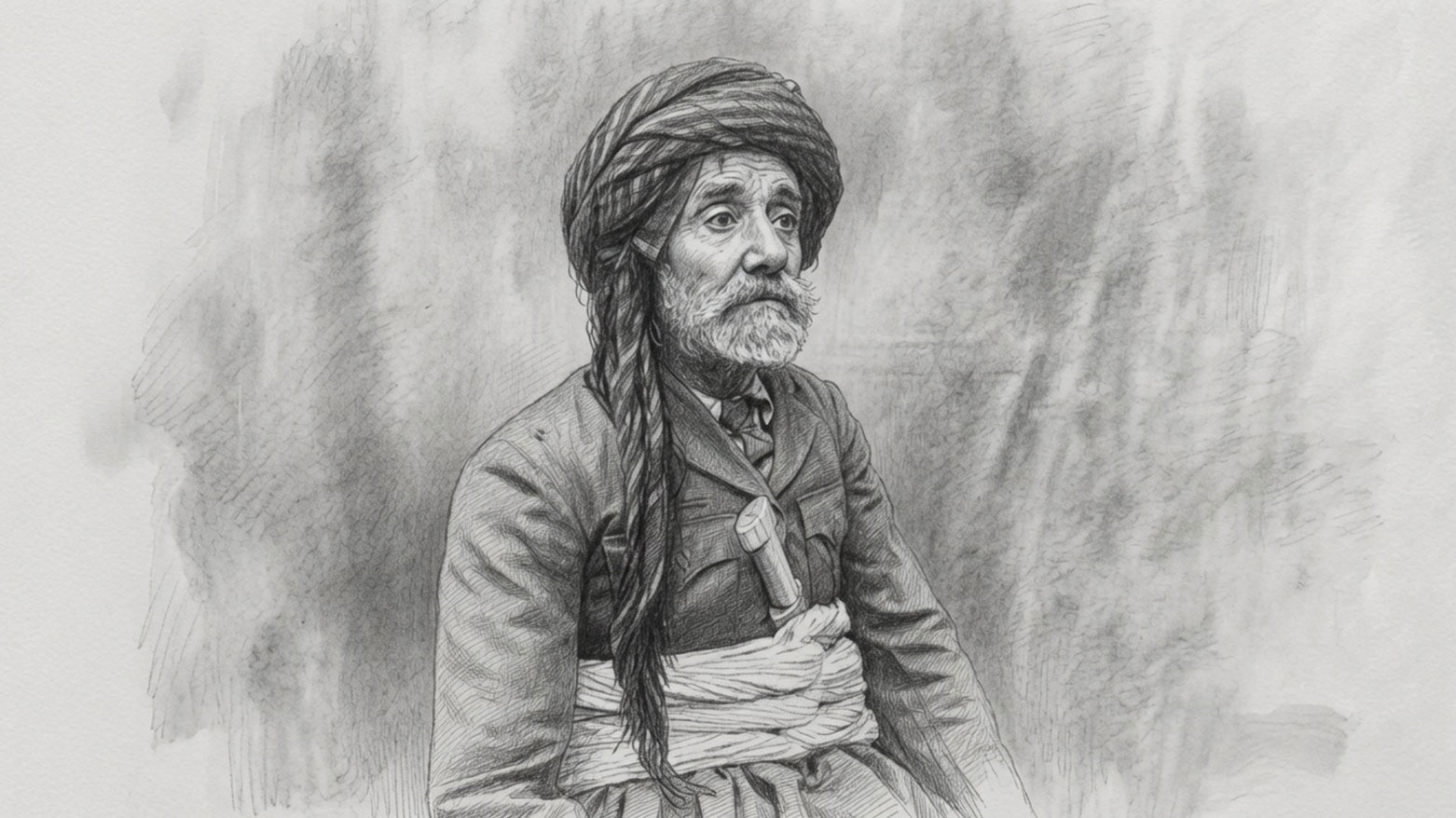
Tawfiq Mahmoud Hamza or known by his pen name Pîremêrd's journey from the halls of Ottoman power to the mountains of Sulaimani redefined Kurdish identity through the dual power of the printing press and the Newroz fire.
ERBIL (Kurdistan24) - Every spring, as the vernal equinox approaches, the rugged peaks of the Kurdistan Mountains glow with countless bonfires. Thousands gather around the flames, their voices rising in a solemn yet triumphant chorus. Together, they sing the timeless anthem made famous by the renowned Kurdish singer Hassan Zirek: "Em rojî salî tazeye, Newroz hatewe..." ("This day of the new year, Newroz has returned").
The song echoes across the mountains and valleys, carrying with it centuries of memory, resilience, and hope, as Kurds celebrate the arrival of Newroz, the Kurdish New Year and a symbol of renewal and freedom.
While the fire is ancient, the modern ritual of its celebration as a pillar of national consciousness owes its life to a single, towering intellectual: Pîremêrd.
Born Tawfiq Mahmoud Hamza in 1867 in the Goizha neighborhood of Sulaimani, the man who would adopt the pen name "Pîremêrd" (The Old Man) did not merely write poetry; he engineered a cultural resurrection.
Before his death on this day, June 19, in 1950, he had transitioned from a high-ranking official in the Ottoman administration in Istanbul to a grassroots reformer who understood that a nation's survival depends less on the sword than on the schoolhouse and the newspaper.
The Fire of Defiance
Pîremêrd's return to Sulaimani after the collapse of the Ottoman Empire marked a decisive turning point in Kurdish history.
During an era of intense political pressure aimed at the assimilation and erasure of Kurdish identity, he recognized that the people needed a symbolic anchor. He chose Newroz.
By encouraging the public to gather on "Mama Yara" hill to light the traditional fires, he transformed a fading folk custom into a formalized national festival. His poem "Newroz" did more than describe a season; it codified the holiday as a "verse of resurrection."
To this day, his words remain the definitive anthem of the Kurdish new year, a testament to his belief that cultural memory, once ignited, cannot be easily extinguished.
A Progressive Vision for Education
Pîremêrd was a didactic intellectual whose work was deeply rooted in the Enlightenment ideals he encountered during his years in Istanbul.
Perhaps his most radical contribution was his early and unwavering advocacy for the education of women. In his poem "O Girls, Come to School," he articulated a vision that was decades ahead of its time.
He argued that "a mother who is lettered, good, and wise" is the true foundation of a "generation bold and grand."
For Pîremêrd, education was not a luxury but an existential necessity. He viewed ignorance as "Kurdistan's dark night" and learning as the "sun, supreme and bright."
By linking female literacy directly to the "forward march of true democracy," he placed himself among the most progressive reformist thinkers of the early modern Middle East. He understood that a nation could not rise if half its population remained in the shadows.
The Pen as a National Vanguard
If poetry provided the soul of Pîremêrd's movement, journalism provided its muscle.
He is regarded by historians as a foundational pillar of the Kurdish press, having taken stewardship of the newspaper Jiyan (Life) before founding his own publication, jîn (Zheen, or in English: Living).
Under his leadership, jîn became more than a news outlet; it was an intellectual sanctuary. He utilized the printing press to disseminate philosophy, social critique, and classical literature, often funding the publication of books at his own personal expense.
He viewed the journalist not as a mere reporter of events, but as a guardian of the language and a teacher to the masses. His "Proverbs of the Ancestors" served as a bridge between the oral traditions of the past and the literate requirements of the modern age.
The Moral Landscape of the Homeland
In his more reflective work, such as "This Pure Soil is So Good to Me" and "So Lofty is the Rank of the Homeland's Soil," Pîremêrd developed a sophisticated concept of patriotism.
Kurdistan appears in his verses not merely as a contested territory, but as a moral and emotional landscape.
He describes the "stainless earth" and "holy springs" as a "haven for the starry-eyed," where love of country is synonymous with an elevated soul.
In "The Constellation of the Kurdish Sun," written in 1945, he examined the historical suffering of the Kurds with a sharp, analytical eye.
He framed the Kurdish struggle as a cyclical movement toward a "golden dawn," placing his faith in the "Prophet's path" of freedom and the inevitable success of democratic ideals.
An Enduring Intellectual Legacy
Pîremêrd's greatest achievement was convincing a fragmented and oppressed people that their liberation lay in self-improvement.
He famously noted that "a sewing needle cannot dig a well," emphasizing that only through the collective accumulation of science and intellect could a land "swell" with prosperity.
As we mark the anniversary of his passing, the legacy of the "Old Man" is visible in every Kurdish classroom, every newsroom in Erbil and Sulaimani, and every fire lit on the mountainsides each March.
He taught that national dignity begins with the preservation of language and the acquisition of knowledge.
Today, Pîremêrd stands not just as a figure of the past, but as a continuing guide for a nation still marching toward the "brilliant flight" of the sun he so eloquently described.
|
Summary Pîremêrd was a monumental figure who revived the Newroz festival, pioneered Kurdish journalism, and championed modern education. His legacy as a poet and reformer transformed Kurdish cultural memory, proving that national dignity is built upon knowledge, literacy, and the power of the pen. |