A Kurdish Surgeon's Pioneering Gene Therapy Wins Russia's Top Medical Honor
Dr. Roni Baha Mai and his team developed a groundbreaking neurosurgical procedure to treat a devastating genetic disorder, offering new hope to children facing severe lifelong paralysis.
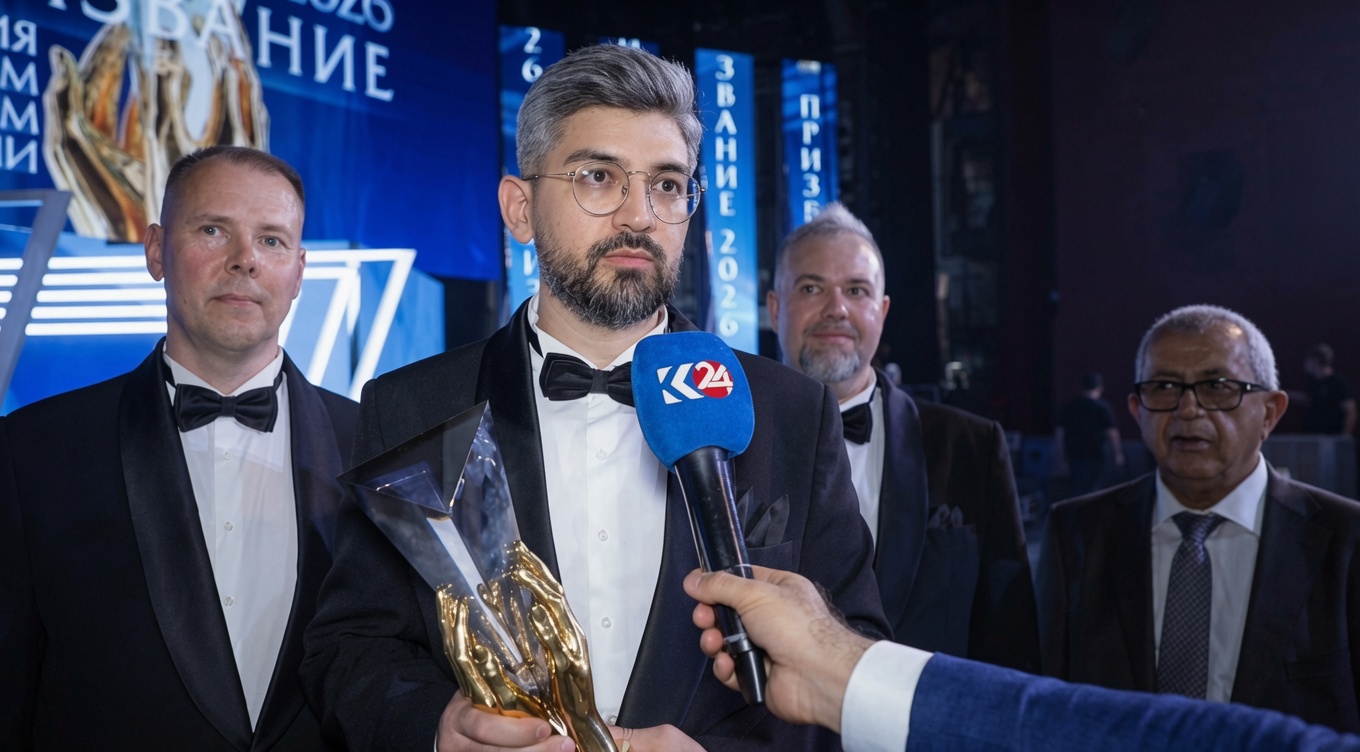
ERBIL (Kurdistan24) - Under the soaring architecture of Moscow's most prestigious ceremonial halls, the highest echelons of the Russian medical and political establishment gathered to honor the nation's most transformative scientific achievements. Among the laureates celebrated at the 2026 Prizvaniye ("Calling") Awards, the country's premier medical distinction, stood Dr. Roni Baha Mai, the sole physician of Kurdish origin to receive the accolade.
Presented in the presence of Deputy Prime Minister Tatyana Golikova and Health Minister Mikhail Murashko, the award recognized Dr. Roni and his team not just for exceptional surgical skill, but for fundamentally rewriting the medical trajectory for children suffering from one of the world's most devastating, and previously untreatable, neurological conditions.
The breakthrough honored by the Russian state centers on a pioneering application of gene therapy in pediatric neurosurgery.
According to an exclusive interview with Kurdistan24 correspondent Khoshavi Mohammed, Dr. Roni's team successfully developed a surgical method to treat Aromatic L-amino Acid Decarboxylase (AADC) deficiency.
AADC deficiency is an exceptionally rare inherited disorder that cripples the central nervous system.
Children born with the condition are unable to produce critical neurotransmitters, notably dopamine and serotonin.
The clinical manifestation of this genetic failure is catastrophic: infants typically experience profound developmental delays, severe movement disorders, debilitating seizures, and feeding difficulties that often necessitate permanent feeding tubes.
Historically, the prognosis was grim, condemning children to profound paralysis, near-total dependence on caregivers, and an agonizingly shortened lifespan.
Dr. Roni's innovation strikes directly at the genetic root of the disease. In accessible terms, the procedure involves surgically navigating into the deepest, most delicate structures of a child's brain to deliver a microscopic payload of healthy, functional genes.
"This surgery, performed here in Russia, utilizes the world's latest technology," Dr. Roni told Kurdistan24. "We surgically introduce healthy genes into the child's brain to replace defective ones, enabling the child to grow and move normally."
To execute this intervention, the surgical team relies on an arsenal of cutting-edge biomedical technology. The procedure utilizes precision imaging, smart-screen guidance systems, and real-time video monitoring.
These tools allow the surgeons to navigate the intricate neural pathways of infants, some under the age of one, and deliver infinitesimal doses of therapeutic genetic material with absolute precision.
The successful implementation of this gene therapy represents a monumental leap forward in pediatric neuroscience.
Dr. Dmitry Ryzhkov, a pediatric surgeon and key member of the team, emphasized the life-or-death stakes of their work in his remarks to Kurdistan24.
"This is a new way to save children who previously faced certain death," Dr. Ryzhkov explained. "Through our team's efforts, we can now perform this surgery on children under the age of one, allowing them to return to a normal life."
The magnitude of the achievement is echoed across the interdisciplinary team that spent years refining the procedure. Anesthesiologist Sergey Grelik described the successful operations as a historic scientific milestone.
"I am honored to have participated in this milestone," Grelik told Kurdistan24, adding that the team plans to continue developing the technique to treat an even broader demographic of patients.
For the global Kurdish diaspora, Dr. Roni's recognition on the stage of the Prizvaniye Awards carries immense symbolic weight. The Kurdish people, numbering in the tens of millions and scattered across the Middle East and Europe, have frequently seen their national narrative defined by conflict and political struggle.
Achievements like Dr. Roni's highlight a parallel narrative: the profound contributions of Kurdish professionals to global scientific advancement, elite institutional research, and humanitarian innovation.
The Prizvaniye Award, established to honor physicians and researchers whose work irrevocably alters patient outcomes, serves as a validation of the grueling research and immense risk undertaken by Dr. Roni and his colleagues.
Gene therapy is widely regarded by the global medical community as the most promising, and challenging, frontier in modern medicine.
By successfully navigating the complexities of neurological gene replacement, the Russian-based team has placed itself at the vanguard of this revolution.
As Dr. Roni stepped off the stage in Moscow, his achievement resonated far beyond the borders of Russia. For families worldwide grappling with the despair of a rare genetic diagnosis, the Kurdish surgeon's breakthrough in a high-tech operating room offers more than just a new medical procedure.
It offers the unprecedented possibility that a child, once destined for a life of severe paralysis, might eventually learn to walk, to play, and to reclaim the childhood they were nearly denied.
|
Summary Dr. Roni Baha Mai, a Kurdish pediatric surgeon, has received Russia's highest medical honor, the Prizvaniye Award. He and his team developed a pioneering gene therapy procedure that delivers healthy genes directly into the brain, treating a rare disorder and saving children from severe paralysis. |