Baghdad to Finalize Cabinet Ahead of Washington Visit as Iraqi Premier Rules Out Re-Election
Iraq's Prime Minister Ali al-Zaidi seeks to project domestic stability by assuring the Kurdistan Region of uninterrupted salary payments while preparing for high-stakes economic talks in the United States.
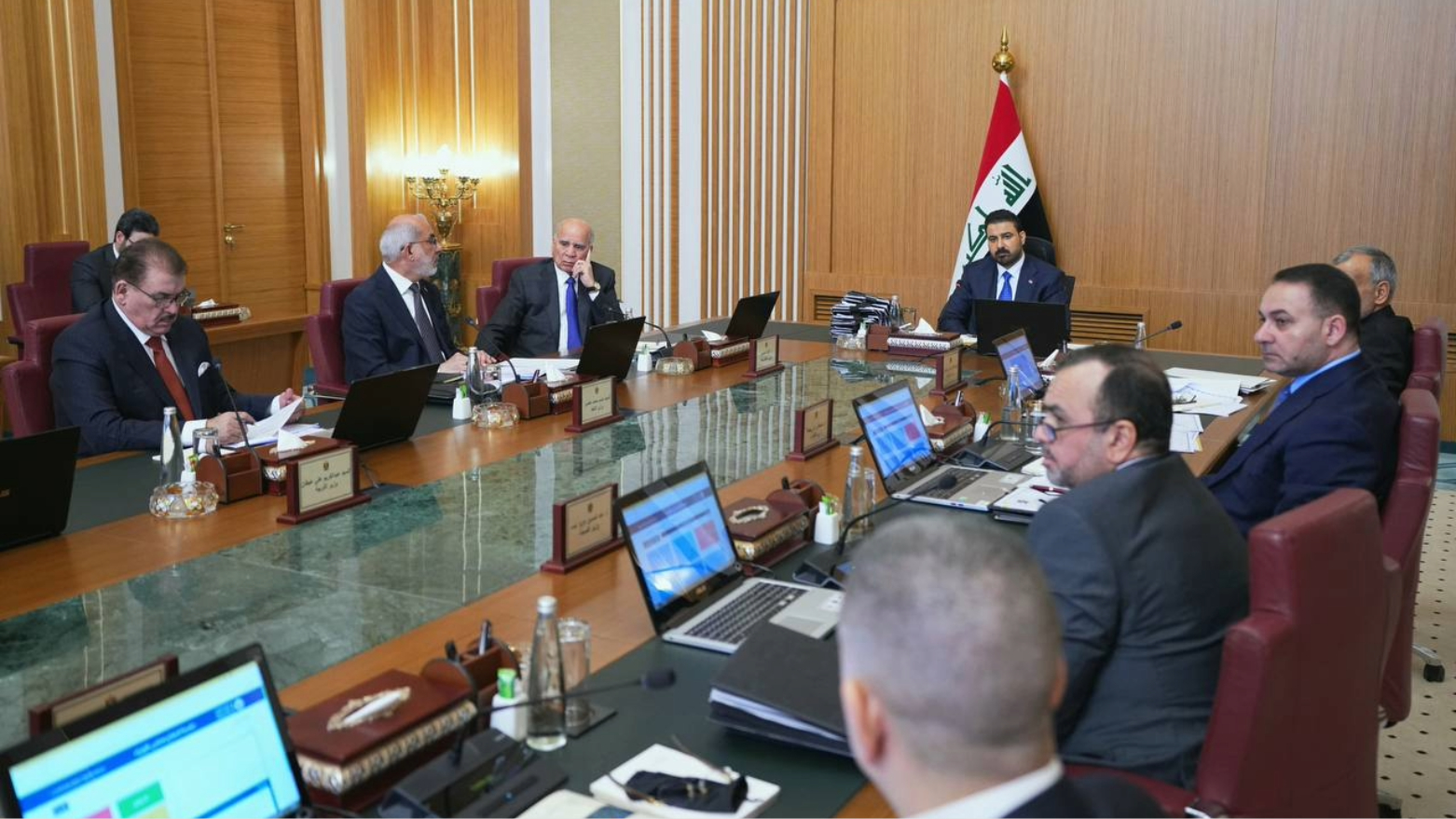
ERBIL (Kurdistan24) - In an outline of the Iraqi government's immediate political and economic agenda, Baghdad has announced that Prime Minister Ali al-Zaidi will finalize his cabinet in the first half of July, just days before embarking on a highly anticipated diplomatic visit to the United States.
The push to complete the government formation coincides with a surprising political declaration: the Prime Minister does not intend to leverage his current position for long-term political dominance.
Addressing reporters during a press conference on Sunday, government spokesperson Haider al-Aboudi stated that al-Zaidi has decided against running as a candidate in future elections and has no plans to establish a new political organization.
The announcement appears designed to cast al-Zaidi as a transitional and reform-focused technocrat, insulated from the fierce partisan maneuvering that traditionally dictates Iraqi electoral politics.
By removing himself from the future electoral calculus, the Prime Minister is attempting to signal that his administration's focus remains squarely on governance, state-building, and economic stabilization.
Diplomacy and Economic Cooperation
That stabilization effort will be tested on the international stage next month. Al-Aboudi confirmed that the ministerial cabinet will be fully staffed before al-Zaidi travels to Washington in mid-July.
The state visit will focus on a range of critical bilateral issues, with a primary emphasis on expanding U.S.-Iraq economic cooperation.
The Washington visit occurs against a backdrop of shifting geopolitical currents.
Asked about the ongoing negotiations between the United States and Iran, the government spokesperson reiterated Baghdad's official stance, noting that Iraq welcomes any diplomatic resolution aimed at de-escalating regional tensions.
For Baghdad, securing foreign direct investment and modernizing its economy relies heavily on maintaining a stable neighborhood, free from the proxy conflicts that have historically paralyzed its development.
Security Reforms and Anti-Corruption Efforts
Domestically, the al-Zaidi administration is pressing forward with a mandate to reassert the state's authority.
Addressing recent changes within Iraq's intelligence and defense apparatus, al-Aboudi clarified that the reshuffles were not punitive. Instead, they are part of a broader strategy to modernize state security institutions and enforce the government's vision that weapons must be held exclusively by the state.
However, the spokesperson emphasized that the most insidious threat to Iraq's institutional integrity does not necessarily come from armed groups, but from systemic graft.
"The Prime Minister views corruption as the single greatest threat to the country and the Iraqi political system," al-Aboudi stated, outlining a critical priority for the remainder of al-Zaidi's term.
To ensure long-term fiscal predictability, al-Aboudi also noted that the government aims to finalize the 2027 draft budget law by October for submission to Parliament, adhering to strict legal and administrative procedures.
Reassuring the Kurdistan Region
As Baghdad attempts to project federal stability, the Prime Minister has moved to alleviate one of the most persistent sources of friction between the federal government and the Kurdistan Region: the timely payment of civil servant salaries.
In an exclusive comment to Kurdistan24 correspondent Dilan Barzan on Sunday, al-Aboudi reaffirmed the federal government's financial commitment to Erbil.
"Prime Minister Ali al-Zaidi informed me today that there are no issues regarding the salaries of civil servants in either Iraq or the Kurdistan Region, and payments will continue to be disbursed on time every month," the spokesperson said.
According to Barzan's reporting from Baghdad, the federal Ministry of Finance has already initiated the funding process for June salaries across federal ministries.
Subsequently, the allocated funds for the Kurdistan Region's civil servants will be transferred to the KRG Ministry of Finance and Economy's account.
Regional authorities in Erbil have already submitted the necessary payroll lists and financial audits for the current month. Once the federal funds are deposited, the KRG plans to distribute salaries to all ministries and public agencies within a streamlined three-day window.
This financial coordination is being bolstered by a massive digital transformation within the Kurdistan Region.
The KRG's "Hejmari Min" (MyAccount) financial inclusion project has reached a major milestone this month, with 900,000 public sector employees now registered in the system. Over 800,000 of those earners are currently receiving their salaries digitally, bypassing the inefficient cash-based systems of the past.
For Prime Minister al-Zaidi, ensuring seamless financial coordination with Erbil and advancing institutional reforms in Baghdad are critical prerequisites for his upcoming trip to Washington.
By attempting to resolve chronic internal disputes and stepping away from future electoral contests, the Iraqi premier aims to present the United States and international investors with a unified, reform-oriented state that is open for business.
|
Summary Iraqi Prime Minister Ali al-Zaidi plans to finalize his cabinet before a mid-July visit to Washington, his spokesperson announced. Zaidi also pledged not to seek re-election, while assuring the Kurdistan Region that monthly civil servant salary disbursements will continue without disruption. |