Crimea Declares Emergency as Ukrainian Drones Overwhelm Russian Skies
The emergency declaration applies to both "the Republic of Crimea and the port city of Sevastopol," per Crimea's Moscow-installed governor Sergey Aksyonov, adding that the emergency situation would allow for a "rapid resolution of tasks related to ensuring the stable operation of all sectors."
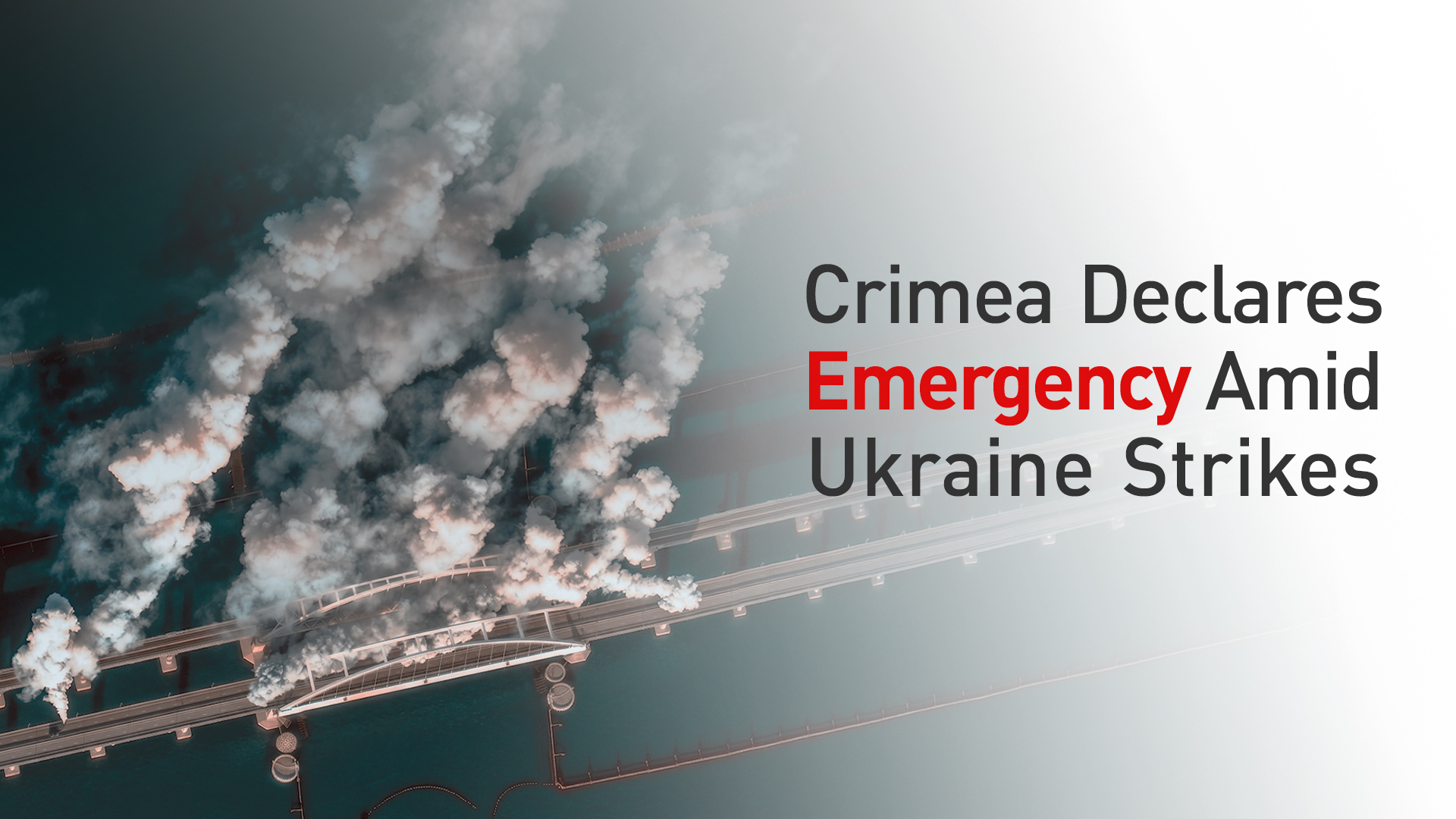
ERBIL (Kurdistan24) - Russian-installed authorities in occupied Crimea have declared a regional state of emergency after a sustained wave of Ukrainian aerial attacks disrupted fuel supplies, damaged infrastructure, and intensified pressure on one of Moscow's most strategically important territories. The move reflects the growing reach of Kyiv's long-range campaign, which is increasingly targeting the logistical backbone supporting Russia's war effort rather than limiting operations to front-line battlefields.
According to an Agence France-Presse (AFP) report from Moscow, the emergency declaration applies to both the Republic of Crimea and the port city of Sevastopol, where Russian officials say the extraordinary measure will accelerate government responses aimed at maintaining essential services amid mounting disruptions.
The announcement follows days of attacks that have reportedly strained fuel distribution networks and contributed to electricity outages across the annexed peninsula and other Russian-controlled areas in southern Ukraine.
Moscow-installed Crimean governor Sergey Aksyonov acknowledged that authorities are confronting significant logistical challenges, describing the fuel situation as particularly difficult while conceding that no air-defense system can guarantee complete protection against increasingly sophisticated aerial attacks.
The declaration highlights how Crimea, annexed by Russia in 2014 but internationally recognized as part of Ukraine, has become one of the central theaters of the broader contest over logistics, military infrastructure, and strategic endurance in the fourth year of the war.
The developments coincide with an apparent expansion of Ukraine's long-range strike campaign beyond Crimea itself.
According to reporting by Lucy Pakhnyuk of The Kyiv Independent, Ukrainian-made Flamingo long-range missiles reportedly struck the Titan-Barrikady defense enterprise in Volgograd, one of Russia's most important military-industrial facilities involved in producing launch systems for strategic and tactical missile complexes.
While Ukrainian military authorities had not officially confirmed the strike, Russian regional officials acknowledged damage to an industrial enterprise following what they described as high-speed aerial attacks.
Taken together, the operations suggest Kyiv is broadening its effort to degrade both Russia's battlefield logistics and its capacity to replenish military equipment far behind the front lines.
Crimea occupies a uniquely important position in Russia's military architecture.
Since its annexation in 2014, Moscow has transformed the peninsula into a heavily fortified military hub hosting naval assets, air bases, logistics centers, fuel depots, and missile systems that have supported operations across southern Ukraine.
For Ukraine, these installations represent legitimate military objectives that sustain Russia's offensive operations. President Volodymyr Zelensky argued that targeting Crimea is integral to restoring what Kyiv considers justice and ending the war, describing efforts to neutralize the peninsula's military role as central to Ukraine's broader strategy.
Russian authorities, meanwhile, portray the attacks as deliberate attempts to undermine civilian life by targeting infrastructure essential to daily functioning. The emergency declaration grants local officials expanded administrative powers intended to ensure uninterrupted operation of public services while accelerating repairs to damaged facilities.
AFP reported that Aksyonov acknowledged Crimea is experiencing one of its most challenging periods since the conflict intensified, particularly regarding fuel availability. Although officials have not disclosed detailed contingency plans, authorities insist emergency measures are designed to stabilize transportation, energy distribution, and other critical sectors.
The deteriorating security situation is also affecting civilian life in ways increasingly visible across the peninsula.
A vacationing Moscow resident interviewed by AFP while staying in Feodosia described nights punctuated by explosions and fear as Ukrainian attacks intensified. She recalled residents praying through the night as explosions illuminated the sky, comparing the spectacle to scenes from science fiction.
Those accounts reflect the changing reality for Crimea, which despite the war has remained a popular domestic tourist destination for Russian visitors. Ukrainian officials have openly framed recent attacks as intended to make military occupation increasingly costly, while also discouraging tourism by highlighting the peninsula's growing insecurity.
The emergency declaration comes against the backdrop of one of Ukraine's largest aerial offensives since Russia launched its full-scale invasion in February 2022.
According to The Associated Press, Russia's Defense Ministry said its air defenses intercepted 660 Ukrainian drones overnight across multiple regions, including Crimea and areas surrounding Moscow. The reported number marked one of the largest drone bombardments since the beginning of the war and reflected Ukraine's rapidly expanding domestic drone capabilities.
The AP reported that Kyiv's strategy increasingly focuses on oil refineries, fuel depots, transportation corridors, naval facilities, and military-industrial infrastructure located deep inside Russian territory.
Western analysts cited by the news agency argue that these attacks seek to complicate Russian logistics, constrain fuel supplies, and increase the economic costs associated with sustaining prolonged military operations.
Alongside drone attacks, Ukrainian security officials also claimed strikes against Russian naval vessels and air-defense radar systems near Kerch, an important Crimean port linking the peninsula with mainland Russia. Those claims could not be independently verified.
The broader campaign appears designed to alter the strategic balance beyond the front lines.
Rather than relying solely on defensive operations inside Ukraine, Kyiv increasingly seeks to project military pressure into Russian territory, forcing Moscow to divert resources toward protecting infrastructure spread across thousands of kilometers.
The reported Volgograd strike fits that evolving approach.
If confirmed, damage to the Titan-Barrikady defense plant would represent another attempt to target Russia's defense-industrial complex, complementing previous attacks on refineries, ammunition depots, logistics hubs, and aviation facilities that Ukrainian officials argue contribute directly to Moscow's military campaign.
Meanwhile, the fighting continues to exact a heavy humanitarian toll on both sides.
The AP reported that Russian attacks across several Ukrainian regions killed civilians and wounded dozens more during the same period, while Ukraine's air force said it intercepted most incoming Russian drones overnight, although several ballistic missiles penetrated air defenses.
Despite continued prisoner exchanges between the two countries, prospects for meaningful negotiations remain limited as military operations intensify.
For Moscow, Crimea retains enormous symbolic, political, and military significance.
President Vladimir Putin has consistently portrayed the peninsula's 2014 annexation as one of modern Russia's defining geopolitical achievements, investing heavily in infrastructure, transportation links, military installations, and economic integration over the past decade.
For Kyiv, however, Crimea remains internationally recognized Ukrainian territory whose occupation continues to underpin Russia's military campaign.
The emergency declaration illustrates how that dispute is increasingly unfolding not only along entrenched front lines, but also through an expanding contest over logistics, industrial production, and strategic depth, one that now reaches from the shores of the Black Sea to Russia's military factories hundreds of kilometers from the battlefield.
|
Summary Russian-installed authorities in Crimea have declared a regional emergency as escalating Ukrainian strikes disrupt fuel supplies, power infrastructure and military logistics. The developments underscore Kyiv's expanding long-range campaign and the growing strategic pressure on Moscow. |