Kurdistan Will Not Shelter Corruption Suspects, Asserts Senior KDP Official Hoshyar Zebari
Senior KDP official Hoshyar Zebari emphasizes the Kurdistan Region's role as a democratic refuge while confirming it will not harbor corruption suspects.
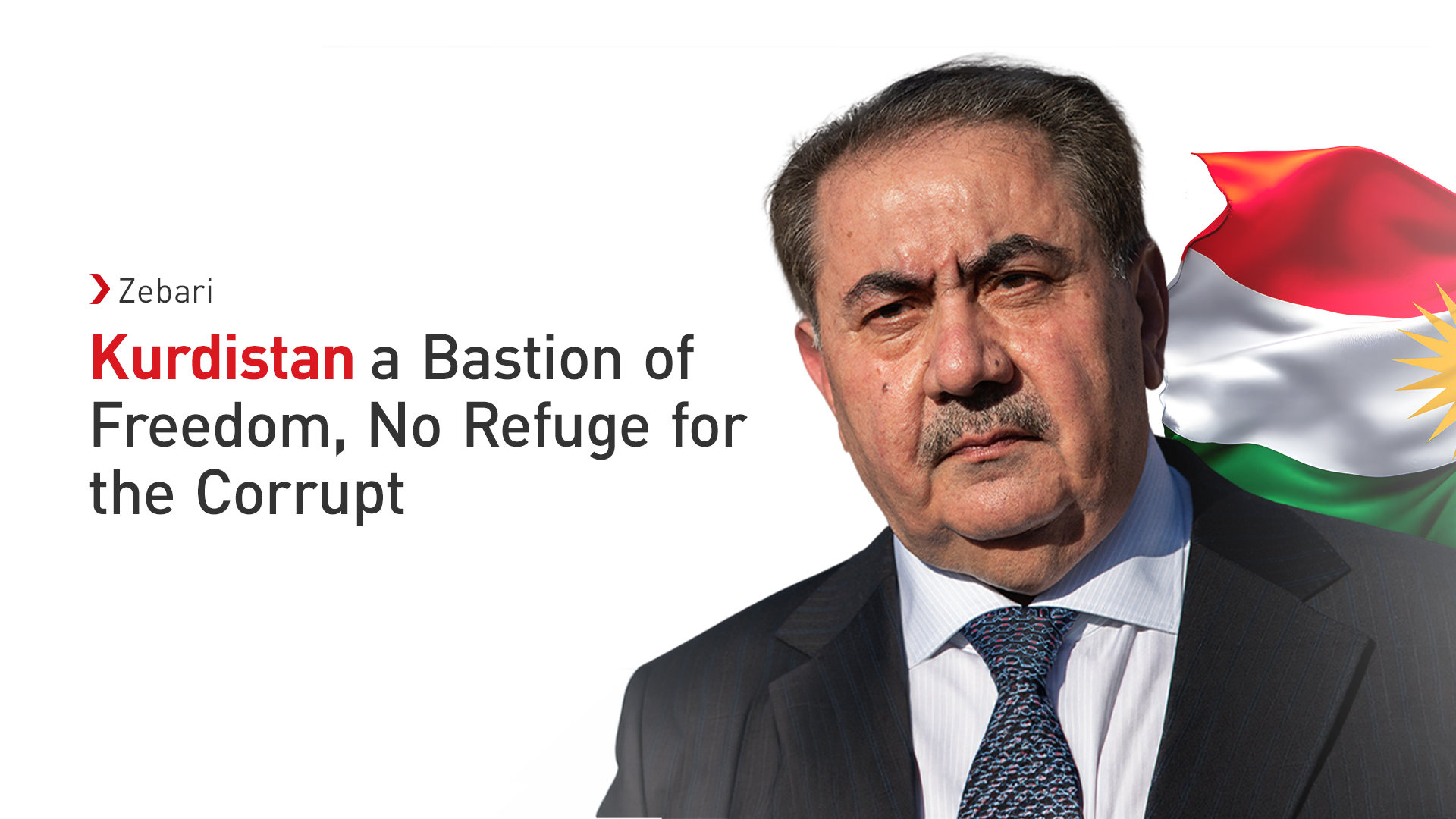
ERBIL (Kurdistan 24) - Within the complex constitutional architecture of Iraqi federalism, the Kurdistan Region has historically occupied a distinct and carefully guarded space. For decades, it has been internationally and domestically recognized as a sanctuary, a secure environment for political dissidents, civil society activists, marginalized communities, and those fleeing systemic repression. Yet, as federal authorities in Baghdad launch an expansive legal campaign against entrenched graft, a senior Kurdish leader has intervened to clearly define the boundaries of that historical refuge.
On Monday, Hoshyar Zebari, a senior member of the Kurdistan Democratic Party (KDP) Politburo, issued a public declaration that articulated the region's contemporary political identity.
Writing on his official X (formerly Twitter) account, Zebari affirmed that the Kurdistan Region remains a steadfast "citadel of freedom and democracy in Iraq." His statement served as both a reaffirmation of the region's foundational democratic principles and a strategic, legally minded response to the shifting judicial landscape unfolding across the nation.
Zebari's remarks require careful examination, as they encapsulate the dual responsibilities of the Kurdistan Regional Government (KRG) within the broader federal framework.
For years, the provinces of Erbil, Sulaimani, and Duhok have operated as vital safe havens for Iraqi activists and victims of human rights violations. When independent voices have faced intimidation, or when political dissidents have required shelter from persecution, the Kurdistan Region has consistently provided an environment governed by the rule of law and constitutional protections.
This heritage is woven into the very fabric of the region's identity, reflecting a governance model that intimately understands the profound cost of authoritarianism and systemic disenfranchisement.
However, Zebari moved swiftly to clarify that this tradition of hospitality contains a strict, non-negotiable caveat.
The constitutional right to refuge, he emphasized, is entirely distinct from providing immunity for criminal conduct. Delivering a categorical warning, the KDP official stated that the Kurdistan Region will never allow its territory to be utilized as a sanctuary for criminals, individuals who embezzle public resources, or those complicit in systemic corruption.
By drawing this sharp conceptual line, Zebari addressed a critical issue of institutional credibility.
His comments assert that protecting human rights and defending political expression do not extend to shielding fugitives from lawful prosecution. By delineating the parameters of sanctuary, Zebari is effectively solidifying the KRG's commitment to administrative transparency.
Furthermore, his statement reinforces Erbil's willingness to respect the jurisdictional authority of federal courts and cooperate fully when constitutional due process is rigorously observed.
This significant political declaration arrives at a highly sensitive moment in Iraqi governance.
Early Sunday morning, federal security forces, operating under the explicit directives of the Supreme Judicial Council, initiated a sweeping law enforcement operation in Baghdad. The initiative was designed to address alleged misconduct within various administrative levels of the state apparatus.
Addressing the Council of Ministers shortly after the operation commenced, Iraqi Prime Minister Ali Falih al-Zaidi confirmed that the current wave of arrests represents only the "first stage" of a comprehensive governmental strategy.
Read More: Iraq Prime Minister Vows No Mercy in Stage One of Corruption Crackdown
According to official statements, this federal sweep resulted in the detention of forty-seven suspects, a roster that reportedly includes sitting lawmakers and senior administrative officials.
Rather than framing this initiative as the achievement of a single political figure, the federal government has presented the campaign as a synchronized, institutional effort. The Iraqi judiciary, the Counter-Terrorism Service (CTS), and key oversight bodies are coordinating to enforce accountability.
The central objective remains the protection of public funds and the strengthening of state authority, vital steps toward improving the delivery of public services and executing strategic development projects across the country.
Importantly, the federal judiciary is navigating this complex undertaking while maintaining the fundamental presumption of innocence, ensuring that all allegations are tested through established, transparent legal mechanisms.
The practical implications of Zebari's demarcation between political refuge and criminal evasion were vividly demonstrated just hours before his public statement. In a clear display of institutional coordination, Kurdish security forces facilitated the transfer of individuals wanted under federal judicial warrants.
At the Sherawa checkpoint, operating under the precise requirements of the law, KRG authorities formally handed over three notable suspects, Ziyad al-Janabi, Hind al-Abbasi, and Mohammed al-Mayahi, to federal security personnel.
Read More: Kurdistan Region Arrests Three Corruption Suspects, Hands Them Over to Baghdad
As previously reported by Kurdistan24 correspondent Hoshmand Sadiq, this transfer was executed following a formal legal request from the federal government and the Federal Integrity Commission.
The meticulous execution of this handover, complete with the necessary administrative and legal protocols, illustrates a maturing judicial relationship between Erbil and Baghdad. It provides immediate, tangible evidence supporting Zebari's assertion: the KRG is not merely issuing rhetorical commitments to the rule of law, but is actively participating in its nationwide enforcement.
This cross-jurisdictional collaboration highlights the practical functionality of Iraq's federal constitution when institutions operate in tandem.
The alignment of Zebari's political messaging with the concrete actions of Kurdish security forces sends a unified and powerful signal regarding Erbil’s role in modern Iraq.
The Kurdistan Region's leadership clearly recognizes that maintaining its hard-earned reputation as a bastion of democracy requires rigorous adherence to overarching legal standards.
By firmly refusing to harbor those accused of compromising the public trust, Erbil reinforces its own institutional legitimacy while simultaneously supporting Baghdad's constitutional mandate to hold public officials accountable.
Ultimately, Hoshyar Zebari's remarks transcend standard political commentary; they establish a sophisticated framework for intergovernmental cooperation based on mutual respect for the law.
As the federal judiciary continues to investigate and address networks of alleged financial misconduct, the Kurdistan Region has positioned itself as an indispensable partner in the pursuit of justice and governmental reform.
This cooperative stance ensures a stable balance of principles.
While the Kurdish provinces will permanently remain open to those seeking political freedom and protection from oppression, the gates are firmly closed to those attempting to escape the consequences of criminal activity.
Through this principled approach, the Kurdistan Region continues to uphold its proud democratic heritage without compromising the broader national imperative of institutional integrity and judicial accountability.
|
Summary Senior KDP official Hoshyar Zebari reaffirmed the Kurdistan Region as a democratic sanctuary for the oppressed while strictly ruling out shelter for those facing federal corruption charges. His remarks highlight Erbil's commitment to the rule of law and judicial coordination with Baghdad in Iraq. |