KRG Seeks Wider Role in Migrant Smuggling Fight at UNODC Vienna Meeting
Dr. Dindar Zebari outlined the Kurdistan Region's legal, humanitarian and security approach as international cooperation against smuggling networks takes center stage.
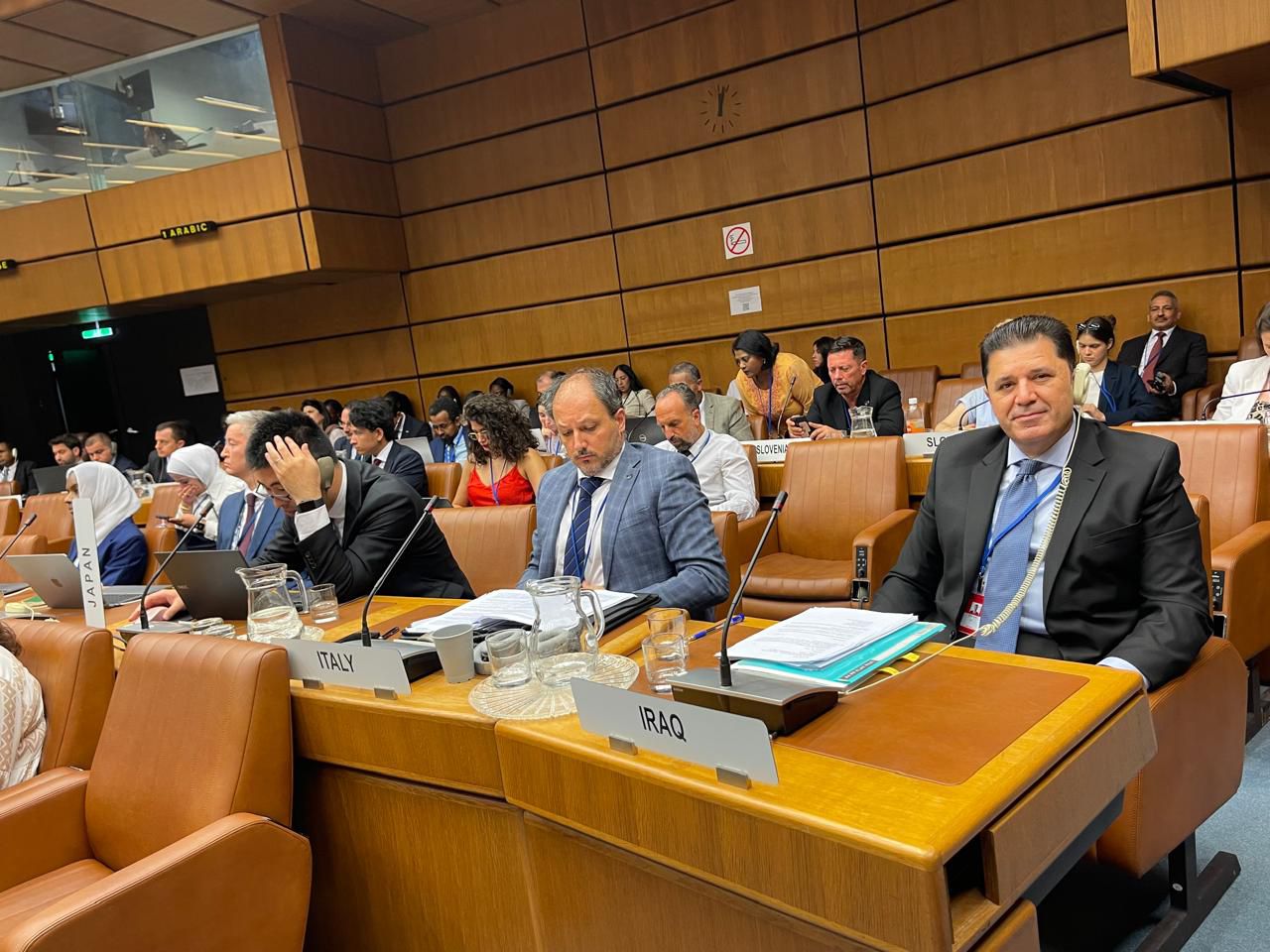
ERBIL (Kurdistan24) – In Vienna this week, the Kurdistan Regional Government placed one of its most persistent transnational challenges before a global audience: how to confront migrant smuggling without confusing criminal networks with the people they exploit.
At the 13th meeting of the Working Group on the Smuggling of Migrants, held at the United Nations Office on Drugs and Crime, Dr. Dindar Zebari, the KRG Coordinator for International Advocacy, used his remarks to present the Region's approach as a combination of law enforcement, judicial coordination, human-rights commitments and international partnership.
His participation, as part of the Iraqi federal delegation, reflected a broader effort by the Kurdistan Region to position itself not merely as a local authority responding to irregular migration, but as an institution working within multilateral frameworks to confront organized crime across borders.
The venue itself mattered. The UNODC is one of the central international bodies shaping cooperation on criminal justice, border integrity and the protection of vulnerable groups, and the Vienna forum offered a setting in which the Kurdistan Region could argue that migrant smuggling is best addressed through shared legal standards rather than isolated enforcement.
Zebari's message was framed around that principle. He said the KRG's policies continue to evolve in line with the recommendations of the UN Human Rights Council’s 2025 Universal Periodic Review, which encouraged states to strengthen protections while combating abuse by smugglers and traffickers.
That connection placed the Region's anti-smuggling strategy within a broader international legal conversation, one that treats migration as a humanitarian, security and governance issue at once.
The Region's legal framework, as he described it, extends from Kurdish legislation to federal Iraqi law and international commitments. Regional Law No. 6 of 2018 provides a domestic basis for penalties tied to smuggling-related offenses.
Federal instruments, including the amended Iraqi Penal Code No. 111 of 1969, the Foreigners' Residency Law No. 76 of 2017 and the Passport Law No. 32 of 2015, reinforce that framework.
Zebari also pointed to Iraq's adherence to the Palermo Convention, underscoring that the Region's enforcement policy is aligned with the wider architecture of international anti-organized-crime law.
That legal architecture matters because the challenge itself is rarely local. Smuggling networks move people, money and documents across borders, often using multiple transit points and financial intermediaries.
The Region's own record, as Zebari outlined in Vienna, shows how law enforcement cases can intersect with foreign nationals, transnational routes and cross-border investigations.
He said that in 2024, authorities registered 114 cases linked to illegal migration smuggling, with suspects including 65 foreign nationals from several countries.
The government's response, according to Zebari, has increasingly focused on dismantling the networks behind the movement rather than treating migration itself as a crime. That distinction is central to the KRG's public stance.
Migrants, asylum seekers and people pushed into irregular movement by economic desperation or conflict are not the target; the focus is on the organizers, facilitators and profiteers who expose them to danger.
The consequences of that distinction were visible in some of the cases Zebari referenced. In 2024, Kurdish security forces arrested four people tied to a boat disaster off Italy that left more than 64 people dead.
A year later, authorities dismantled another international network that had been moving migrants through yachts and complex financial arrangements.
Those examples point to a pattern familiar across Europe and the Middle East: smuggling operations are rarely improvised; they are structured businesses that combine transport, money transfer and false assurances of safe passage.
The same logic shaped the emergency response that followed the Italy tragedy. Under instructions from Prime Minister Masrour Barzani, a crisis operations room was established, and a specialized team was sent to coordinate with Italian authorities, assist survivors and help repatriate the remains of the dead.
The episode became a reference point for the Region's evolving policy, showing that a response to migrant smuggling can include police work, consular coordination and humanitarian support at the same time.
Zebari also revisited the 2021 Belarus-Poland border crisis, when thousands of migrants, including people from the Kurdistan Region, were stranded in harsh conditions. He said those travelers had departed legally by air through transit points, not directly from regional airports, and warned against turning the episode into a political weapon.
His remarks were a reminder that migration crises often become arenas of blame long after the original movement of people has been shaped by smugglers, brokers and false promises. In that sense, the Region's message in Vienna was as much about protecting dignity as about asserting administrative responsibility.
International cooperation, he argued, is essential if that balance is to hold.
Among the examples he cited was a 2024 security agreement with the United Kingdom, described by the KRG as the first of its kind globally, aimed at curbing irregular migration and improving border security between Iraq, the Kurdistan Region and the UK.
The arrangement includes support for training, border management, awareness campaigns and voluntary return programs, suggesting a model built on prevention as much as enforcement.
The Region's engagements with Libya, Tunisia and other partners formed another part of that picture.
Zebari said more than 319 people were repatriated from Libya and Tunisia in 2025, and that another 197 migrants detained in Libya were later handled through a high-level joint committee in early 2026.
He also said that in summer 2025, about 300 people from the Region were abducted and tortured by Libyan militias demanding ransom payments. Those accounts reinforced a central truth of the smuggling trade: the journey itself can become a site of extortion, violence and abuse long before a migrant reaches a destination.
By placing those experiences before UNODC delegates in Vienna, the KRG sought to situate its own policy within a larger international effort to protect human dignity while prosecuting organized criminal networks.
That approach depends on more than border controls. It requires judicial cooperation, intelligence sharing, victim-sensitive procedures and sustained support from international partners. Zebari's remarks suggested that the Kurdistan Region sees itself as part of that architecture, not outside it.
His message in Vienna was ultimately a pragmatic one. Smuggling networks cross jurisdictions; the response must do the same. And if the international system is to reduce the human cost of irregular migration, it will need to match enforcement with protection, and sovereignty with cooperation. The KRG, at least in its presentation in Vienna, is asking to be judged by that standard.
|
Summary Dr. Dindar Zebari represented the KRG at a UNODC meeting in Vienna, outlining the Region's legal and humanitarian approach to migrant smuggling. His remarks highlighted international cooperation, UPR commitments, anti-smuggling cases and efforts to protect migrants from criminal networks. |