Restoration begins at Damascus Jewish cemetery as Syria's Jewish heritage sees cautious revival
Project follows Assad's ouster as returning Syrian Jews reconnect with ancestral sites amid pledges to protect minority heritage
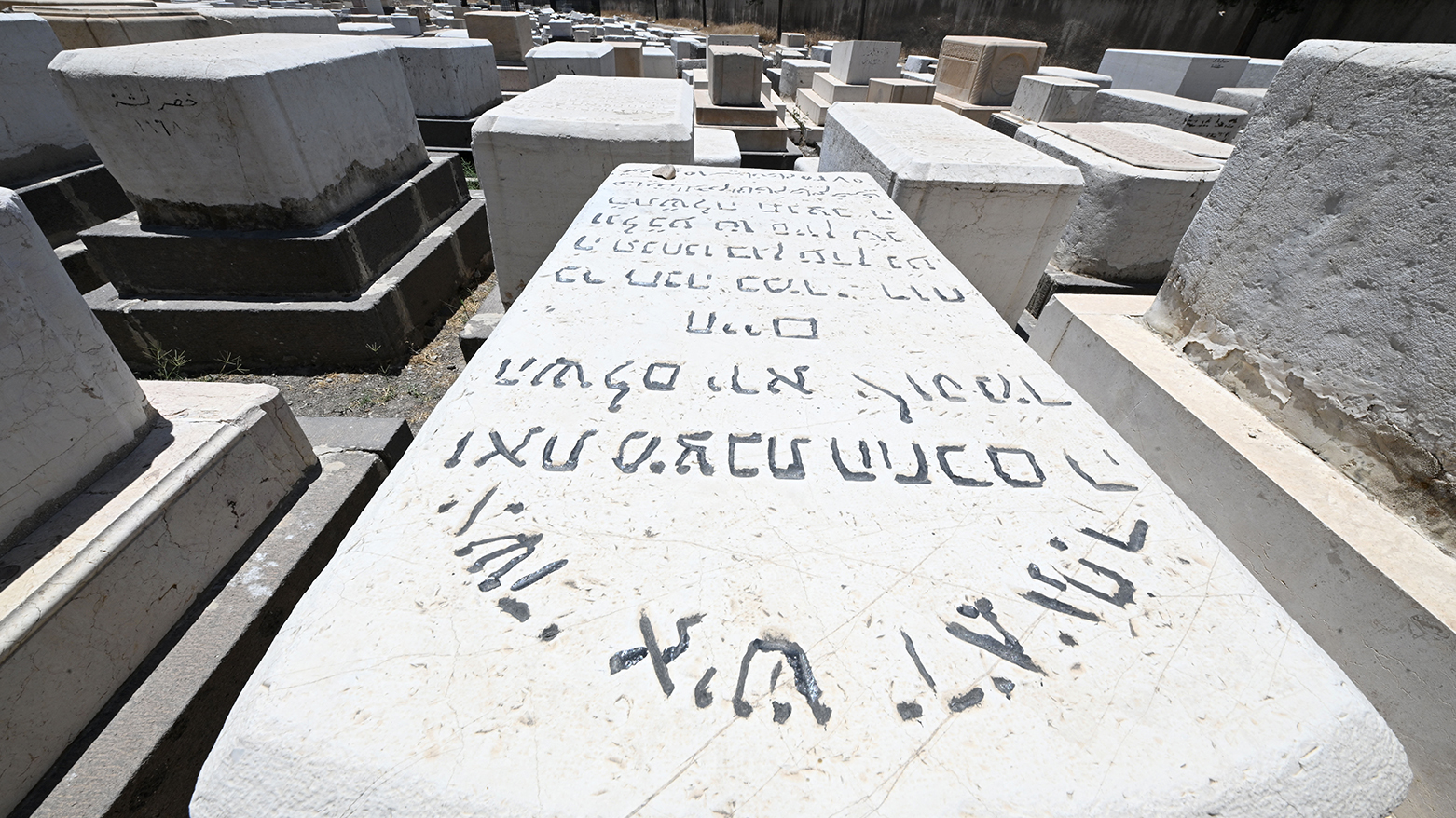
ERBIL (Kurdistan24) — Restoration work has begun at Damascus's main Jewish cemetery, marking a significant step in efforts to preserve Syria's dwindling Jewish heritage as members of the diaspora cautiously reconnect with their ancestral homeland following the ouster of former president Bashar al-Assad.
The restoration project is being led by the Syrian Mosaic Foundation, whose founder, Syrian-American businessman Joe Jajati, said work is already underway to clean the historic cemetery and stabilize deteriorating graves.
Located along the airport road on the outskirts of the Syrian capital, the cemetery contains hundreds of tombs bearing Hebrew inscriptions. According to Jajati, restoration efforts include repairing the cemetery's outer walls and installing lighting and surveillance cameras, with those works expected to be completed next month.
"The cemetery wasn't damaged during the war," Jajati said, referring to the Syrian civil war that began in 2011. He added that the last burial at the site took place around a year and a half ago.
Jajati, whose grandfather was a Syrian rabbi, said he has traveled repeatedly from the United States to Damascus in recent months to oversee the project. He noted that visits to the cemetery had largely ceased for decades but resumed after Assad's removal from power in December 2024.
Since then, members of Syria's Jewish diaspora have returned to inspect family properties, visit synagogues, and pay respects at ancestral graves, reflecting a broader effort to reconnect with a community that once formed an integral part of the country's religious and cultural landscape.
Syria's Jewish population has declined dramatically over the past several decades. Under former president Hafez al-Assad, the community was permitted to practice its religion but was largely prohibited from leaving the country until travel restrictions were lifted in 1992. At that time, Syria was home to roughly 5,000 Jews, but emigration rapidly reduced the population to only a handful of residents today.
The outbreak of the Syrian civil war in 2011 further accelerated the community's decline. Many synagogues closed, and visits by Syrian Jews living abroad became increasingly rare as the conflict engulfed much of the country.
Following Assad's ouster, Syria's new Islamist-led authorities have sought to reassure the country's religious and ethnic minorities by pledging to safeguard their rights and preserve their places of worship and communal property.
As part of those efforts, authorities granted official recognition last December to a Jewish-Syrian organization tasked with pursuing the return of properties confiscated by previous governments.
Signs of renewed communal life have also begun to emerge. In February last year, Jews still living in Damascus joined members of the diaspora for a group prayer at the historic Faranj Synagogue in the city's Old City—the first such gathering there in more than three decades.
The cemetery restoration is seen as another symbolic milestone in preserving Syria's Jewish legacy, even as the community itself remains one of the smallest and most diminished religious minorities in the country after years of conflict, displacement, and emigration.