KDP Official Pushes Back on 'Power Shift' Narrative, Says Ballot Box Alone Determines Political Legitimacy
"If they both think they have equal or more seats than KDP why they are not genuinely coming forward to reactivate the parliament and negotiate on every thing within parliament," Dr. Hemn Hawrami, a member of the Kurdistan Democratic Party (KDP) Politburo said.
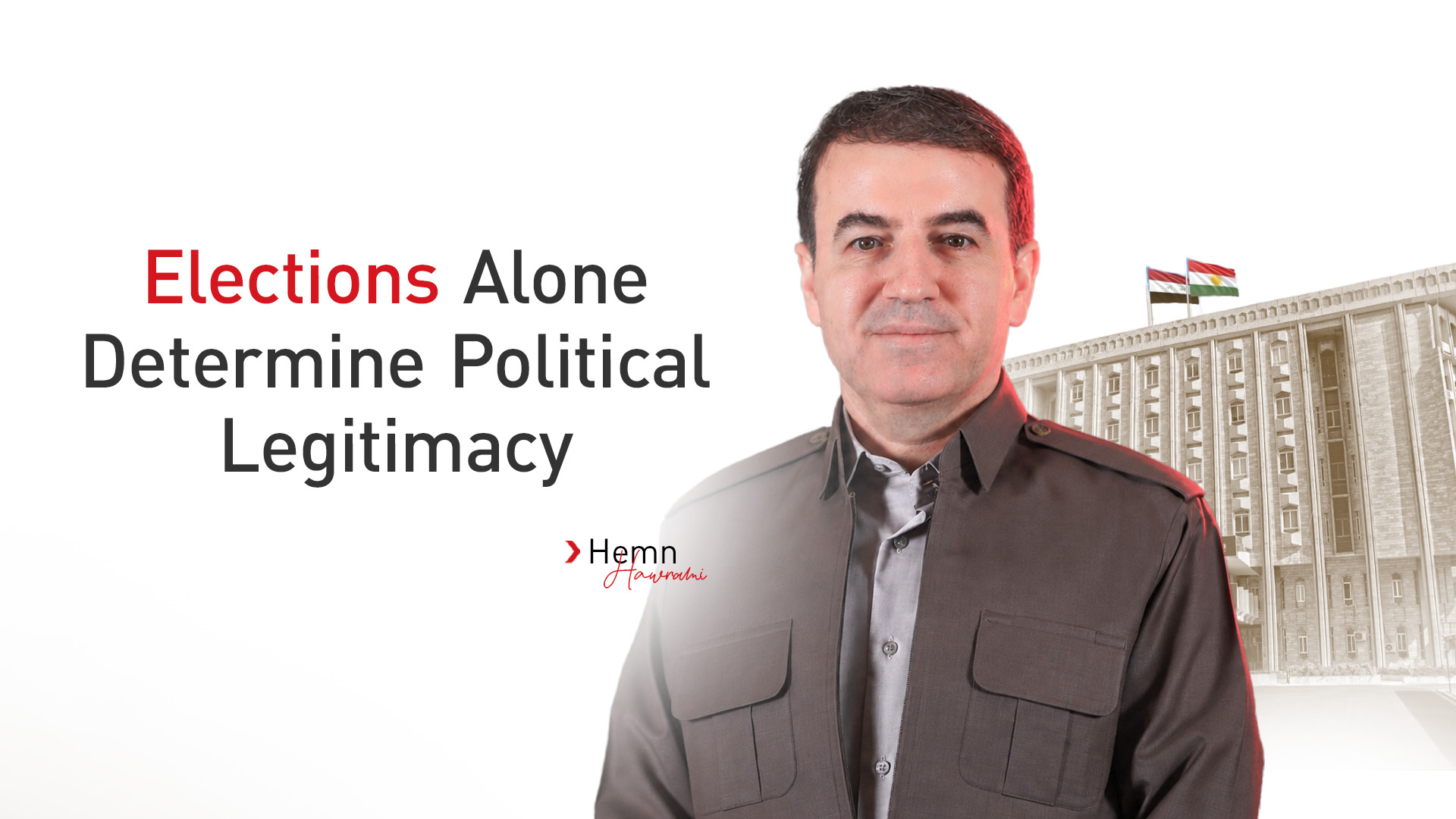
ERBIL (Kurdistan24) - A fresh political debate over the future balance of power in the Kurdistan Region intensified on Friday after Dr. Hemn Hawrami, Deputy Speaker of the fifth-term Kurdistan Parliament and a member of the Kurdistan Democratic Party (KDP) Politburo, forcefully rejected suggestions that recent political alignments have altered the Region's electoral landscape, insisting that democratic legitimacy remains rooted exclusively in the ballot box.
In a statement posted on his official X account, Hawrami argued that "the only legitimate source of power shifting is the votes of our people in free, fair and transparent democratic elections," directly responding to growing commentary surrounding the newly announced political alliance between the Patriotic Union of Kurdistan (PUK) and the New Generation Movement (NGM).
The remarks represent the KDP's clearest public rebuttal yet to assertions made by several analysts that the political equilibrium in the Kurdistan Region may be changing as coalition negotiations remain stalled months after parliamentary elections.
Hawrami pointed to the November parliamentary vote as the principal measure of political legitimacy, noting that the KDP secured more than 400,000 additional votes than the combined total received by both the PUK and New Generation.
"Just as recently as Last November, we as KDP won more than 400,000 votes over both PUK and New Generation combined in the Kurdistan Region," Hawrami said.
He questioned why, if the alliance believes the political balance has fundamentally shifted, it has not moved swiftly alongside the KDP to reactivate parliament and begin formal negotiations over government formation.
According to Hawrami, any claim of changing political influence should ultimately be tested through parliamentary engagement rather than public messaging.
"If they think power is shifting why they don’t dare to come along with us to reactivate the parliament as soon as in the coming days," he said, adding, "If they both think they have equal or more seats than KDP why they are not genuinely coming forward to reactivate the parliament and negotiate on every thing within parliament."
The only legitimate source of power shifting is the votes of our people in free, fair and transparent, democratic elections. Just as recently as Last November, we as KDP won more than 400,000 votes over both PUK and New Generation combined in the Kurdistan Region. However if they… https://t.co/DOgy0gC8EX
— Dr. Hemn Hawrami (@heminhawrami) July 2, 2026
His comments come against a backdrop of mounting international and domestic discussion about prolonged delays in establishing the Kurdistan Region's next cabinet and the implications of the PUK-New Generation partnership for negotiations among the Region's principal political forces.
The debate has intensified after international observers, including veteran regional analyst Amberin Zaman, argued that prolonged political deadlock risks creating deeper divisions inside the Kurdistan Region if the two dominant parties fail to reach agreement on a governing coalition.
While Hawrami rejected the notion that political alliances alone can redefine electoral legitimacy, the discussion reflects broader questions over how parties intend to translate parliamentary arithmetic into an operational government.
Political Pressure or Parliamentary Strategy?
Additional perspective emerged during a recent Kurdistan24 television interview on Thursday in which political commentator and former senior official Dr. Mohammed Ihsan discussed the implications of the new alliance with Kurdistan24 news anchor Kovan Ezzat.

Throughout the interview, Ihsan repeatedly stressed that any political agreement should ultimately be judged by whether it contributes to restoring the functioning of Kurdistan's institutions after an extended period of parliamentary inactivity.
He described the prolonged suspension of both parliamentary work and government formation as damaging for the Region, particularly at a time when Iraq and the wider Middle East are experiencing profound political and security changes.
While acknowledging that political parties possess the democratic right to form alliances, Ihsan questioned whether the current partnership was primarily designed to facilitate governance or to increase negotiating leverage over the KDP.
He suggested that, despite public declarations emphasizing cooperation, the alliance appears largely intended as a political pressure mechanism aimed at strengthening bargaining power during future government negotiations.
At several points during the interview, Ihsan expressed skepticism regarding the motivations behind the agreement, saying he hoped it would ultimately serve Kurdistan's interests but believed its immediate objective was likely to improve each party's negotiating position rather than accelerate institutional recovery.
He also argued that neither the KDP nor the PUK is realistically capable of forming a stable regional government without the participation of the other, given the intertwined political, security and administrative realities that have shaped governance in the Kurdistan Region for decades.
According to Ihsan, regardless of coalition tactics, the electoral map continues to demonstrate that cooperation between the Region's two largest parties remains indispensable if political stability is to be preserved.
Electoral Legitimacy Versus Coalition Politics
Hawrami's statement directly engages this broader debate.
Rather than focusing on coalition arithmetic alone, his argument centers on the principle that electoral mandates, not post-election political arrangements, constitute the foundation of democratic authority.
By emphasizing the KDP's electoral performance, Hawrami sought to reinforce the party's claim that any future government must accurately reflect the preferences expressed by voters during the November elections.
His comments also implicitly challenge suggestions that new alliances automatically translate into altered political legitimacy without first being tested through parliamentary procedures.
This distinction has assumed growing importance as negotiations continue over reactivating the Kurdistan Parliament before broader cabinet formation talks can proceed. The impasse has not been due to an absence of political will to restore the legislature. Kurdistan Region Prime Minister Masrour Barzani has consistently and publicly called for parliament to reconvene, underscoring that its reactivation is an essential prerequisite for moving the wider political process forward.
Read More: PM Barzani: No Justification for Delaying Kurdistan Region Parliament's Reactivation
Hawrami's invitation for rival parties to reconvene parliament and negotiate inside the legislative chamber reflects the KDP's argument that institutional mechanisms, rather than competing public narratives, should determine the next phase of government formation.
Public Skepticism Reflects Broader Frustration
Beyond the exchanges between political leaders, reactions gathered by Kurdistan24 from citizens suggest that the emerging alliance between the PUK and New Generation has been met with considerable skepticism among segments of the public, many of whom view the development less as a pathway toward resolving the political deadlock than as another maneuver in Kurdistan's prolonged struggle over power-sharing.
Several interviewees questioned whether the agreement would translate into tangible improvements for ordinary citizens, arguing that the Region's most pressing need remains the restoration of functioning institutions rather than the formation of new political blocs.
One resident dismissed the alliance outright, saying it resembled previous opposition arrangements that ultimately failed to produce meaningful political change.
"That agreement immediately fell apart. They want to use it to put pressure on the KDP. It is not an agreement for the nation," he said.

Another interviewee similarly argued that any breakthrough capable of ending the institutional paralysis would ultimately require direct understanding between the Kurdistan Democratic Party (KDP) and the Patriotic Union of Kurdistan (PUK), the two parties that have traditionally shared responsibility for governing the Region.
"If there is an agreement, it should be between the parties that actually run the country, and it must be for the benefit of the people," he told Kurdistan24.

Others linked the timing of the alliance to the imprisonment of New Generation leader Shaswar Abdulwahid, suggesting the circumstances surrounding its announcement complicated public perceptions of its political objectives.
One citizen remarked that the agreement appeared to have emerged "under a great deal of pressure," adding that he did not believe it served the broader public interest or would ultimately succeed.

Another respondent went further, alleging that external actors were influencing political developments inside the Kurdistan Region and warning that continued political fragmentation could further delay the formation of a new cabinet.
"The people need agreement and good governance. If these policies continue, the government cannot be formed," he said.

Among younger participants interviewed by Kurdistan24, several expressed broader disappointment with the trajectory of opposition politics in the Kurdistan Region.
One voter argued that opposition parties frequently campaign on promises of sweeping reform only to adopt different priorities once elections conclude.
"The slogans during election campaigns and what happens afterward are not the same. That is why many young people have lost confidence in the opposition," he said.

Another citizen maintained that opposition politics should focus on improving governance rather than competing over political influence.
"The opposition should work to change government for the public interest, not chase power, money and positions," he reflected.

Although the interviewees represented only individual opinions rather than a scientific survey, the recurring themes echoed many of the broader concerns now dominating Kurdistan's political conversation: institutional paralysis, declining public confidence, and growing impatience over the inability of political parties to reactivate parliament and form a new government months after the regional elections.
Those sentiments also reinforce the argument advanced by Dr. Hemn Hawrami, who insists that electoral legitimacy, not post-election alliances, must remain the foundation of any future political settlement.
By repeatedly challenging rival parties to return to parliament rather than negotiate outside it, Hawrami has framed the debate as one centered on democratic procedure as much as political arithmetic, contending that any genuine shift in power must ultimately be decided by voters rather than tactical alliances formed after ballots have been counted.
A Government Waiting to be Formed
The discussion surrounding Hawrami's remarks unfolds amid one of the Kurdistan Region's most prolonged periods of coalition negotiations in recent years.
Although political competition has become increasingly diversified, government formation continues to depend heavily on cooperation between the Region's largest parties, reflecting both electoral realities and long-standing institutional arrangements.
Ihsan argued during his Kurdistan24 interview that the current regional environment leaves little room for prolonged political confrontation.
He warned that Iraq's evolving internal dynamics, shifting regional alignments and broader geopolitical developments require Kurdish political actors to prioritize institutional cohesion over partisan rivalry.
According to Ihsan, the Kurdistan Region's political influence, both within Iraq and internationally, depends significantly upon presenting a unified position during a period of profound regional transformation.
His assessment echoes broader concerns expressed by many analysts that continued political paralysis could weaken the Kurdistan Region's ability to respond effectively to rapidly changing circumstances beyond its borders.
For the KDP, however, Hawrami's message underscored a different but complementary principle: whatever political alliances emerge after elections, the democratic legitimacy to govern must continue to derive from voters themselves.
As negotiations continue, the central question confronting Kurdistan's political leadership is no longer simply whether new alliances can reshape bargaining dynamics, but whether competing parties can translate electoral mandates into functioning institutions before political uncertainty further erodes public confidence.
Until parliament reconvenes and formal coalition negotiations advance, the debate over shifting political power is likely to remain less about rhetoric and more about whether the Region's leaders can deliver the stable government that many Kurdish citizens say they have been waiting for.
|
Summary A senior KDP official says electoral legitimacy, not political alliances, determines power in the Kurdistan Region, pushing back against claims of a shifting balance as debate over the PUK-New Generation partnership intensifies amid stalled government formation. |