Iraq's Film Industry Seeks a New Beginning as Filmmakers Rebuild a Lost Cultural Legacy
Iraq's film industry is gradually reviving after decades of conflict, with filmmakers, government support and international recognition fueling cautious optimism despite limited funding, technical shortages and lingering challenges.
ERBIL (Kurdistan24) - Iraq's film industry, once among the Arab world's most vibrant cultural sectors, is slowly finding its footing again after decades of conflict, political upheaval and institutional decline, according to an extensive report by Agence France-Presse (AFP). While filmmakers and cultural officials acknowledge the obstacles remain formidable, a growing number believe the country's cinematic renaissance is no longer beyond reach.
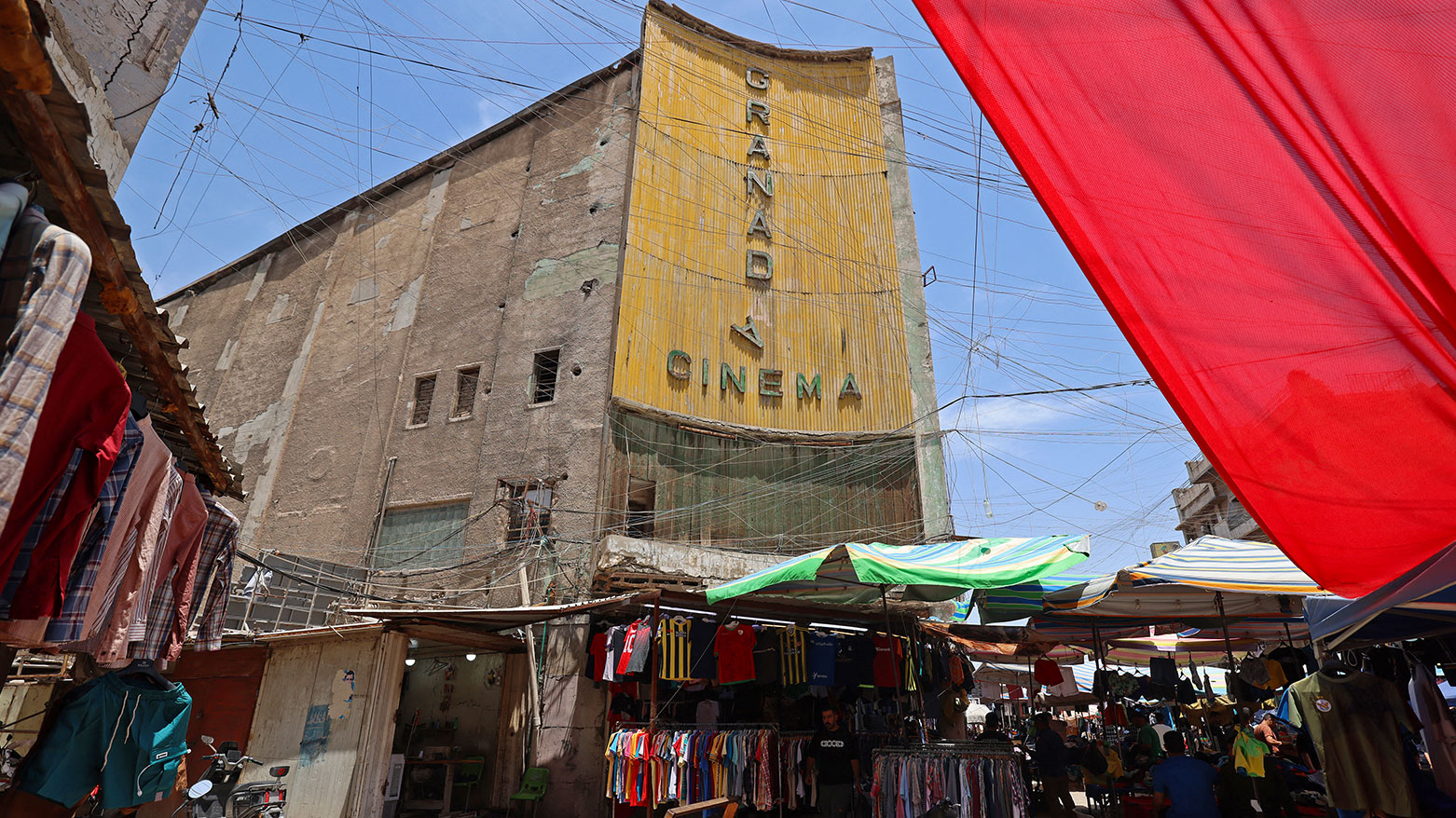
Reporting from Baghdad, AFP's Christy-Belle Geha documents an industry attempting to reconnect with a rich artistic heritage that was nearly extinguished by successive wars, sanctions and instability. Across the Iraqi capital, abandoned movie theaters stand as visible reminders of a period when cinema occupied a central place in the country's cultural life.
Yet alongside those fading landmarks, a younger generation of directors is increasingly determined to create films capable of reaching audiences both inside Iraq and abroad.
Among them is Iraqi filmmaker Ali al-Bayati, who is currently directing a horror film that he hopes will secure international distribution.
Speaking to AFP, Bayati described rebuilding Iraqi cinema as a difficult but achievable mission, arguing that restoring the sector will require persistence rather than quick victories.
His optimism reflects a broader shift taking place across Iraq's cultural landscape.
Recent years have brought greater relative stability compared with previous decades, creating conditions that have allowed filmmakers, producers and government institutions to begin investing once again in domestic film production.

That renewed momentum has also been reinforced by growing international recognition for Iraqi cinema.
One of the strongest examples has been "The President's Cake," directed by Hasan Hadi, which attracted global attention after earning recognition at the 2025 Cannes Film Festival.
The film portrays life during the international sanctions imposed under Saddam Hussein's rule through the story of a young girl tasked with baking a birthday cake for the former Iraqi leader despite severe shortages of basic ingredients.
Its international success has become an encouraging symbol for Iraq's emerging filmmakers, demonstrating that locally rooted stories can resonate with audiences well beyond the country's borders.
The revival, however, remains fragile.
According to AFP, Iraqi authorities launched an initiative last year supporting 58 film projects, allocating approximately $4 million in funding.
Officials involved in the program acknowledge that while the initiative marks meaningful progress, the financial resources remain modest compared with international production standards.

Wareth Kwaish, who oversees the government-backed initiative, noted that such a budget would often finance only a single production in many established film industries, underscoring the scale of investment still needed if Iraq hopes to rebuild a competitive cinematic sector.
Government efforts extend beyond financing new productions.
Officials are also working to recover Iraq's historic film archives from both domestic and international collections while expanding cultural cooperation with France to preserve and promote Iraq's cinematic heritage.
Those preservation efforts highlight the country's long filmmaking tradition.
Film production in Iraq dates back to the 1940s, when Iraqi productions were frequently developed in cooperation with Egyptian filmmakers.
The industry flourished throughout the 1950s, producing classics that helped establish Iraq's reputation across the Arab world.

Among the most celebrated works from that period is "Said Effendi" (1956) by Kameran Hosni.
The landmark film was recently restored through the Iraqi Cinematheque Project, supported by France, and screened at the 2025 Cannes Film Festival, introducing one of Iraq's cinematic treasures to new international audiences.
That flourishing era gradually came to an end after Saddam Hussein consolidated power during the 1970s, when cinema increasingly became an instrument of state propaganda.
Subsequent decades brought the Iran-Iraq War, international sanctions, the 2003 U.S.-led invasion, sectarian violence and the rise of extremist groups, leaving little room for sustained artistic production.
The physical scars remain evident across Baghdad.
Historic cinemas that once attracted crowds of moviegoers now sit abandoned or have been converted into warehouses and commercial storage facilities.
At venues such as the Granada Cinema, faded signs, deteriorating façades and remnants of old film posters offer reminders of an industry that once occupied a prominent place in Iraqi society.

Today's audiences instead largely frequent modern multiplexes located inside shopping malls, where Hollywood blockbusters and Egyptian productions dominate cinema schedules.
That shift has altered viewing habits as much as it has changed Iraq's exhibition landscape.
Syrian filmmaker Abdulhadi al-Rakeb, whose documentary explores Baghdad's historic movie theaters, told AFP that the disappearance of traditional cinemas has fundamentally weakened Iraq's film culture.
He argued that the closure of those venues has diminished not only public movie-going but also broader interest in filmmaking itself, creating a cycle in which fewer audiences translate into fewer domestic productions.
Production challenges extend well beyond financing.
Director Hasan Hadi explained that while "The President's Cake" was filmed in Iraq, assembling a production team proved particularly difficult because of the limited availability of experienced local technical crews.

According to Hadi, European professionals had to be brought into the production to complement Iraqi staff.
While international specialists possessed technical expertise, they were less familiar with Iraq's cultural environment, creating additional logistical and creative challenges during filming.
He believes the country's film sector requires significantly greater investment in technical training, professional workshops and long-term institutional development if Iraqi productions are to compete consistently on the international stage.
Despite those shortcomings, Hadi expressed measured confidence about the future.

He told AFP that increasing numbers of Iraqis want to tell their own stories through cinema, even if resources remain insufficient to fully support that creative ambition.
For directors such as Bayati, the industry's future ultimately depends not only on government assistance but also on rebuilding audience confidence in Iraqi productions themselves.
Generating sustainable domestic box office revenue, he argues, would create a stronger economic foundation capable of supporting continued filmmaking without relying exclusively on public grants or international funding.

The path toward restoring Iraq's cinematic standing remains long and uncertain.
Yet as restored classics return to international festivals, new productions gain overseas recognition and young filmmakers continue developing original projects, the industry is gradually reclaiming a place within Iraq's broader cultural revival.
As AFP's reporting illustrates, rebuilding Iraqi cinema may be neither quick nor straightforward, but for many filmmakers working behind the camera today, it is a project increasingly defined by possibility rather than nostalgia.

|
Summary Iraq's film industry is showing cautious signs of revival after decades of war and instability, with filmmakers, officials and artists seeking to rebuild a once-thriving cinematic tradition despite limited funding, scarce technical expertise and enduring structural challenges. |