Diyarbakir Bar Chief: 40 Million Kurds Remain Without Rights
Speakers at the opening of a Kurdish lawyers' conference in Diyarbakir called for legal reforms, mother-tongue education, and greater recognition of Kurdish rights
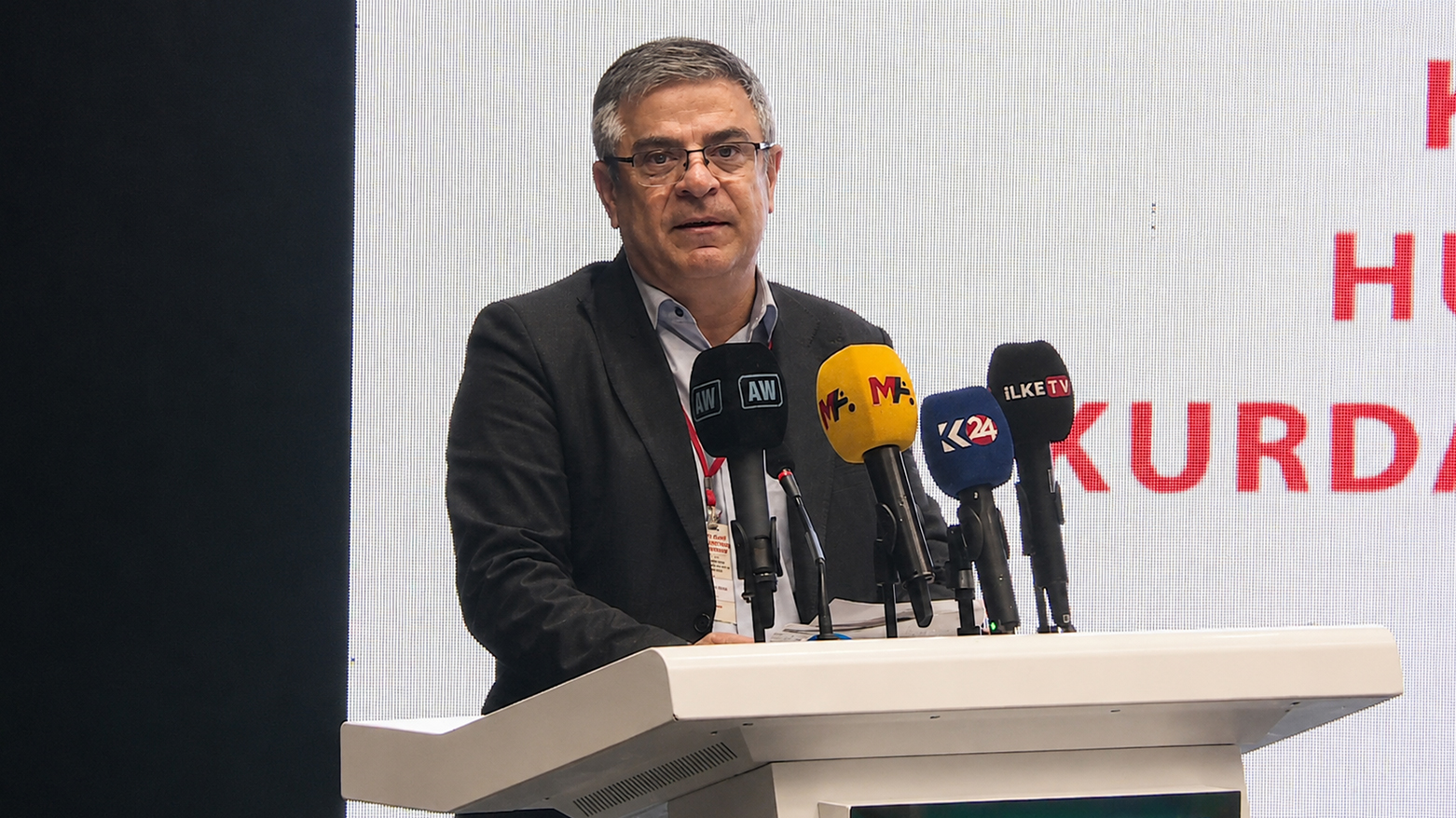
ERBIL (Kurdistan24) - A conference organized by Kurdish legal professionals focused on democratic rights opened this Saturday in the city of Diyarbakir, in Northern Kurdistan (southeastern Türkiye). The event brought together lawyers and activists to discuss the legal status of the Kurdish minority, calls for democratic reforms, and the ongoing efforts to revive the peace process between the Turkish state and Kurdish political groups.
In his opening speech, Abdulqadir Guleç, the head of the Diyarbakir Bar Association, made a key distinction regarding national identity and statehood. He argued that an ethnic group does not need to have its own sovereign country in order to be entitled to fundamental legal protections. However, he went on to make a stark claim about the current situation, stating that "40 million Kurds today remain without rights and are living under severe oppression."
Guleç said the rights to language, culture, and history are fundamental rights for every nation, regardless of whether it has an independent state.
"As Kurdish legal professionals, we must use this conference to clarify the position of the Kurdish people and define their status," he said.
Addressing language and education rights, Guleç stressed that Kurds should be able to speak their mother tongue within their own society and continue efforts to secure Kurdish-language education within the existing system.
He also called for Kurds to freely elect their own representatives in their cities and regions and to participate fully in political and official institutions.
Speaking about the peace process and reports of a possible new phase in Türkiye, Guleç said lasting peace cannot be achieved without the rule of law and justice.
"Any peace process that is not built on law and justice cannot be sustainable or durable," he said. "Peace is not merely the silence of weapons. Peace means recognizing the rights of this people, implementing justice, and ensuring society sees itself represented equally within the political system."
He also called for a new democratic constitution and stronger local governance to safeguard fundamental rights.
Concluding his remarks, Guleç urged unity among Kurdish legal professionals.
"Whatever our beliefs may be—whether we are socialists, liberals, or religious—we must stand together and work collectively for national unity," he said.
The conference is being held under the slogan, "For Freedom, Peace, and Status Through Democratic Law," bringing together legal experts and specialists to discuss the legal status and rights of the Kurdish people within a democratic system.