Iran Resumes Attacks on Commercial Ships in Strait of Hormuz, Threatening War-Ending MOU
Tehran fires at least two missiles at commercial ships as a one-week agreement on halting strait attacks expires, with Washington likely to retaliate and the recently signed memorandum of understanding under acute stress
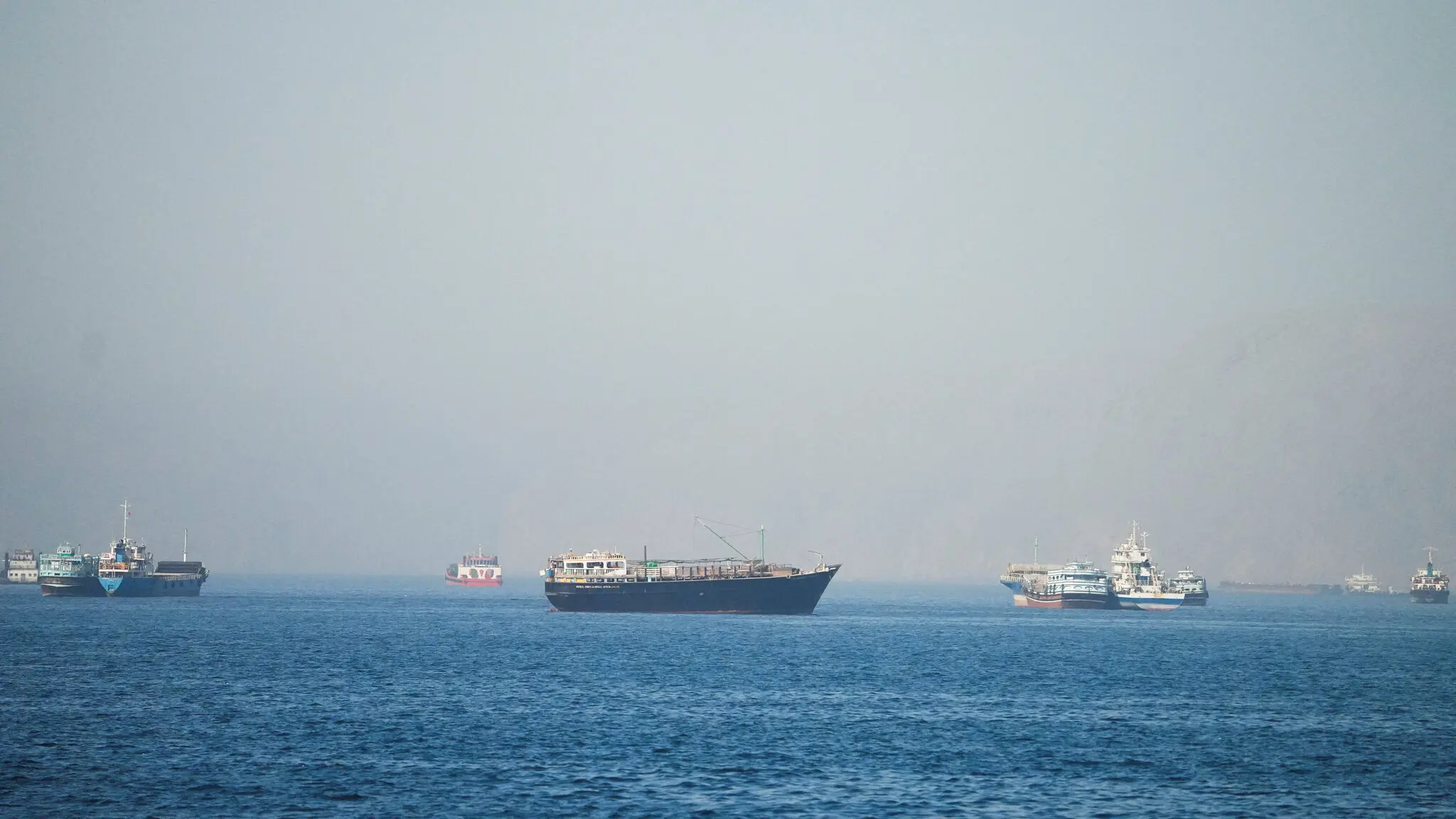
ERBIL (Kurdistan 24) - Less than three weeks after the United States and Iran signed a memorandum of understanding to end their war, Tehran has resumed attacks on commercial vessels transiting the Strait of Hormuz, firing at least two missiles at ships on Monday night in a development that threatens to unravel the fragile peace framework Washington has spent months constructing.
Two US officials told Axios on Monday that Iran's military fired the missiles at commercial vessels transiting the strait after a one-week agreement between the two countries on halting attacks in the waterway expired. The US is likely to retaliate with strikes against Iranian targets, the officials said.
The UK Maritime Trade Operations confirmed it received a report from a tanker traveling south near the Omani coast in the Strait of Hormuz that was struck by an unknown projectile, causing a fire. A US official confirmed to Axios that a second commercial vessel was struck by an Iranian missile. Both ships suffered significant damage, but no casualties were reported.
A Pattern of Breakdown
The resumed attacks follow a week of indirect talks between the US and Iran in Doha that ended without meaningful progress on the question of the Strait of Hormuz, the narrow waterway between Iran and Oman that under normal conditions carries roughly one-fifth of the world's daily oil supply. Secretary of State Marco Rubio had previously warned that any Iranian tolling system in the strait "would make a diplomatic deal unfeasible," a position that sits in direct tension with Tehran's stated intention to charge transit fees once the 60-day toll-free period stipulated in the memorandum of understanding expires.
The pattern of the current breakdown mirrors previous cycles in the conflict. Trump had asserted on one occasion that "Iran shot at least four one-way attack drones at ships traversing the Strait of Hormuz... Damage was done, but the ship was able to proceed on its way," adding that the attacks were "a very foolish violation of our ceasefire agreement."
CENTCOM has repeatedly responded to Iranian strikes on commercial vessels with retaliatory strikes on Iranian military targets, including missile and drone storage facilities, coastal radar sites, and air defense positions.
The MOU Under Stress
The memorandum of understanding signed electronically by Presidents Trump and Pezeshkian on June 17, 2026, included a one-week agreement specifically addressing attacks in the Strait of Hormuz, a provision that has now expired without a successor arrangement in place. Iranian President Pezeshkian had posted that Tehran remains committed to the MOU "provided Washington upholds its obligations," framing mutual compliance as a two-way commitment.
Iran did not attend technical talks scheduled for one Sunday, citing unmet MOU conditions, with a Supreme Leader's office official telling state television that Iran was still assessing whether Washington had fulfilled its commitments, specifically whether Iran had actual access to its unfrozen funds. The $24 billion in frozen Iranian assets has remained one of the central unresolved points of contention throughout the peace process, with Tehran linking its compliance on Hormuz directly to the release of those funds.
A Waterway That Has Never Fully Recovered
Even during the periods of relative calm following the June 17 signing, the Strait of Hormuz had not returned to pre-war operational normality. The UAE's state-owned oil company estimated that full flows through Hormuz will not resume until 2027, even if a deal is reached quickly. World Trade Organization data showed a 95 percent reduction in ships carrying crude oil to and from Persian Gulf ports and a 99 percent reduction in ships with LNG since the conflict began on Feb. 28, 2026.
Kpler data had shown Saudi Arabia shipping approximately 34 million barrels through the strait between June 17 and July 1, more than double its wartime volumes, as Riyadh cleared a war-era backlog. But tanker traffic remained at roughly a third of pre-war levels even at its highest point following the signing, with US Energy Secretary Chris Wright confirming approximately 20 million barrels of oil exited the strait in a single day that represented a new record, though vessel transit counts remained at roughly a third of pre-war levels, suggesting larger individual loads rather than a full restoration of normal shipping traffic.
Washington's Next Move
The resumption of Iranian attacks places the Trump administration in a familiar bind: retaliate militarily and risk further escalation that could collapse the MOU entirely, or absorb the strikes and appear to reward Iranian aggression at a moment when the peace process is already under severe strain from the Lebanon front, unresolved nuclear questions, and disputes over frozen assets.
A US official previously said of Iran's failure to stop attacks after a ceasefire warning: "Iran had a chance to stop shooting... and they didn't take it," a statement that reflects Washington's escalating frustration with a pattern it has encountered repeatedly since the April 8 ceasefire first took effect.
The resumption of Hormuz attacks on Monday night represents the most serious challenge yet to the June 17 memorandum of understanding, and comes just hours before Trump is set to arrive in Ankara for the NATO summit, leaving the president to manage a renewed Gulf crisis from the margins of a major alliance gathering.
|
BRIEF: |