NATO allies showcase defense surge at Ankara summit, hoping to soften Trump's fury over Iran
European nations unveil arms deals worth tens of billions and pledge continued Ukraine support as Trump arrives in Türkiye still furious over allied restrictions on US forces during the Iran war
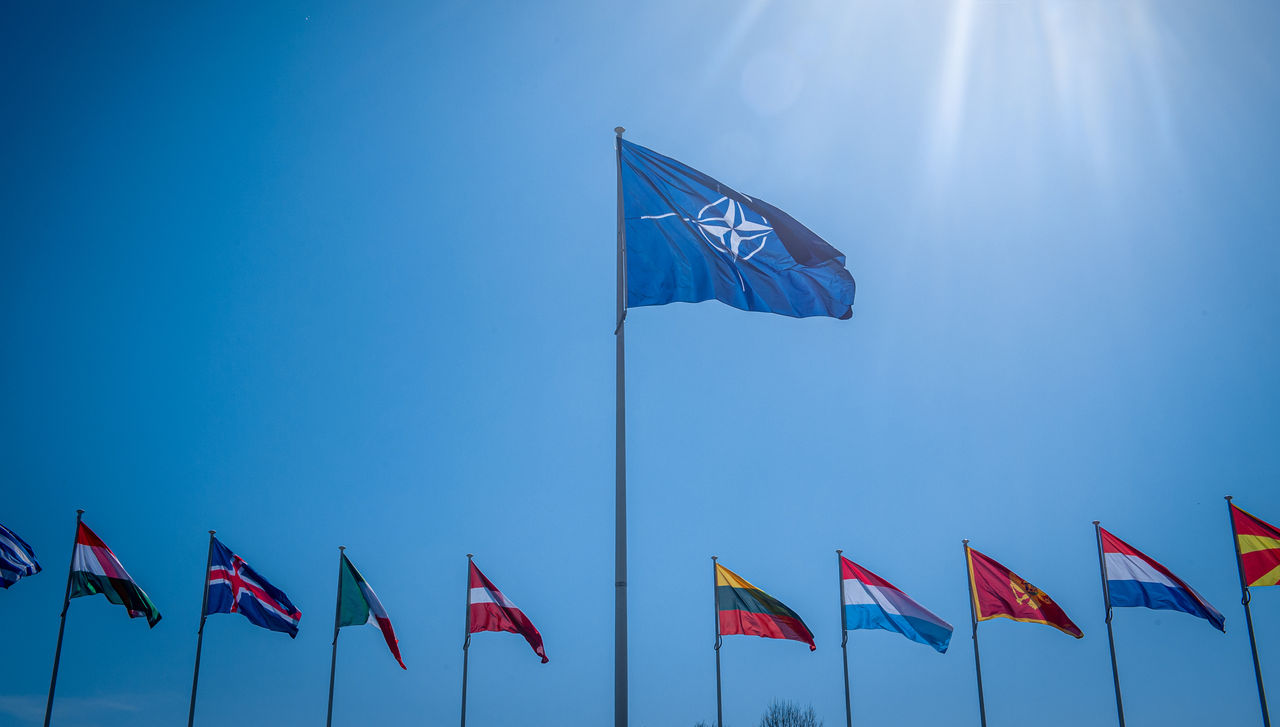
ERBIL (Kurdistan 24) - Inside Türkiye's sprawling presidential palace in Ankara on Tuesday, NATO's 32 member states assembled for a summit that carries an unusually personal urgency: convince Donald Trump that the alliance is worth his continued commitment, after the US president spent the run-up to the gathering publicly berating allies who had refused to let American forces use their bases to strike Iran.
"This is showtime," a senior European diplomat told reporters on condition of anonymity, capturing in two words the pressure hanging over a gathering that has been framed less as a routine alliance meeting than as a high-stakes performance for an audience of one.
Delivering on a Year-Old Pledge
The summit comes exactly one year after NATO members pledged to ramp up security-related spending to 5 percent of GDP under pressure from Trump, and alliance chief Mark Rutte arrived in Ankara determined to demonstrate that the promise has been kept. "Just one year later, we already see transformational progress," Rutte told journalists on the eve of the summit. "All of this is evidence of a real shift in mindset. This is NATO 3.0. A stronger Europe in a stronger NATO."
At an industry forum ahead of the main summit on Tuesday, leaders unveiled a series of new arms deals worth tens of billions of dollars, designed to present Trump with the kind of headline-grabbing commercial and military commitments that the administration has consistently demanded as proof of allied seriousness. Underscoring that push, Canada announced on Monday that it had selected Germany's Thyssenkrupp Marine Systems to build its new fleet of submarines, a multi-billion-dollar programme Ottawa framed explicitly as part of a broader effort to deepen defense ties with European NATO allies.
Trump Still Fuming Over Iran
The carefully orchestrated display of allied generosity faces a significant obstacle in the form of Trump's publicly stated anger. The president has spent the days before the summit attacking allies who imposed restrictions on US forces using their bases to strike Iran during the war, a grievance he has shown no sign of setting aside.
"Ridiculous for the USA to continue along this one-sided path when the relationship is not reciprocal. They were not there for us!!!" Trump wrote on Truth Social last week, a message that framed his arrival in Ankara not as a celebration of allied solidarity but as a reckoning with what he views as European freeloading and strategic timidity.
Spain, in particular, drew Washington's ire by declining to allow the use of its facilities for US operations against Iran, even as Britain permitted US bombers to fly missions from one of its bases, a distinction that has sharpened bilateral tensions and complicated the broader European effort to present a unified front at the summit.
European Naval Mission on Hormuz on Standby
Seeking to demonstrate willingness on Iran specifically, European allies spearheaded by France and Britain have assembled a potential naval mission to support operations in the Strait of Hormuz, with member states shifting vessels closer to the region in preparation for possible deployment. As AFP reported on Monday, the situation remains volatile, and European governments want clarity on how the fragile US-Iran memorandum of understanding is evolving before committing their navies to the waterway, particularly given that Iran resumed missile attacks on commercial ships on Monday night, just hours before the summit opened.
Zelensky, Ukraine, and a Call With Putin
Beyond the Iran dimension, the Ankara summit also carries high stakes for Ukraine. President Volodymyr Zelensky, who attended the leaders' dinner on Tuesday, is set to secure a commitment from European backers at NATO to maintain at least 70 billion euros, approximately $80 billion, in annual military aid to Kyiv in both 2026 and 2027, as European nations have taken over the support of Ukraine almost entirely following Washington's wind-down of US assistance.
Zelensky, who is also scheduled to hold direct talks with Trump at the Ankara summit, urged the alliance to take "strong decisions" on bolstering Ukraine's air defenses following a devastating Russian blitz that killed nearly 30 people. He will seek to convince Trump, who held a phone call with Russian President Vladimir Putin ahead of the gathering, that Kyiv is turning the tide in the war and that Washington should press Moscow back into serious peace negotiations.
The Architecture of a Changing Alliance
Beneath the deal announcements and diplomatic choreography, the Ankara summit is grappling with a structural reality that European leaders have only recently begun to acknowledge openly. Washington has made clear it wants its allies to take the lead on the conventional defense of the continent, and has recently announced cuts to the assets it makes available to NATO commanders. This decision has forced European governments to accelerate their own rearmament regardless of how Trump's mood evolves.
Diplomats attending the summit are banking on Trump's well-documented personal rapport with host President Recep Tayyip Erdogan, and on NATO Secretary-General Rutte's persistent charm offensive to keep the president's temperament sufficiently managed to prevent the kind of public rupture that would further erode NATO's credibility. Trump has had visible fallings-out with a string of allied leaders in recent months, most recently Italian Prime Minister Giorgia Meloni, and European officials are acutely aware that the irritants capable of igniting his anger are numerous and unpredictable.
European leaders are not arriving in Ankara under the illusion that the relationship with Washington is what it was. The goal now is more modest but no less important: keep the US as engaged as possible while building the independent European defense capacity that the alliance will almost certainly need regardless of who occupies the White House.
| BRIEF: NATO allies unveiled tens of billions in defense deals at the Ankara summit on Monday, seeking to placate Trump after his fury over European base restrictions during the Iran war. Zelensky attended to secure $80 billion in annual Ukraine aid and lobby Trump for renewed US pressure on Moscow. |