Najaf Prepares to Receive Ali Khamenei's Body as Millions Expected for Funeral Rites
Iraq's holiest Shiite city is mobilizing security and public services as Ali Khamenei's funeral ceremonies move from Iran into Najaf before concluding in Mashhad.
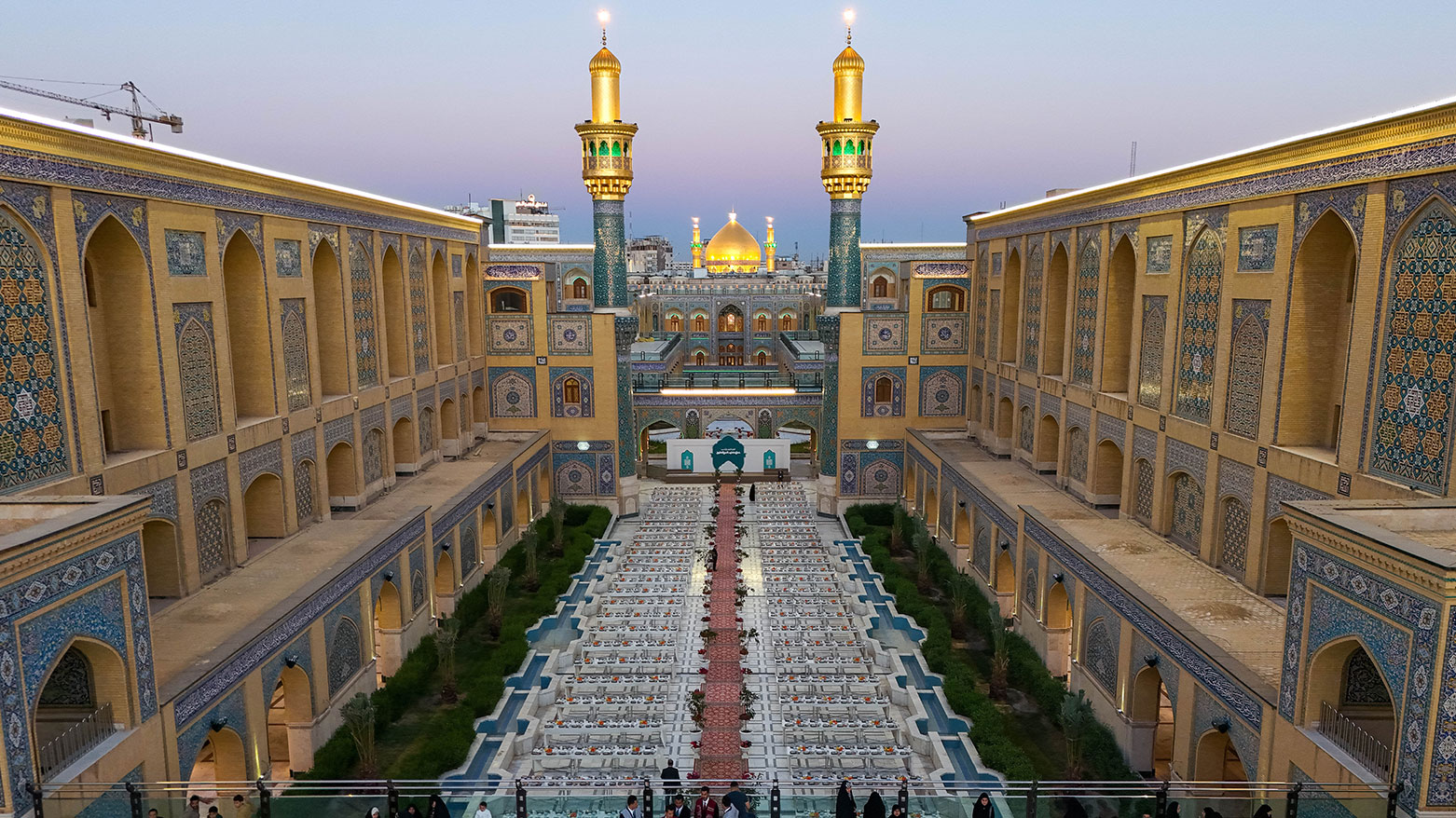
ERBIL (Kurdistan24) - Iraq's holy city of Najaf is making final preparations to receive the remains of former Iranian Supreme Leader Ali Khamenei, as authorities brace for the arrival of vast numbers of mourners expected to cross from Iran for the next stage of funeral rites that have already drawn millions across the Islamic Republic.
Tuesday marks the fifth consecutive day of public mourning, with funeral ceremonies shifting from Iran toward Iraq after large gatherings in Tehran and the clerical city of Qom.
Officials in Najaf are coordinating security, transportation and public services ahead of what is expected to become one of the largest religious gatherings in the city in recent years.
According to local authorities, public committees have been mobilized to oversee crowd management, essential services and security arrangements as pilgrims and religious visitors converge on Najaf before the funeral procession continues to Karbala and ultimately returns to Iran for Khamenei's burial in his hometown of Mashhad later this week.
The Iraqi phase of the funeral carries significance that extends beyond logistics.
Najaf is one of Shiite Islam's most revered religious centers, and its inclusion in the funeral itinerary reflects the city's enduring spiritual importance and its longstanding religious ties with neighboring Iran.
The ceremonies also underscore the close movement of pilgrims and clerics between the two countries during major religious occasions, requiring extensive coordination by Iraqi authorities.
Earlier on Tuesday, funeral ceremonies continued in Qom, where prayers and religious observances were held at the Jamkaran Mosque.
The events were attended by religious figures and visitors, including the son of former Hezbollah Secretary-General Hassan Nasrallah, while additional mourning gatherings were reported in other Iranian cities, including Bandar Abbas.
As attention turns toward Iraq, Najaf has become the focal point of preparations for what will be the principal Iraqi stage of the funeral before commemorations continue in Karbala.
Authorities have emphasized the need to accommodate large numbers of visitors while maintaining public order and ensuring the uninterrupted delivery of municipal and emergency services.
The funeral procession follows several days of ceremonies inside Iran that have attracted extraordinary crowds.
According to Agence France-Presse (AFP) and correspondent Payam Doost Mohamadi, millions gathered in Tehran on Monday for a procession that began after Khamenei's body lay in state at the Grand Mosalla religious complex.
Read More: Millions Join Ali Khamenei Funeral Procession in Tehran
Although Iranian authorities have not released an official attendance figure, AFP reported that mourners filled major thoroughfares across the capital, highlighting the scale of the public farewell.
AFP also reported that Iranian authorities implemented extensive crowd-control measures informed by lessons from the 1989 funeral of Ayatollah Ruhollah Khomeini, when overcrowding resulted in fatalities and thousands of injuries.
Security barriers, restricted access around the coffin and the temporary closure of Tehran's airspace formed part of broader efforts to manage the massive turnout safely.
The ceremonies have unfolded against the backdrop of Iran's leadership transition following Khamenei's death during the conflict involving Iran, Israel and the United States earlier this year.
AFP reported that Mojtaba Khamenei, who succeeded his father as supreme leader, has yet to appear publicly despite earlier official statements indicating he was injured in the strikes that killed his father. His continued absence has drawn international attention as the funeral progresses across multiple cities.
Senior figures from Iran's security establishment have nevertheless maintained a visible presence throughout the ceremonies.
According to AFP, newly appointed Revolutionary Guards commander Ahmad Vahidi and Quds Force commander Esmail Qaani both attended funeral events, while delegations representing Hezbollah and Hamas also took part, underscoring the broader regional dimension of the commemorations.
The funeral has evolved beyond a state ceremony into a closely watched moment of political and institutional continuity for Iran following weeks of conflict.
Yet the Iraqi stage places greater emphasis on the religious character of the procession, with Najaf and Karbala serving as central destinations within the wider Shiite world.
For Iraq, hosting part of the funeral requires balancing religious hospitality with the practical demands of managing exceptionally large crowds in cities that routinely welcome millions of pilgrims during major religious events.
Security coordination, transportation planning and public service provision are expected to remain central priorities as mourners continue arriving from Iran and elsewhere.
The multi-country funeral itinerary is scheduled to conclude after ceremonies in Iraq, with Khamenei's body returning to Iran for burial in Mashhad, where the final rites will bring to a close nearly a week of commemorations spanning several of the region's most significant religious centers.
|
Summary Najaf is preparing for the arrival of Ali Khamenei's body as funeral ceremonies move from Iran into Iraq. Authorities are coordinating security and public services for millions of expected mourners before the procession continues to Karbala and concludes with burial in Mashhad. |