Tehran Accuses Washington of Violating Ceasefire Understanding
Tehran accused the United States of violating both the UN Charter and a memorandum aimed at ending the conflict, warning that countries allowing attacks on Iran from their territory would bear legal responsibility.
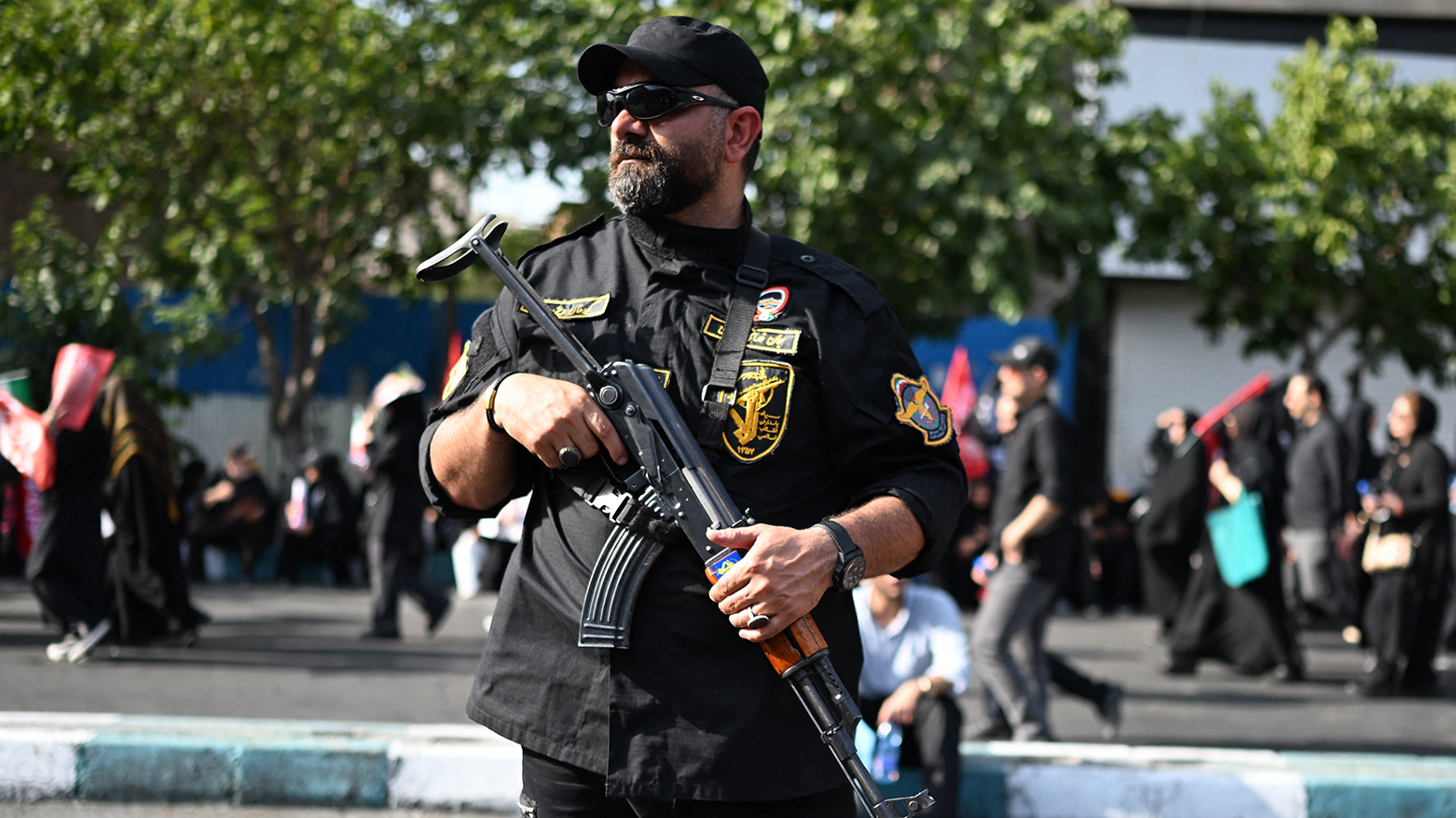
ERBIL (Kurdistan24) - Iran's Foreign Ministry said on Wednesday that recent US military strikes on Iranian territory had effectively rendered a memorandum intended to end the conflict ineffective, accusing Washington of violating both the United Nations Charter and the agreement designed to halt hostilities.
In a statement issued on Wednesday, Iran's Foreign Ministry said US forces had violated Iran's sovereignty by carrying out military strikes against several monitoring facilities along the country's southern coastline.
According to the ministry, the attacks constituted not only a violation of Article 2 of the UN Charter, but also a breach of the memorandum of understanding to end the war, which had emphasized halting military operations.
The Foreign Ministry said a series of recent US measures had undermined the agreement, including the military strikes, the US Treasury Department's decision to revoke Iran's oil export waiver, and what it described as US interference in the Strait of Hormuz.
The statement also cited the continuation of Israeli attacks on Lebanon as another factor that had rendered the agreement ineffective.
Tehran said it holds Washington fully responsible for the renewed escalation.
Iran also issued a strong warning to neighboring Gulf states, saying that any country allowing its territory to be used for attacks against Iran would be considered a partner in the aggression and would bear the resulting legal responsibility.
The Foreign Ministry strongly condemned the US strikes and reiterated that, under Article 51 of the UN Charter, Iran has the legitimate right to self-defense.
It added that Iran's armed forces would respond decisively to any future aggression and would target the source and bases of attacks in order to protect the country's national sovereignty and territorial integrity.
Khatam al-Anbiya Central Headquarters vows "strong and crushing" response
In a separate statement, Iran's Khatam al-Anbiya Central Headquarters warned that the country's armed forces would deliver what it described as a "strong and crushing" response to what it called America's aggression and "terrorist act."
The headquarters stressed that Iran would not, under any circumstances, allow interference in the management of the Strait of Hormuz, adding that its armed forces remain fully prepared to respond to any attack.
The statement also said the large public turnout at the farewell and burial ceremonies for what it described as the "martyred leader of the Islamic Ummah" represented a major setback for the United States.
It further accused US forces of launching strikes on parts of southern Iran while the body of the late leader was in Iraq for funeral ceremonies, describing the attacks as a clear act of aggression carried out despite previous commitments.
Khatam al-Anbiya also issued a warning to commercial vessels and oil tankers, stating that the only safe navigation route through the Strait of Hormuz is the one designated by the Islamic Republic of Iran.
The statement comes as military tensions between Iran and the United States continue to intensify.
Earlier on Wednesday, Iran's Islamic Revolutionary Guard Corps (IRGC) announced that it had launched what it described as an initial retaliatory missile and drone operation targeting 85 US military facilities in Bahrain and Kuwait following American strikes inside Iran.
According to the IRGC, the operation also included the downing of a US MQ-9 drone.
Hours earlier, US Central Command (CENTCOM) said American forces had struck more than 80 military targets inside Iran, including air defense systems, command and control networks, coastal radar sites, anti-ship missile capabilities, and more than 60 IRGC small boats in and around the Strait of Hormuz.
Washington said the operation was carried out in response to Iranian attacks on three commercial vessels in international waters in the Strait of Hormuz.
As the confrontation widened, Kuwait's military announced that its air defense systems were intercepting incoming missile and drone attacks, while air raid sirens sounded in Bahrain and explosions were reported across parts of the island kingdom.