NATO Seeks to Reassure Allies of US Commitment as Trump Arrives for High-Stakes Ankara Summit
Trump presses members to increase defense spending as Middle East tensions, Ukraine, and transatlantic unity dominate the alliance's agenda
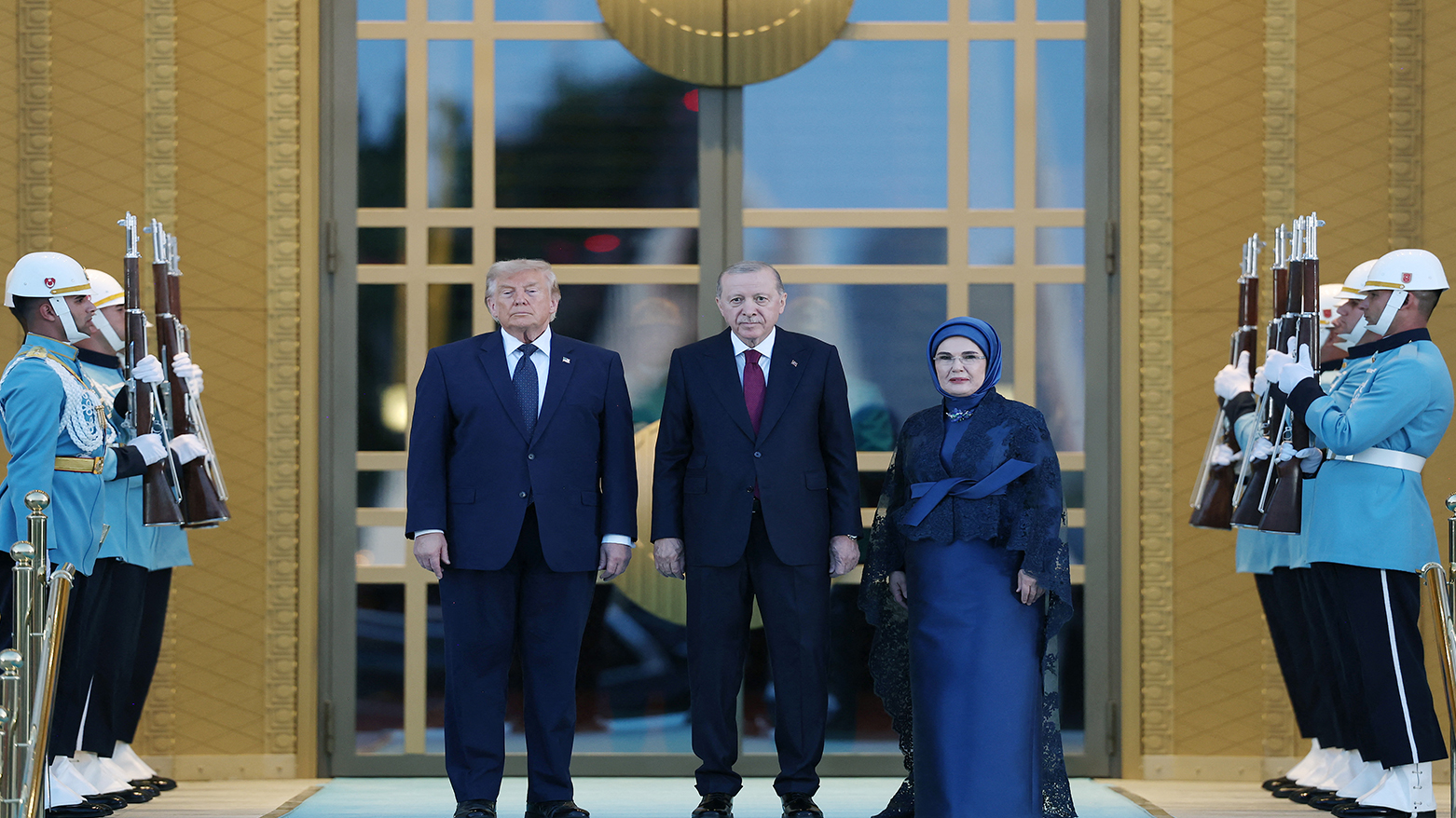
ERBIL (Kurdistan24) — NATO sought on Wednesday to reassure allies that the United States remains firmly committed to the alliance despite persistent disputes over defense spending, as leaders gathered in Ankara for a high-stakes summit overshadowed by escalating conflict in the Middle East and mounting pressure from US President Donald Trump for Europe to shoulder a greater share of the continent's security burden.
NATO Secretary General Mark Rutte told reporters before the opening of the alliance's main session that Washington remained fully committed to NATO while defending Trump's long-standing call for European allies and Canada to increase military spending.
"There is complete commitment of the United States to NATO," Rutte said.
"But there's also an expectation... that the Europeans and the Canadians will equalize their spending with the United States... which I think is completely fair," he added.
The summit opened under the shadow of rapidly escalating tensions in the Middle East after US forces launched extensive strikes on Iran in response to attacks on commercial shipping in the Strait of Hormuz.
Iran retaliated by targeting US military bases across the Gulf, adding urgency to discussions among NATO leaders about the alliance's security priorities.
Defense spending takes center stage
The gathering comes at a critical moment for the 77-year-old alliance as Trump continues to push European members and Canada to dramatically boost military expenditures while signaling that Washington expects its allies to take greater responsibility for defending Europe.
Seeking to demonstrate progress before Trump's arrival, NATO released new figures showing that core European defense spending rose by 11 percent in 2026, reaching $634 billion, compared with $571 billion the previous year.
On Tuesday, alliance members also announced tens of billions of dollars in new defense contracts, aiming to underscore their commitment to expanding military capabilities.
"Yesterday was a great success," Rutte said, praising allies for "delivering" on promises to strengthen Europe's defenses against Russia.
"This is a big win for the American president," he added.
Trump praises Erdogan, criticizes allies
Arriving in the Turkish capital on Tuesday, Trump offered warm praise for Turkish President Recep Tayyip Erdoğan, highlighting the strong "chemistry" between the two leaders.
At the same time, he renewed criticism of several NATO allies over their handling of the Iran conflict and defense commitments.
"I was very disappointed with NATO," Trump said, setting a confrontational tone before the leaders' meeting.
Despite those tensions, the US president signaled a potential thaw in relations with Ankara by saying he would consider allowing Turkey back into the F-35 Lightning II program and lifting US sanctions imposed after Turkey purchased Russia's S-400 missile defense system in 2019.
"We're going to be taking the sanctions off," Trump said during talks with Erdogan at the Turkish presidential palace.
Erdogan expressed confidence that Trump would resolve the long-running dispute, which has strained bilateral ties and hindered Turkish defense modernization efforts.
Greenland dispute resurfaces
Trump also revived another contentious issue by reiterating that Greenland "should be controlled by the United States," prompting a swift response from Danish Prime Minister Mette Frederiksen.
"Our position is as clear as it has been all through: Greenland is, of course, not for sale," Frederiksen said Wednesday.
Trump first floated the idea of acquiring Greenland during his first presidency, a proposal that Denmark has consistently rejected.
Ukraine and Syria remain on agenda
Beyond defense spending, leaders are also expected to discuss continued support for Ukraine as Russia's full-scale military operations in Ukraine enters another year.
Trump said he believes both Moscow and Kyiv are interested in reaching a peace agreement and is scheduled to meet Ukrainian President Volodymyr Zelensky on the sidelines of the summit.
Before arriving in Ankara, Trump spoke by telephone with Russian President Vladimir Putin and is expected to follow up after he meets with Zelensky, according to a US official.
European allies and Canada are preparing to pledge approximately €70 billion ($80 billion) in annual military assistance to Ukraine for both 2026 and 2027, reinforcing long-term support despite ongoing diplomatic deadlock.
Trump is also expected to meet Syrian President Ahmed al-Sharaa as Damascus seeks to rebuild international ties following years of civil war.
The talks come a day after Sharaa hosted French President Emmanuel Macron in Damascus during the first visit by a Western European leader since the country's political transition. The visit, however, was overshadowed by twin bomb attacks in the Syrian capital that wounded 18 people, including four policemen.
The Ankara summit is widely viewed as one of NATO's most consequential in years, with leaders attempting to balance growing security challenges in Europe and the Middle East while preserving alliance unity amid Trump's demands for greater burden-sharing and a redefined US role in transatlantic security.