Trump declares Iran ceasefire 'over,' blasts NATO over Iran, Greenland, Spain
US president says dealing with Tehran is "a waste of time," criticizes alliance for failing to back Washington against Iran, and threatens to cut off trade with Spain during NATO summit in Ankara
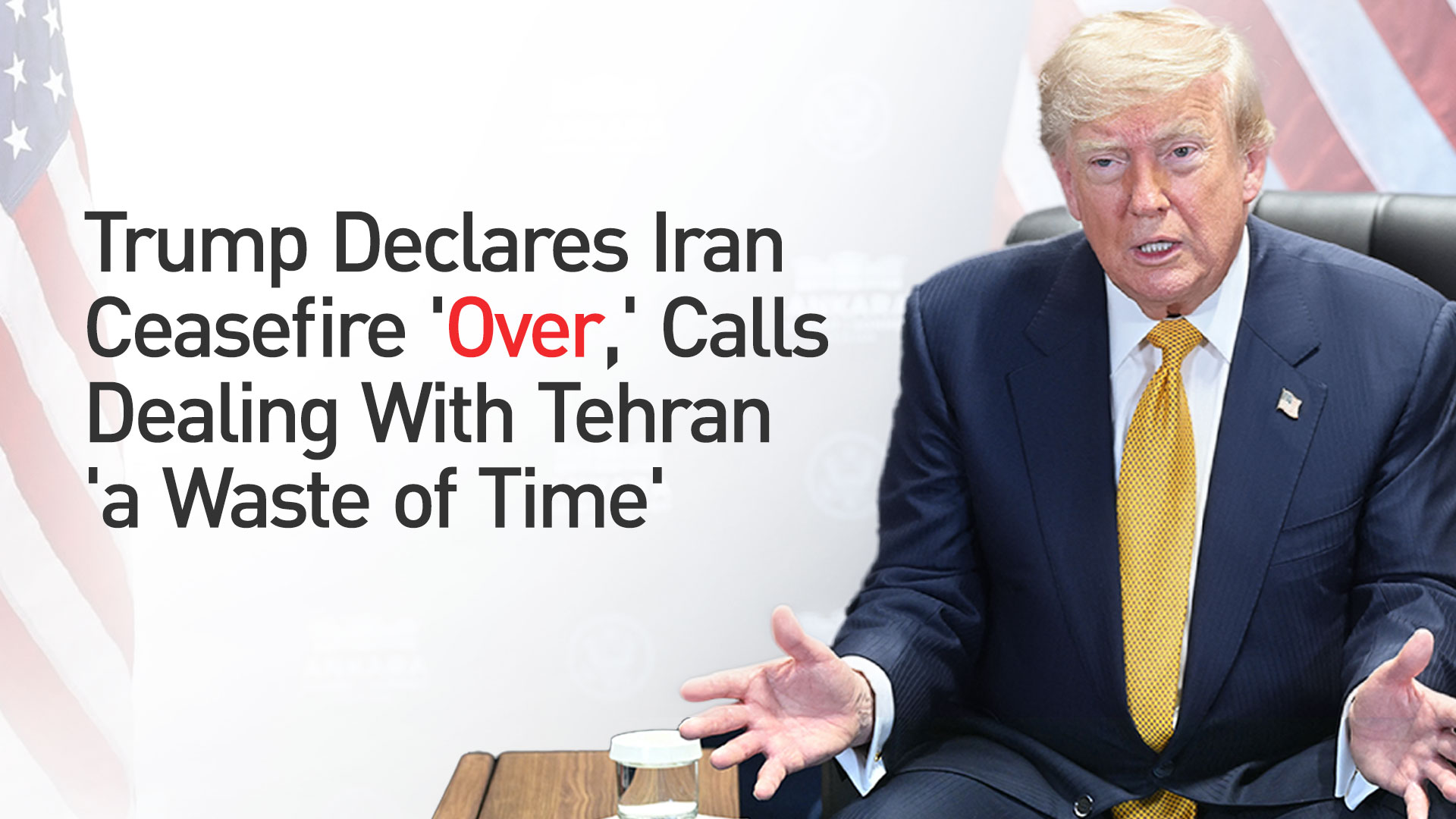
ERBIL (Kurdistan24) — US President Donald Trump declared on Wednesday that the ceasefire between the United States and Iran was effectively over, accusing Tehran of being "sick" and dismissing further engagement with the Islamic Republic, while also launching sharp criticism of NATO allies over Iran, Greenland, and defense spending during the alliance's summit in Ankara.
Speaking to reporters at the opening of the NATO summit in Ankara, Trump said the truce that had followed recent US-Iran hostilities had run its course.
"As far as I'm concerned, it's over," Trump said when asked whether the ceasefire remained in effect. "It's just a waste of time dealing with them."
His remarks came after the United States carried out strikes on Iranian targets and Tehran responded by targeting US military bases in the Gulf, marking one of the most dangerous periods of direct confrontation between the two countries in recent years.
Trump offered no indication that Washington was pursuing renewed diplomatic efforts with Tehran, instead portraying the Islamic Republic as unwilling to change its behavior.
The comments underscored growing uncertainty over the future of US-Iran relations after weeks of escalating military tensions that raised fears of a broader regional conflict before the two sides observed a fragile ceasefire.
During his appearance alongside Mark Rutte, Trump also launched a broad attack on NATO, saying he was dissatisfied with the alliance's handling of several issues.
"I'm very upset with NATO," Trump told reporters.
He said the alliance had failed to support Washington against what he described as "the number one state sponsor of terror," referring to Iran.
"I'm not happy with NATO because of what they did with Greenland, and I'm not happy with NATO because of the fact that they didn't want to help us with the number one state sponsor of terror, that's Iran. They were unwilling to help us."
Trump has repeatedly argued that NATO allies should provide stronger backing for US security priorities beyond Europe, including confronting Iran.
Trump also intensified pressure on NATO member Spain, threatening to end trade relations over Madrid's defense spending policies and its reluctance to support Washington during the recent confrontation with Iran.
"Spain is a wasted cause. We don't want to do any trade business with Spain anymore," Trump said upon arriving at the summit.
His comments added a new economic dimension to long-running disputes within NATO over burden-sharing, with Washington continuing to press European allies to increase military spending and contribute more actively to collective security initiatives.
Trump also revived his longstanding campaign for US control of Greenland, calling the Arctic island a strategic necessity for global security and criticizing resistance from NATO allies.
"Greenland is a big problem for us," he said.
"It is very important for the United States, but it's not important for Denmark."
"We need it for protection of the world, not just the United States. It doesn't help Denmark, but it helps us."
Trump has repeatedly argued that Greenland's strategic location and growing importance in the Arctic make it vital to US national security, a position rejected by Denmark and widely opposed by NATO allies, who maintain that the territory remains an autonomous part of the Danish kingdom.
Trump's remarks cast a confrontational tone over the NATO gathering in Ankara, where alliance leaders are expected to discuss collective defense, military spending, the wars in the Middle East and Ukraine, and broader transatlantic security challenges.
Instead of emphasizing alliance unity, the US president used the summit's opening to criticize several NATO partners, signaling continued tensions between Washington and some of its closest allies over defense commitments, regional security priorities, and strategic issues ranging from the Arctic to the Middle East.
His declaration that the Iran ceasefire was effectively finished also raises fresh questions about whether recent military exchanges between Washington and Tehran could once again escalate into a wider confrontation, despite earlier hopes that the truce had reduced the immediate risk of further conflict.