KRG Expands Soran Road Network to Boost Trade and Agriculture
New highways, bridges, and planned highways across the Soran Independent Administration are improving freight movement, strengthening agriculture, reducing transport costs, and advancing the Kurdistan Region's long-term infrastructure strategy.
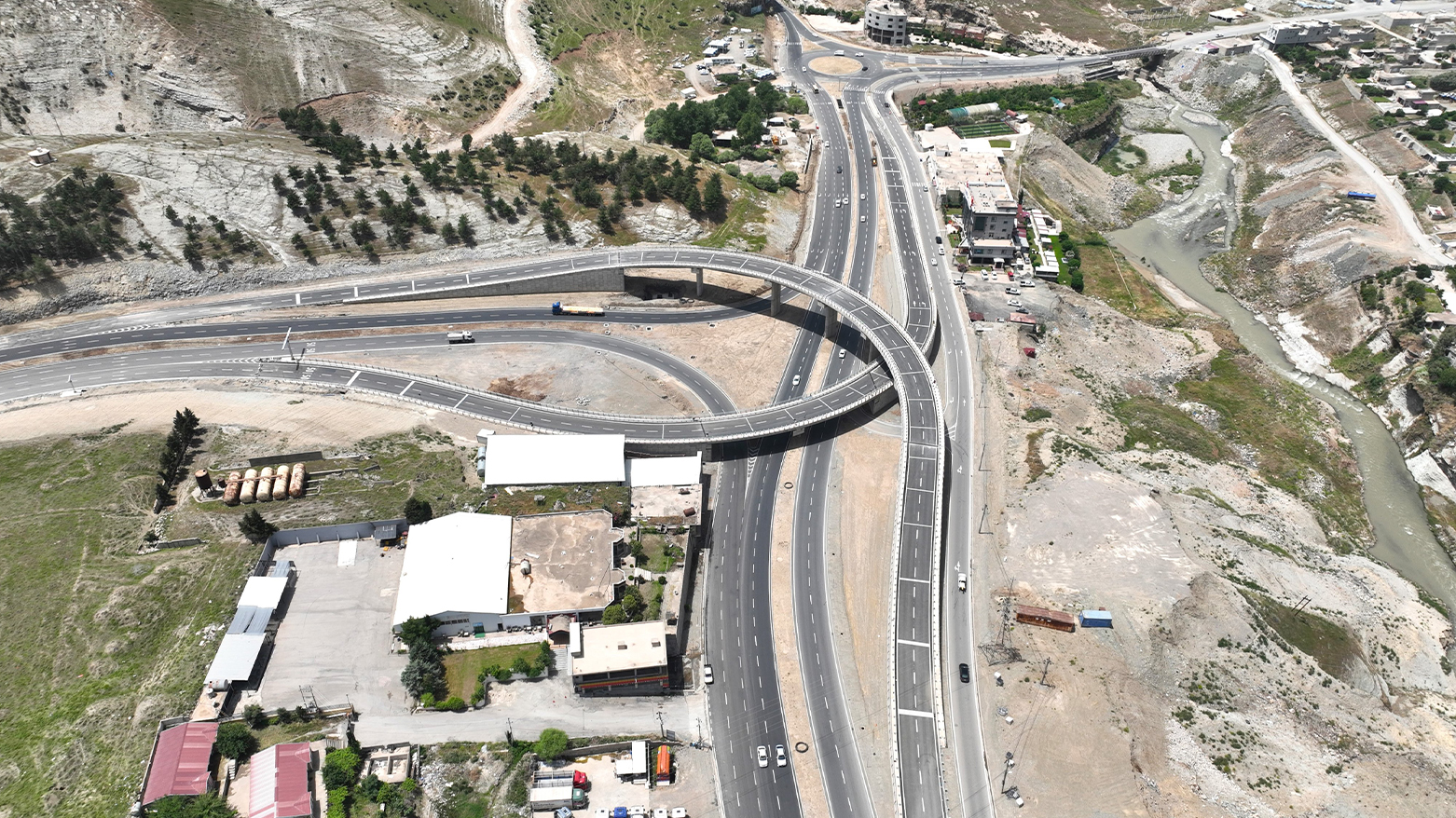
ERBIL (Kurdistan24) - Modern roads are reshaping daily commerce across the Soran Independent Administration, where newly completed highways, bridges and transport corridors are shortening travel times for freight operators, improving access to markets for farmers and reinforcing one of the Kurdistan Regional Government's central economic development priorities.
According to Kurdistan24, truck drivers traveling the international route linking the Kurdistan Region with Iran say years of difficult journeys over deteriorated roads are giving way to faster and safer transport.
The improvements are reducing wear on commercial vehicles while making cross-border cargo movement more predictable along one of the Region's busiest trade corridors.
Yahya, an international truck driver who has worked the route for two decades, told Kurdistan24 that conditions have changed dramatically compared with previous years.
Roads once marked by severe damage and uneven surfaces frequently delayed deliveries and increased maintenance costs, he said.
The upgraded network has made long-distance transport less physically demanding while improving safety for drivers carrying goods between the border and urban markets.
He added that completing the remaining phases of the road program would further streamline freight movement between border crossings and commercial centers, a development that transport operators believe could strengthen regional logistics and trade.
The benefits extend well beyond the trucking industry.
Farmers across the Soran region say improved transportation infrastructure is beginning to transform how agricultural products reach consumers, reducing both travel times and distribution expenses while expanding access to domestic and international markets.
One farmer from the region told Kurdistan24 that moving produce over older roads had long increased transportation costs and complicated deliveries.
Newly constructed highways, bridges and tunnels, he said, are allowing agricultural goods to reach markets more quickly and efficiently, helping preserve product quality while lowering operating expenses.
Those experiences illustrate why the government's road-building program is being presented as more than a series of construction projects.
Efficient transportation networks influence nearly every stage of economic activity, from moving agricultural harvests and commercial imports to supporting tourism and facilitating cross-border trade.
Shorter travel times, safer roads and lower logistics costs can improve competitiveness for businesses while encouraging investment across rural and urban communities alike.
Engineering standards have been a defining feature of the latest infrastructure projects, with authorities emphasizing internationally recognized design and safety requirements throughout construction.
The approach aims not only to improve driving conditions but also to strengthen the long-term durability of strategic transport corridors.
Among the next major priorities is the planned highway at Khalifan Curve, a section of road that has historically experienced heavy congestion and a high number of traffic accidents.
Authorities have approved plans to convert the route into two lanes in each direction, with construction expected to begin in the near future as part of broader efforts to improve safety and traffic flow.
The government's wider infrastructure strategy provides additional context for those projects.
According to a statistical report released by the KRG Department of Media and Information covering the Ninth Cabinet's work between 2019 and 2026, transportation investment has become one of the administration's largest development priorities.
The government report states that 1,271 road projects, representing planned investment exceeding 5.3 trillion Iraqi dinars and nearly 5,940 kilometers of roadway, have been launched across the Kurdistan Region.
Of those, 810 projects covering more than 3,055 kilometers have been completed, while work continues on another 461 projects totaling approximately 2,885 kilometers.
According to the report, construction extends across Erbil, Duhok, Sulaimani, Halabja, Soran, Garmian, Raperin and Zaxo, complemented by thousands of municipal road, bridge and public works projects.
Read More: KRG Report Details Ninth Cabinet Projects and Reforms, 2019-2026
Traffic engineering improvements, including pedestrian bridges, underpasses, road barriers, crossings, speed-control measures and upgraded signage, have also been introduced to improve mobility and public safety.
The transportation program forms part of a broader development agenda that the government says includes investments in electricity, water infrastructure, agriculture, digital governance and logistics.
Those complementary projects are intended to reinforce economic diversification while strengthening the physical infrastructure needed to support expanding commercial activity throughout the Kurdistan Region.
As new highways continue to connect farming communities, commercial centers and international border crossings, the road network emerging across the Soran Independent Administration reflects a wider effort to strengthen regional connectivity.
By improving the movement of people and goods while reducing transportation costs, these infrastructure investments are designed to support agriculture, expand trade opportunities and lay a stronger foundation for long-term economic development across the Kurdistan Region.
|
Summary New Kurdistan roads across the Soran Independent Administration are improving trade, agriculture and logistics under the KRG Ninth Cabinet. Expanded highways, bridges and transport infrastructure are reducing travel times, supporting Haji Omeran commerce and strengthening regional economic development. |