Iraq Finance Ministry Defines Role in Anti-Corruption Asset Recovery
The Iraqi Ministry of Finance says its role is to safeguard public funds through legally enforceable asset recovery while criminal prosecutions and clemency decisions remain solely under the judiciary's authority amid Iraq's widening anti-corruption campaign.
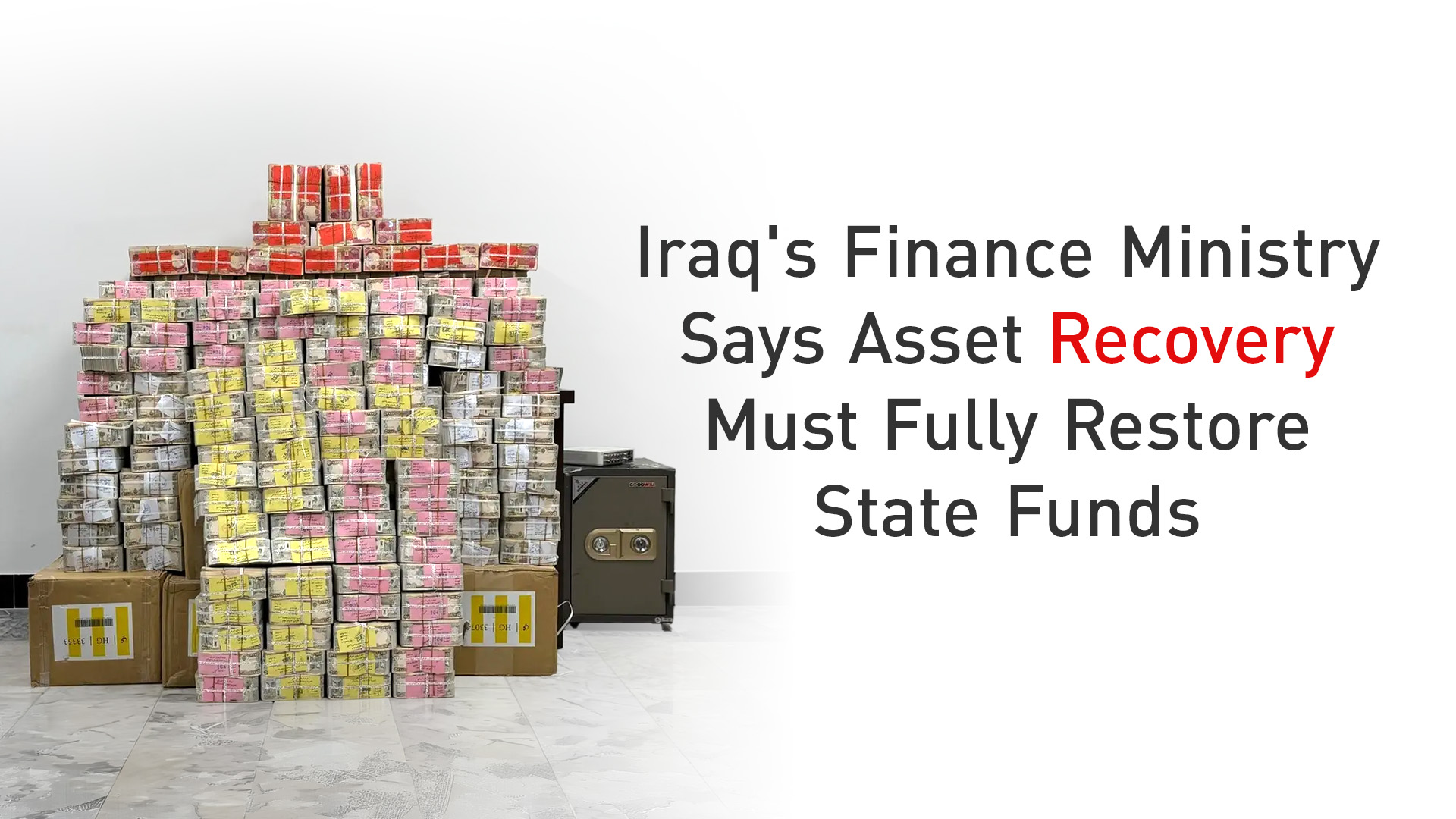
ERBIL (Kurdistan24) - Iraq's Ministry of Finance has clarified the limits of its authority in corruption cases, stressing that its primary legal responsibility is to safeguard the state treasury by recovering public funds while leaving criminal prosecutions, sentencing and clemency decisions exclusively to the judiciary.
The statement, issued Saturday in response to recent decisions by Iraq's Supreme Judicial Council, seeks to define the ministry's position as Baghdad intensifies one of its most far-reaching anti-corruption campaigns in recent years.
By drawing a clear distinction between financial administration and judicial authority, the ministry underscored that protecting public assets and ensuring due process are complementary but legally separate functions.
According to the ministry, its role in corruption investigations centers on restoring money owed to the state and ensuring that any repayment arrangements fully protect the public treasury.
It said mechanisms allowing convicted individuals to return funds must be legally binding, enforceable and capable of guaranteeing the complete recovery of state assets.
The ministry also emphasized that matters involving criminal liability, court proceedings, reduced sentences, amnesty requests or clemency petitions remain solely within the jurisdiction of Iraq's courts, which exercise those powers under the country's established legal framework.
The clarification follows a statement from the Supreme Judicial Council outlining what it described as a dual-track approach to combating corruption: prosecuting those responsible while simultaneously pursuing the recovery of embezzled public funds.
Within that framework, the Ministry of Finance has been identified as the injured party in major financial crimes, giving it a central role in determining how recovered assets are returned to the state.
That issue has drawn particular attention in the long-running tax deposit scandal known as the "Theft of the Century," where judicial authorities have said a request involving businessman Nour Zuhair remains under review pending the ministry's position on an acceptable repayment mechanism.
The council has stressed that any legal facilitations must be balanced against safeguarding the state's financial interests.
The ministry's latest statement reinforces that position, signaling that financial settlements must be structured in a way that protects the treasury while remaining consistent with judicial rulings.
The clarification also comes as Iraq broadens anti-corruption investigations across multiple sectors.
Recent operations by the Iraqi Integrity Commission resulted in the arrest of Rafidain Bank officials in Diwaniyah over allegations of embezzling approximately 1.6 billion Iraqi dinars through manipulation of the bank's cash reserves. The allegations remain subject to legal proceedings.
Read More: Iraq Arrests Rafidain Bank Officials Over Alleged $1.1 Million Embezzlement Scheme
Meanwhile, Iraqi authorities continue expanding investigations linked to former Oil Ministry Undersecretary Adnan al-Jumaili.
Read More: Iraq Seizes Additional 25 Billion Dinars in Expanding Jumaili Corruption Case
The Supreme Judicial Council has announced successive recoveries of cash, gold and other assets allegedly connected to the case, while officials have also begun pursuing international legal channels in an effort to trace suspects and recover funds believed to have been transferred abroad.
Read More: Iraq's Anti-Corruption Drive Reaches France as $500 Million Probe Widens
Those allegations remain under judicial investigation and have not been proven in court.
Throughout the campaign, Iraqi authorities have increasingly emphasized that recovering stolen assets is as important as securing criminal convictions.
Asset tracing, seizure orders, cooperation with oversight bodies and cross-border legal coordination have become integral components of corruption investigations that increasingly extend beyond Iraq's borders.
Concluding its statement, the Ministry of Finance reaffirmed its commitment to working closely with the judiciary and relevant oversight institutions to protect public wealth under the rule of law.
As Iraq's anti-corruption drive continues to evolve, the effectiveness of that institutional coordination is likely to play an increasingly important role in future investigations, asset recovery efforts and broader governance reforms aimed at strengthening accountability and public confidence.
|
Summary Iraq's Ministry of Finance clarified its role in the anti-corruption campaign, emphasizing asset recovery, protection of public funds and coordination with the judiciary. The statement comes as Iraq expands corruption investigations, strengthens the rule of law and pursues stolen assets. |