Can Syria Turn Global Investment Momentum Into Lasting Economic Recovery?
As Syria attracts renewed international investment following diplomatic breakthroughs, investors continue to weigh reconstruction opportunities against persistent security, governance, and institutional challenges.
ERBIL (Kurdistan24) - Syria is entering what many officials and analysts regard as its most significant economic opening in more than a decade, as renewed diplomatic engagement and easing international restrictions create new opportunities for investment, reconstruction, and reintegration into regional markets. Yet while foreign companies are signaling growing interest across multiple sectors, the country's ability to convert that momentum into sustained economic recovery will depend largely on whether it can overcome longstanding security, governance, and institutional obstacles.
After years of war devastated infrastructure and weakened state institutions, Syria faces enormous reconstruction needs.
The country's economy contracted sharply during the conflict, leaving much of the population in poverty and making foreign investment an essential component of any long-term recovery strategy.
Recent diplomatic developments have altered that outlook.
Moves by several Western governments to ease economic restrictions, alongside efforts to reintegrate Syria into the international financial system, have encouraged a wave of regional and international commercial interest.
The momentum was further reinforced by high-level diplomatic engagement, including French President Emmanuel Macron's visit to Damascus, which was accompanied by major agreements in infrastructure and energy.
Investment proposals now span sectors widely viewed as critical to rebuilding the economy.
Energy companies are exploring opportunities to revive gas production, while telecommunications, logistics, ports, aviation, agriculture, tourism, and real estate have all emerged as priorities for both Syrian authorities and prospective investors.
Regional firms have announced projects ranging from telecommunications expansion to port modernization, airport development, and large-scale real estate investments.
Other initiatives are aimed at increasing agricultural production, restoring damaged farmland, expanding oil output, and rebuilding tourism, which officials view as a potential future source of foreign revenue.
Together, these projects illustrate a broader ambition that extends beyond post-war reconstruction.
Syrian authorities are seeking to reshape the country's economy by reconnecting it with regional trade routes, modernizing infrastructure, and encouraging private-sector participation after years of conflict and isolation.
Despite growing optimism, investors continue to identify significant risks.
Security remains the foremost concern.
Recent violence in Damascus following renewed international engagement highlighted the fragility of conditions on the ground.
Energy executives have publicly acknowledged that security challenges continue to complicate commercial operations, particularly in strategic sectors requiring long-term investment commitments.
Political and territorial disputes also continue to weigh on confidence.
Unresolved issues involving different regions and communities, together with continuing cross-border security tensions, contribute to uncertainty over the stability of future investments and the protection of critical infrastructure.
Economists cited in the reporting argue that lasting recovery will require more than foreign capital alone.
Strengthening the rule of law, protecting property rights, modernizing the financial system, stabilizing the currency, improving transparency, and reinforcing independent institutions are widely viewed as essential prerequisites for sustainable growth.
Governance reforms are equally important.
Analysts say investors will closely monitor whether Syria can establish reliable legal and regulatory frameworks capable of enforcing contracts, combating corruption, and providing greater predictability for businesses considering long-term commitments.
Another challenge lies in rebuilding human capital after years of conflict and outward migration.
Specialists argue that encouraging members of Syria's diaspora to return and establish businesses could help restore confidence and attract additional international investment.
Against this economic backdrop, Syria is also attempting to rebuild its political institutions.
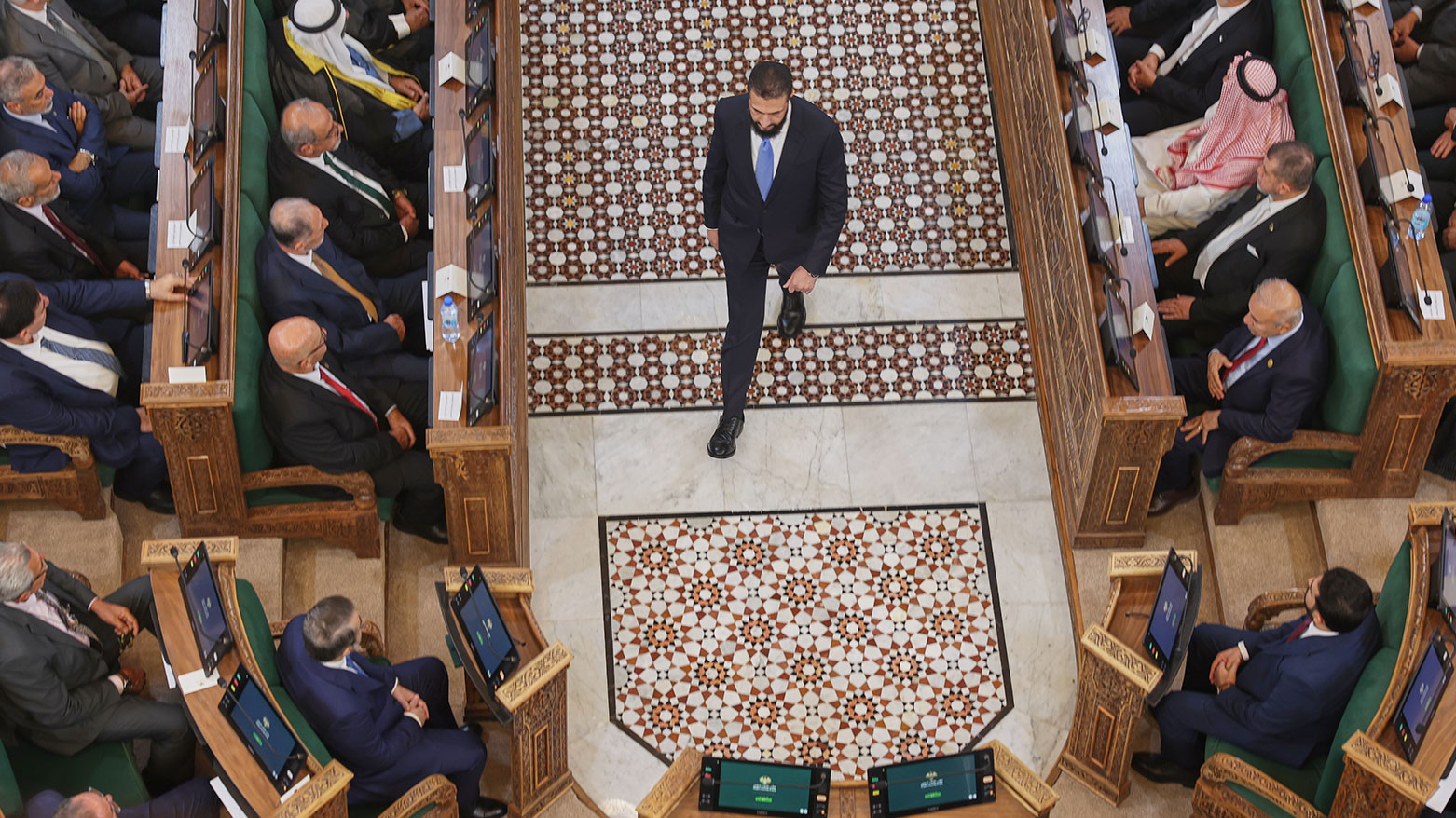
According to Agence France-Presse (AFP) and The Associated Press (AP), the country's transitional parliament convened its first session on Sunday, marking another step in the post-Assad political transition.
During its 30-month mandate, the legislature is expected to draft a new constitution, approve budgets, and consider legislation intended to guide the country's institutional reconstruction.
President Ahmed al-Sharaa described the parliamentary session as the beginning of a new chapter, calling on lawmakers to strengthen respect for institutions and the rule of law.
The United Nations also characterized the inaugural session as an important milestone in Syria's political transition.
At the same time, questions remain over the parliament's independence, representation, and separation of powers.
Critics have pointed to the method used to select lawmakers, the limited role of direct elections, and concerns about the concentration of executive authority.
Political analysts quoted by AFP argue that the legislature's credibility will ultimately depend on whether it can exercise meaningful oversight and develop independently of the executive branch.
For investors, those institutional developments carry implications beyond politics.
Stable governance, credible legislation, and effective public institutions are widely regarded as necessary foundations for major reconstruction projects that may extend over many years.
Syria's economic reopening therefore represents both a rare opportunity and a demanding test.
International interest appears stronger than at any point since the conflict began, but attracting capital is only the first step.
Whether that interest evolves into durable economic recovery will depend on the country's success in improving security, strengthening institutions, advancing political reforms, and creating an environment in which businesses have confidence to invest for the long term.
|
Summary Syria's economic opening is drawing major investment interest across energy, infrastructure and logistics, but security, governance and institutional reforms remain crucial. The new parliament may shape investor confidence as reconstruction accelerates, according to AFP and AP. |
Kurdistan24's journalist Mothafar Mzuri contributed to this report.