Iraqi Prime Minister Heads to Washington on Official Visit Focused on Economy, Investment, and Technology
Ali al-Zaidi seeks to transform Baghdad-Washington ties beyond security as anti-corruption campaign and militia disarmament remain under international scrutiny
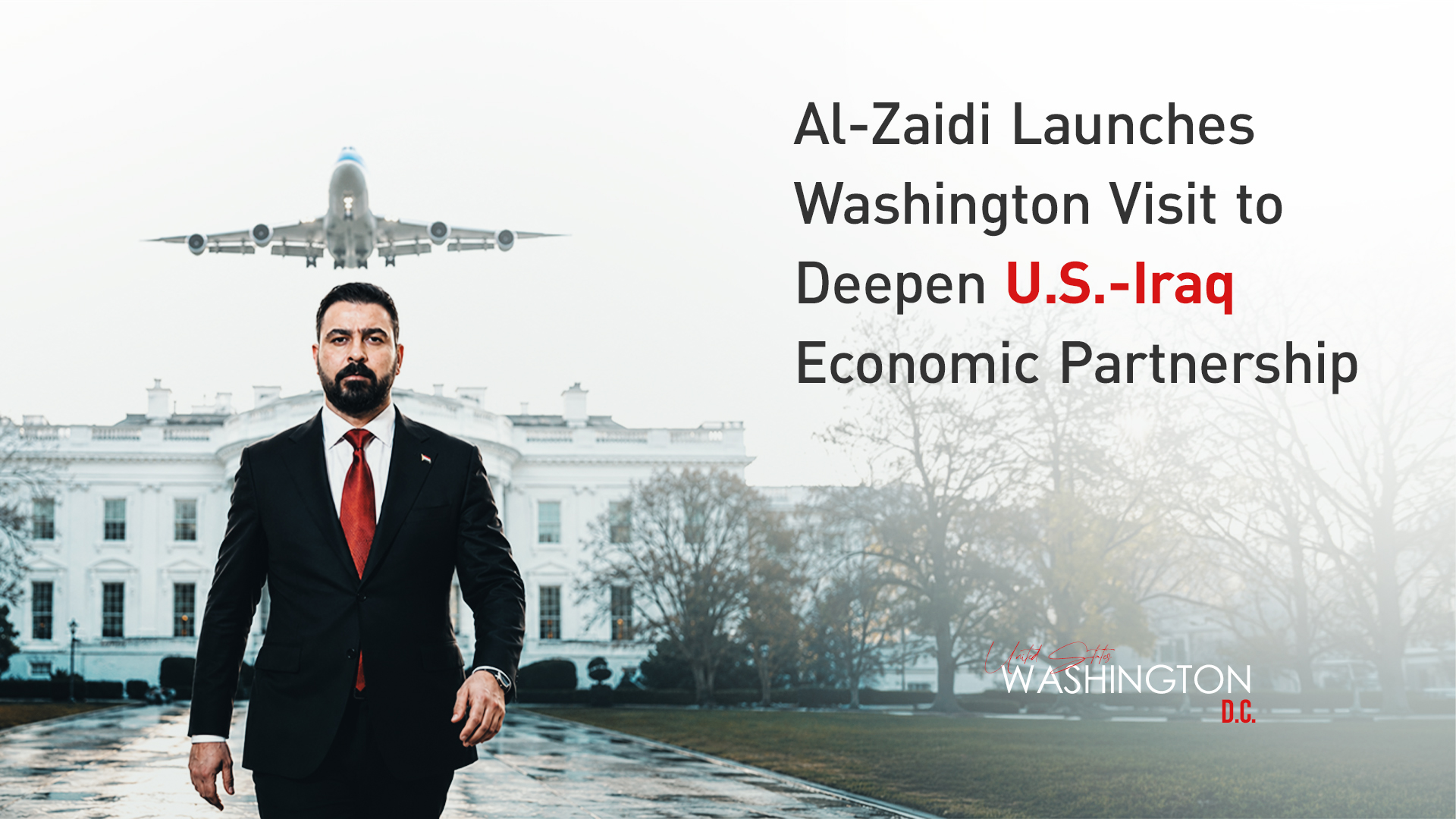
ERBIL (Kurdistan24) — Iraqi Prime Minister Ali Falih al-Zaidi departed for the United States early Monday on an official visit leading a high-level government and economic delegation, aiming to deepen bilateral cooperation in energy, investment, technology, and economic development while reshaping relations with Washington beyond their traditional security focus.
According to a statement from the Iraqi Prime Minister's Media Office, al-Zaidi left for Washington on Monday, accompanied by senior government officials and economic advisers.
"I am heading to Washington today at the head of a government and economic delegation, determined to translate the strength of Iraqi-American relations into genuine economic and investment partnerships that will open broader horizons for cooperation in energy, technology, infrastructure, the digital economy, and financing. Our objective is clear: to attract investment, transfer expertise, diversify Iraq's economy, and create jobs in a way that advances development and reinforces Iraq's position as a trusted partner and a key contributor to regional stability and prosperity," al-Zaidi said in a statement posted on X on Monday.
The visit is expected to focus on broadening economic ties between Iraq and the United States, with both sides seeking to establish a long-term strategic partnership centered on investment, infrastructure, and technological cooperation.
Among the top priorities on the agenda is expanding cooperation in Iraq's oil and gas sector, including accelerating investment in associated gas projects to reduce flaring and waste while increasing the participation of U.S. energy companies in developing the country's energy resources.
The two sides are also expected to discuss upgrading Iraq's electricity network through cooperation with American firms to build new power generation plants, modernize electricity transmission and distribution systems, and expand investment in renewable energy.
Another key proposal is the establishment of a joint Energy and Development Fund, under which a portion of Iraq's oil revenues would finance strategic infrastructure projects, including highways, railways, ports, and industrial cities.
Technology and digital transformation are also expected to feature prominently during the visit, with discussions planned on attracting advanced American technologies in manufacturing, cybersecurity, digital governance, and artificial intelligence.
The agenda further includes talks on banking and financial reforms aimed at integrating Iraq's financial sector into the global banking system to boost investor confidence and facilitate foreign investment.
In addition, Iraqi officials are expected to seek expanded cooperation in agriculture, healthcare, and education, with the goal of strengthening food security, developing the country's food industries, and enhancing human capital through educational and medical partnerships.
Al-Zaidi is also scheduled to hold a series of meetings with the U.S. Chamber of Commerce and major American companies interested in investing in Iraq, where the Iraqi government plans to present legal guarantees and investment protections designed to encourage greater private-sector participation.
The visit comes amid sweeping domestic reforms launched by al-Zaidi's government following the arrest and investigation of Deputy Oil Minister Adnan Jumeili, who oversaw refinery affairs.
The case has triggered a major anti-corruption campaign that has resulted in the detention of dozens of lawmakers, political party leaders, and senior officials accused of corruption.
Earlier, Iraq's Supreme Judicial Council announced that authorities had seized approximately 127 billion Iraqi dinars and $24 million linked to the investigation, in addition to confiscating multiple properties, vehicles, and quantities of gold.
The Washington visit also takes place as the Iraqi government continues efforts to consolidate state authority over weapons. Al-Zaidi has repeatedly stressed that arms must remain exclusively under state control. While three armed groups have announced their willingness to disarm, several others have rejected the proposal.
The issue remains a key concern for Washington, which has made the disarmament of armed factions a central condition for cooperation with Iraq's new government and has insisted that armed groups should not participate in the country's governing institutions.
The article was updated on July 13, 2026, at 12:06 pm.