UAE Condemns Hormuz Attacks as Analyst Warns Strait Cannot Become Tool of Coercion
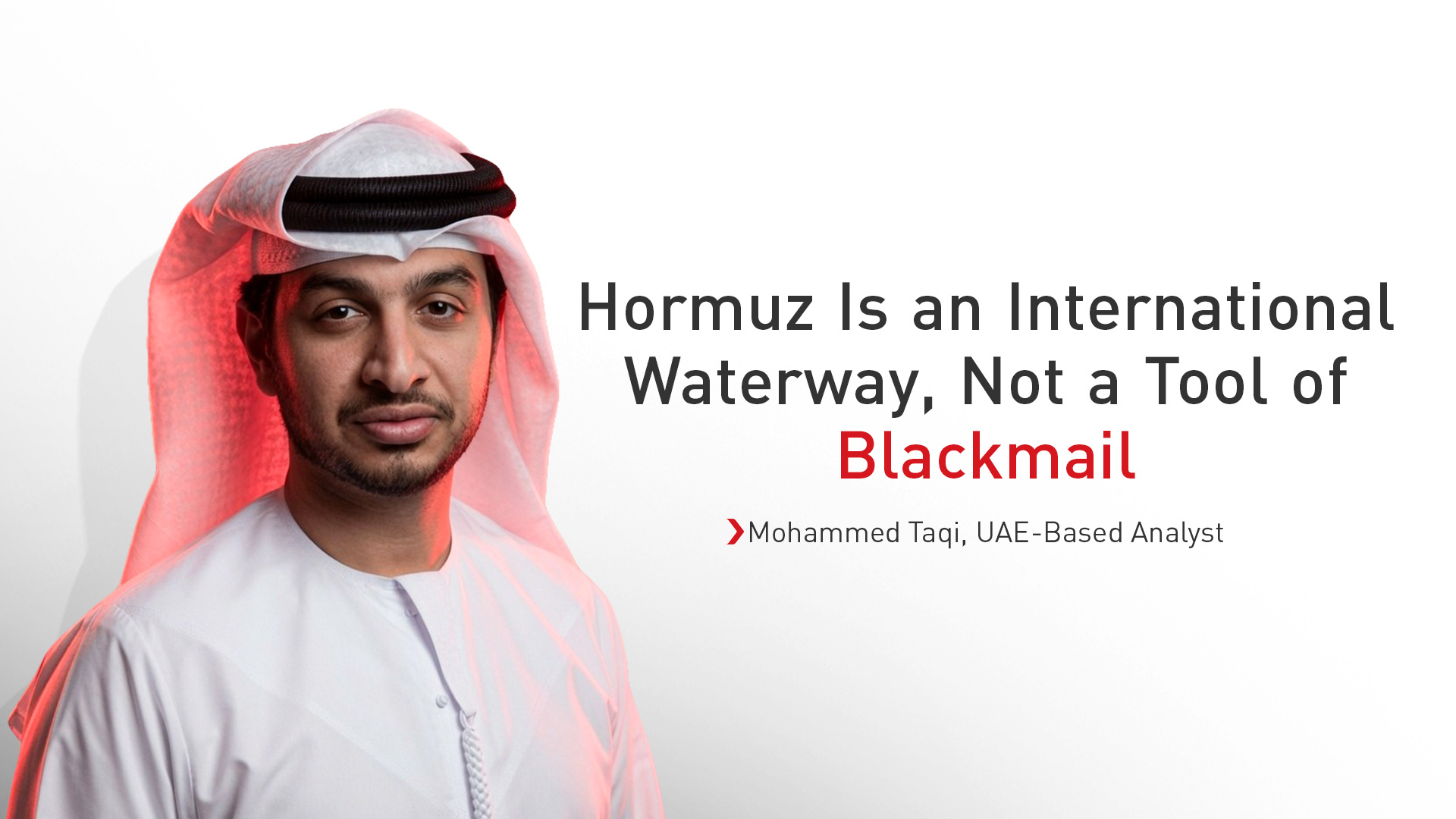
Mohammed Taqi tells Kurdistan24 that safeguarding the Strait of Hormuz under international law is essential to protecting regional security, global energy markets, and maritime commerce.
ERBIL (Kurdistan24) - The United Arab Emirates has sharply condemned what it described as Iranian attacks on two of its national oil tankers in the Strait of Hormuz, while also denouncing renewed missile and drone strikes against Bahrain and Jordan, arguing that the incidents represent a serious challenge to regional stability and the rules governing international navigation.
In separate statements issued Tuesday, the UAE Ministry of Foreign Affairs characterized the attacks on the tankers Mombasa and Al Bahiyah as a grave breach of international law and rejected any attempt to use one of the world's busiest maritime corridors as an instrument of economic pressure.
Abu Dhabi likewise expressed full solidarity with Bahrain and Jordan following the latest cross-border strikes, describing the attacks as violations of the sovereignty and security of both countries.
The diplomatic response framed the latest escalation as extending beyond a dispute between regional rivals.
It also provided the backdrop for a broader strategic assessment offered by Emirati political analyst Mohammed Taqi, who argued in an interview with Kurdistan24 correspondent that the implications reach well beyond the Gulf itself.
For Taqi, the central issue is not only the latest exchange of military force but the future of the Strait of Hormuz as an international maritime passage.
He argued that the waterway is governed by established international rules rather than the authority of any individual state, making attempts to threaten commercial navigation a challenge to principles that underpin global maritime commerce.
In his assessment, attacks against civilian shipping alter the nature of regional confrontation by placing international trade routes directly within the scope of political and military competition.
Such actions, he said, risk transforming a strategic shipping lane into a mechanism for coercion rather than commerce.
That distinction carries significance because the Strait of Hormuz occupies a unique position in the international economy.
It links Gulf energy producers with markets across Asia, Europe, and beyond, making uninterrupted navigation a matter of concern not only for states bordering the Gulf but also for governments and industries dependent upon reliable energy supplies and predictable shipping routes.
Taqi told Kurdistan24 that preserving freedom of navigation cannot be viewed solely through a regional security lens. In his view, attacks on commercial vessels reverberate across international markets by introducing uncertainty into transportation networks and energy distribution, with consequences extending far beyond the immediate area of conflict.
His analysis also places responsibility on the broader international community.
Rather than responding through unilateral measures alone, Taqi argued that safeguarding one of the world's most strategically important waterways requires sustained coordination among Gulf states and international partners committed to maintaining maritime security under international law.
He maintained that no single country should be able to redefine the legal character of an international shipping corridor through the use or threat of force.
That argument closely mirrors the language employed by the UAE in its official statements.
The Foreign Ministry emphasized that attacks targeting commercial vessels and interference with internationally recognized shipping lanes threaten regional stability as well as global energy security. It called for an end to hostilities affecting maritime traffic and urged respect for internationally protected navigation routes.
The ministry also expressed condolences following the death of an Indian crew member aboard one of the tankers and wished a speedy recovery to the injured, who included Indian and Ukrainian nationals.
By highlighting the multinational composition of the crews, the UAE underscored another dimension of the crisis: maritime incidents in the Gulf increasingly involve citizens, companies, and commercial interests from numerous countries, reinforcing the international character of the dispute.
Taqi argued that this reality further strengthens the case for collective action.
According to his assessment, Gulf security should be understood as a shared responsibility rather than a series of isolated national concerns.
Any disruption affecting one state's commercial infrastructure inevitably carries implications for neighboring countries and for international partners whose economies depend on uninterrupted maritime trade.
His comments also suggest that confidence in regional stability cannot be separated from confidence in commercial predictability.
For investors, shipping companies, insurers, and energy markets, the credibility of international navigation rules is closely linked to broader assessments of political risk. Maintaining secure sea lanes therefore becomes not only a military objective but also an economic necessity.
That wider sense of uncertainty has already begun to influence diplomatic operations in the region.
Amid deteriorating security conditions, the U.S. Embassy in Abu Dhabi and the U.S. Consulate General in Dubai temporarily suspended routine consular appointments while maintaining only limited emergency services.
The diplomatic mission also remained under ordered-departure status for non-essential personnel and issued updated security guidance urging American citizens to monitor developments closely, maintain emergency preparedness, and follow instructions from local authorities.
Read More: U.S. Embassy in Abu Dhabi Suspends Consular Appointments as Regional Security Crisis Deepens
Although those measures were administrative rather than political, they illustrated how the effects of the regional crisis are extending into diplomatic and civilian activity beyond the immediate military sphere.
The heightened precautions reflected growing concern over attacks affecting Gulf shipping and the possibility of further instability disrupting normal operations across the region.
For Taqi, however, the broader strategic challenge remains preserving the legal and political framework governing the Strait of Hormuz itself.
He argued that allowing commercial vessels to become targets risks undermining confidence in international maritime norms that have long supported global trade. Protecting those norms, he suggested, requires consistent adherence to international law rather than allowing geopolitical confrontation to redefine the character of one of the world's most important shipping passages.
The UAE's official position similarly emphasizes that commercial navigation should remain insulated from regional conflict.
Its statements rejected the use of the Strait as an instrument of economic or political leverage and called for the restoration of conditions that allow international shipping to move safely through the waterway.
Together, Abu Dhabi's diplomatic response and Taqi's analysis present the latest escalation as more than another episode in a volatile regional confrontation.
Instead, they frame it as a test of whether one of the world's most critical maritime corridors can continue to function according to internationally recognized rules despite mounting geopolitical tensions.
As governments strengthen security measures and monitor developments across the Gulf, the debate increasingly extends beyond military calculations to the future of maritime governance itself. For Taqi, the enduring lesson is that the Strait of Hormuz serves the international community as a whole, and preserving its openness will depend on sustained regional cooperation, respect for international law, and a shared commitment to keeping global commerce separate from political and military confrontation.
|
Summary The UAE condemned attacks on its tankers and strikes against Bahrain and Jordan as Mohammed Taqi told Kurdistan24 the Strait of Hormuz must remain protected by international law, warning that threats to commercial shipping endanger regional stability, global energy markets, and freedom of navigation. |