Tom Barrack: Trade, Not War, Is the Path to Lasting Peace in the Middle East
The US special envoy said past efforts to reshape the region through military intervention had failed, outlining a new strategy centered on trade, investment, and Iraq's role as a regional economic hub.
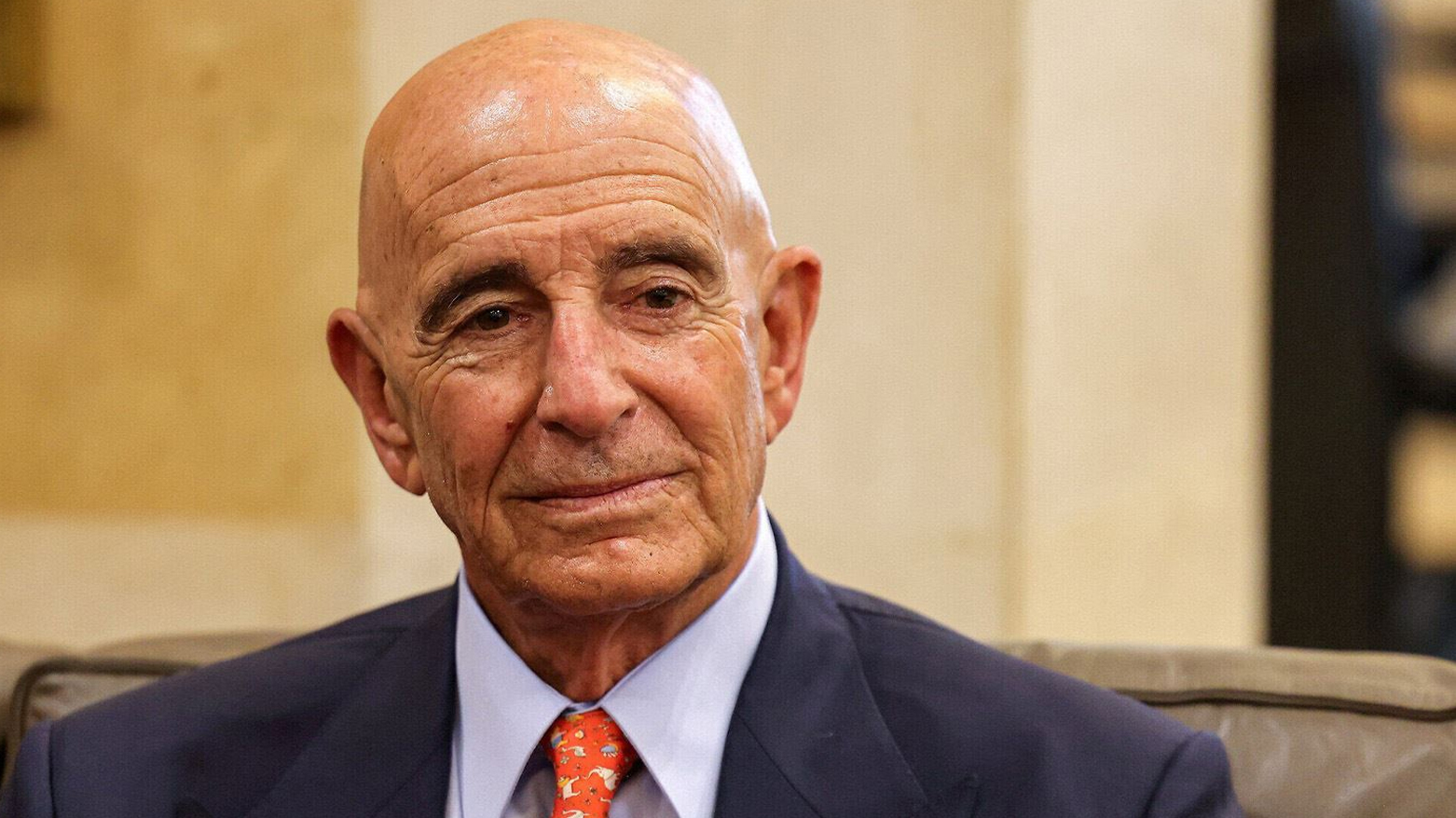
ERBIL (Kurdistan24) - US Special Envoy for Iraq and Syria Tom Barrack said on Friday that the United States is pursuing a new strategy for the Middle East based on trade, investment, and economic integration rather than war or regime change, describing Iraq as the centerpiece of a new regional partnership focused on security, energy, and prosperity.
Speaking during the US-Iraq Business Summit on Friday, Barrack delivered a wide-ranging address that sharply criticized previous US foreign policy approaches in the region while presenting what he described as a new vision under President Donald Trump's administration.
Barrack opened his remarks by reflecting on the Middle East's historical significance.
"Over the past 3,000 years, 75 prophets have been sent to this region," he said. "That reflects the global importance of this land as the cradle of civilization."
The US envoy argued that decades of attempts to reshape the region through military intervention had failed to achieve lasting stability.
"Since the end of World War I, there have been 23 attempts at regime change in this region, yet not a single one has produced a successful outcome," Barrack said.
"We have learned that diplomacy, intelligence, and military power alone cannot create peace. Only economic investment and trade can deliver lasting success."
Barrack outlined what he described as a major strategic initiative that would position Iraq at the heart of a new regional partnership linking Mesopotamia, Syria, and the Gulf.
"We are working on a new energy corridor extending through Türkiye, Azerbaijan, and Turkmenistan, across Central Asia and onward to Europe," he said. "Iraq will become a central part of this new energy and transportation map."
According to Barrack, the initiative is intended to strengthen regional integration through infrastructure, commerce, and long-term investment.
The US envoy also praised Iraqi Prime Minister Ali Faleh al-Zaidi, describing him as "a young leader with a clear and transparent vision."
Barrack encouraged American businesses and companies to fully support the Iraqi government.
"This leader has the ability to transform a 23-year relationship marked by complexity and move Iraq toward a new era of prosperity and stability," he said.
Concluding his address, Barrack emphasized that Washington's future engagement with Iraq would be guided by economic cooperation rather than military confrontation.
"We want to continue our relationship with Iraq through trade and reconstruction instead of war and destruction," he said, adding that this approach represents the only sustainable path to protecting the interests of both countries and the peoples of the region.