U.S. Launches Seventh Straight Night of Strikes on Iran as Tensions Deepen
CENTCOM says the latest strikes are aimed at degrading Iran's military capabilities as Tehran warns continued attacks could trigger a broader regional offensive.
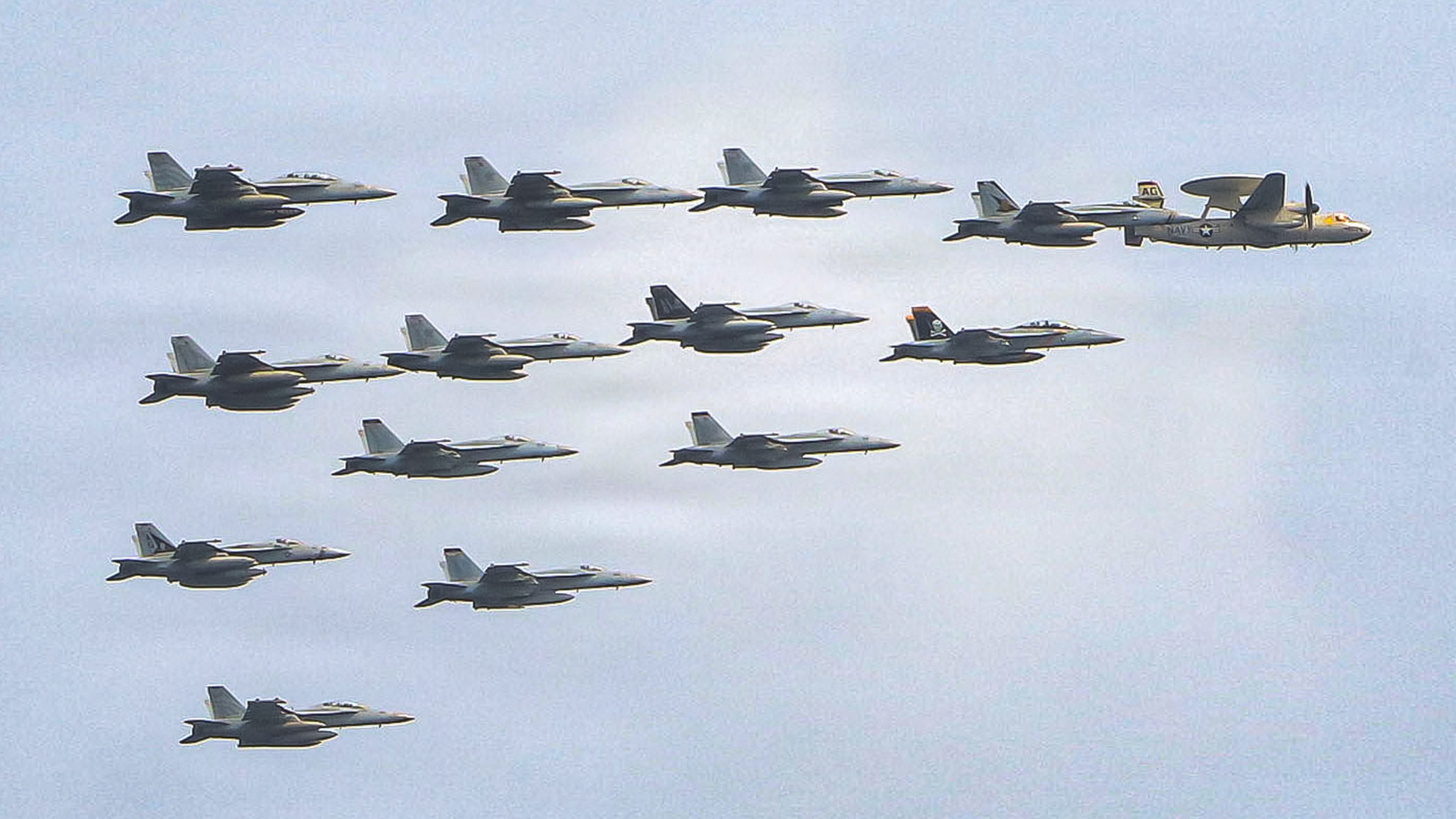
ERBIL (Kurdistan24) - U.S. forces launched a seventh consecutive night of military strikes against Iran on Friday, according to the U.S. military, extending an air campaign that has become the defining feature of an increasingly entrenched confrontation between Washington and Tehran.
According to Agence France-Presse (AFP), U.S. Central Command (CENTCOM) said the latest operation began at 1900 GMT and forms part of an ongoing effort to further weaken Iran's military capabilities.
CENTCOM stated that it "launched a round of strikes against Iran at 3 p.m. ET today for the seventh consecutive night. The strikes are designed to continue degrading Iranian military capabilities at the Commander in Chief's direction."
"American forces remain vigilant as the United States strictly enforces the naval blockade against Iran. During the first three days of renewed implementation, U.S. forces have redirected 4 commercial vessels, disabled 1, and boarded 1 to ensure full compliance," the statement added.
The announcement suggests Washington intends to sustain pressure through successive operations rather than limit its response to isolated strikes, reinforcing signs that the conflict has entered a prolonged phase.
The renewed attacks come at a moment when both military activity and political rhetoric are intensifying across the Middle East. As U.S. operations continue, Iranian officials have warned that additional strikes could prompt a much broader response, underscoring concerns that the conflict may expand beyond its current scope if neither side alters course.
AFP reported that Major General Mohsen Rezaei, a senior military adviser, said Tehran was prepared to move beyond what it described as proportional retaliation if U.S. attacks continued for several more days. According to his remarks, Iran could launch what he characterized as "full-scale offensive operations," while warning that political boundaries would no longer shield potential targets. His comments reflect Tehran's public effort to signal that continued military pressure could produce a wider regional confrontation.
The exchange illustrates how the military balance is increasingly being shaped not only by battlefield operations but also by competing efforts to deter further escalation. While Washington has framed its campaign as one intended to degrade Iranian military capabilities, Tehran has sought to demonstrate that additional strikes would carry growing costs for U.S. interests and regional partners.
AFP also reported that Friday saw renewed exchanges involving drones and missiles as both sides traded attacks across multiple theaters. Iranian officials accused U.S. forces of striking civilian infrastructure, including transportation facilities, while Washington has continued expanding operations against targets it associates with Iran's military capabilities. Those competing accounts highlight the widening scope of the conflict, even as key claims remain contested.
The confrontation continues to revolve around the Strait of Hormuz, one of the world's most strategically important maritime corridors. Since hostilities resumed, commercial shipping has faced heightened risks, and maritime security has become central to the calculations of both governments. Iran has repeatedly linked its military posture to developments around the waterway, while the United States has maintained efforts aimed at protecting regional navigation and broader security interests.
The conflict's regional impact has also become increasingly visible. According to AFP, Iranian strikes have targeted U.S. interests and allied states across the Gulf, prompting air-defense activity in countries including Qatar, Jordan, Bahrain, Kuwait and Iraq. Kurdish authorities in Iraq likewise reported that drones were intercepted over Erbil, reflecting how neighboring states continue to confront the security consequences of a conflict extending well beyond Iranian territory.
Analysts cited by AFP say recent operations demonstrate that strategic infrastructure has become an increasingly prominent feature of the military campaign. Rather than focusing exclusively on conventional military positions, both sides are now operating in an environment where transportation networks, energy-related assets and other critical facilities have assumed greater strategic importance.
Despite the sustained military exchanges, diplomatic efforts have not disappeared entirely. AFP reported that international mediators, including China and Pakistan, continue urging Washington and Tehran to resume negotiations, even as the latest round of strikes illustrates how rapidly opportunities for dialogue are narrowing.
With the United States now conducting seven consecutive nights of military operations and Iran publicly warning of broader retaliation, the conflict appears increasingly defined by reciprocal escalation. While both governments continue to pursue their stated objectives, the expanding geographic reach of the confrontation is placing additional pressure on regional stability and leaving the prospects for a diplomatic breakthrough increasingly uncertain.
|
Summary U.S. forces launched a seventh straight night of strikes against Iran, according to CENTCOM, as Tehran warned continued attacks could trigger a broader offensive. The sustained campaign underscores mounting regional tensions, maritime security concerns and shrinking prospects for renewed diplomacy. |