U.S. Amb.: Premature Troop Withdrawal Could Leave Iraq Facing Security Vacuum
The former US ambassador to Iraq told Kurdistan24's Washington correspondent Issa Hassan that any American troop withdrawal should be guided by security conditions, warning that a premature exit would not serve Iraq, the Kurdistan Region, or the United States.
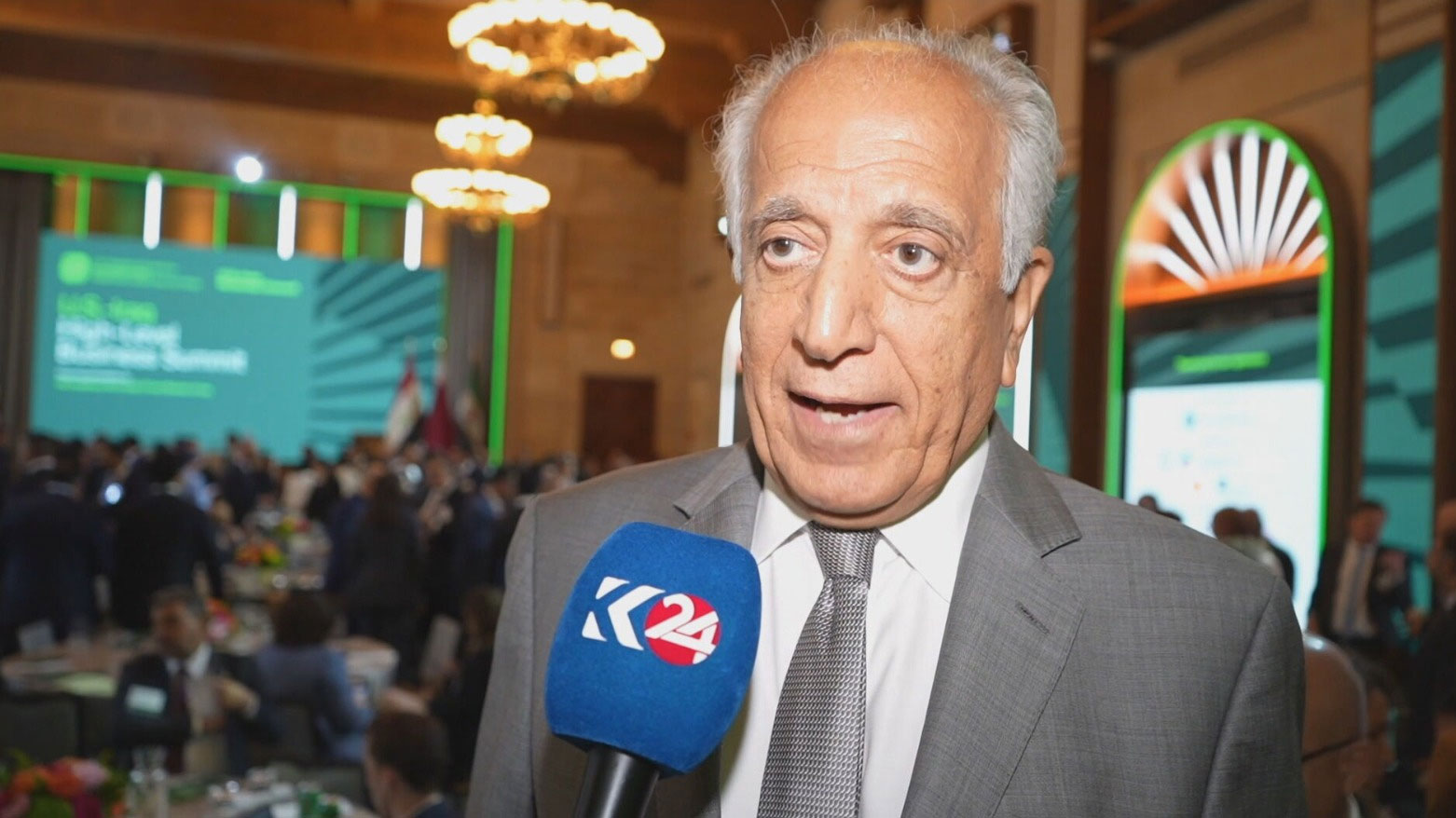
ERBIL (Kurdistan24) - Former US Ambassador to Iraq Zalmay Khalilzad said any withdrawal of US forces from Iraq should be determined by conditions on the ground, warning that creating a security vacuum amid ongoing threats would serve neither Iraq nor the Kurdistan Region nor the United States.
In an exclusive interview with Kurdistan24's correspondent in Washington Issa Hassan, Khalilzad said Iraq currently presents significant opportunities for US investment, driven by the new Iraqi prime minister's emphasis on business, trade, and economic cooperation.
"There’s a lot of hope and expectation of opportunities with the new Prime Minister, who is a businessman in background and he’s emphasizing economic opportunity, economic cooperation, business and trade," Khalilzad said.
He added that attracting international investment will ultimately depend on whether Iraq can provide a favorable business environment.
"The conditions have to be favorable to attract investment," he said. "It has to be profitable, there has to be security, there have to be real opportunities. I think the opportunities are there if the conditions for attracting investment will be there."
Khalilzad said he remains optimistic, noting that the Iraqi prime minister is "doing a great job... in messaging that Iraq is open for business and for investment."
Asked how Baghdad and Washington could overcome security challenges to encourage greater US investment, Khalilzad said security remains central to Iraq's economic future.
"It's a vital question because sometimes people talk about, 'Let's do business, less security,'" he said.
Khalilzad noted that discussions between Iraq and the United States currently focus on both economic cooperation and security arrangements, including the planned withdrawal of US forces by the end of September.
"We will have to see what the impact that will have," he said. "Will the militias disarm? Will the security environment be such that the neighbors do not interfere in Iraqi security affairs and make things difficult? These are important questions."
He stressed that investors will only feel confident operating in Iraq if the country's security environment improves.
"Ideally, the environment will be such from a security point of view that allows for business investment and for businesses to feel comfortable that they don't feel security risks in operating in Iraq."
Responding to a question about whether US forces should leave Iraq while missile and drone attacks continue to target the country, including the Kurdistan Region, Khalilzad said any decision must be based on realities on the ground rather than a fixed timeline.
"I personally think that we have to be condition-driven," he said. "If the conditions are such that it's safe to reduce or adjust or withdraw, one should do it."
However, he warned against a withdrawal that creates new security risks.
"It's not in Iraq's interest or in our interest or Kurdistan's interest for a security vacuum to be established where there are security challenges that remain," Khalilzad said.
He added that maintaining flexibility and preserving a framework for security cooperation would remain essential.
"We need to maintain some flexibility and a framework for security cooperation that exists. That framework needs to be fleshed out, details need to be provided to it that ensures, or at least assists with security."
Khalilzad concluded by describing the current security environment as "very difficult."
Khalilzad said Iraq's economic potential remains strong, but emphasized that long-term investment and any future adjustment of the US military presence must be supported by lasting security and continued cooperation between Baghdad and Washington.
Issa Hassan, Kurdistan24's Washington correspondent, contributed to this report.