Iran Claims Strikes on U.S. Bases in Jordan and Kuwait
Tehran says it destroyed American military assets in Jordan and launched attacks on multiple U.S. bases in Kuwait, while missile strikes near the Iraq-Iran border.
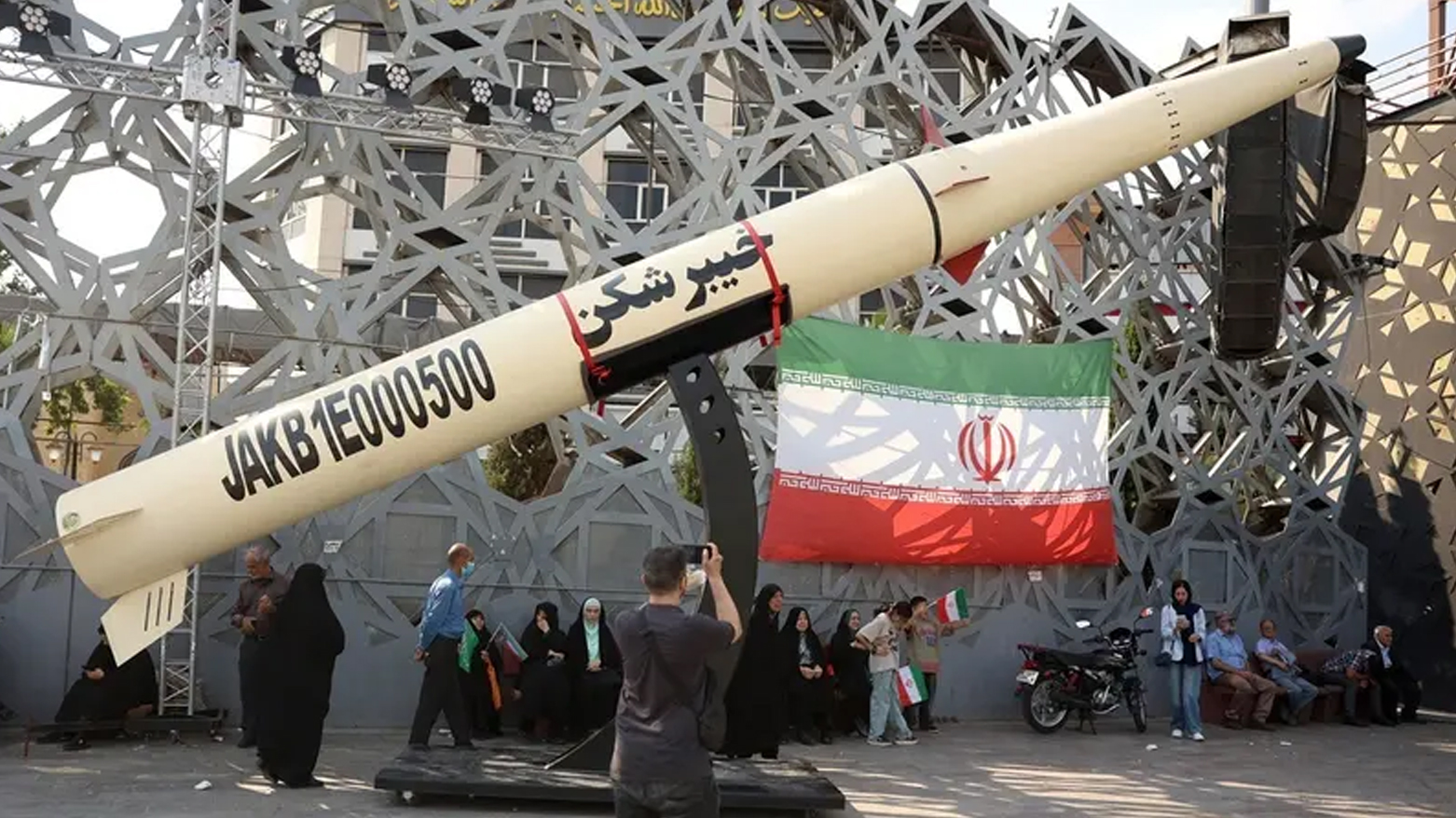
ERBIL (Kurdistan24) - Iran on Thursday claimed it had launched coordinated attacks against U.S. military installations in both Jordan and Kuwait, marking another major escalation in the expanding conflict between Tehran and Washington, while missile strikes near the Iraq-Iran border underscored the growing regional impact of the war.
In separate statements carried by Iranian state television, the Islamic Revolutionary Guard Corps (IRGC) and Iran's military announced attacks on several American military facilities across the two neighboring countries.
The IRGC, the ideological branch of Iran's armed forces, said it had destroyed several U.S. military assets in Jordan, including a THAAD missile defense radar, a Patriot air defense system, a C-RAM radar, and a helicopter hangar.
Iranian authorities did not provide evidence supporting the claims, and there has been no independent confirmation from U.S. or Jordanian officials regarding the reported attacks or any resulting damage.
In a separate statement, Iran's army and the Revolutionary Guards said they also targeted multiple U.S. military facilities in Kuwait in retaliation for continued American strikes inside Iran.
According to the IRGC, the attacks targeted Ali Al Salem Air Base, Camp Udairi, and a telecommunications tower. Iran's army separately said it struck Camp Doha, Ali Al Salem Air Base, and Camp Arifjan.
Neither the United States nor Kuwaiti authorities have confirmed the Iranian claims.
The regional escalation also reached the Iraq-Iran border early Thursday after the Shalamcheh border crossing came under missile attack.
According to the deputy governor of Iran's Khuzestan Province, the United States carried out a missile strike on the border crossing linking Iraq and Iran, killing two people and injuring 11 others.
Iranian media reported that the casualties were Iranian pilgrims traveling to Iraq to participate in the Arbaeen commemorations through the Shalamcheh crossing, one of the busiest pilgrimage routes between the two countries.
Separately, the Revolutionary Guards announced that they had attacked two oil tankers south of the Strait of Hormuz, claiming the vessels attempted to bypass what it described as the southern shipping route under Iranian control.
The Guards reiterated that the Strait of Hormuz remains under Iranian control and warned that as long as U.S. attacks continue, the strategic waterway would remain effectively closed. It further warned that any vessel attempting to transit the strait without coordination with Tehran would be considered a legitimate target.
The latest developments come as the U.S.-Iran conflict continues to intensify across the Middle East.
Earlier Thursday, U.S. Central Command announced its twelfth consecutive night of strikes against Iranian military targets, while Iranian media reported missile attacks on Ramshir, Ahvaz, and Bushehr.
At the same time, Yemen's Iran-backed Houthis claimed attacks on commercial shipping in the Red Sea, including a vessel belonging to a Saudi company, after threatening to blockade Saudi ports.
Washington also announced a landmark civilian nuclear cooperation agreement with Saudi Arabia, while President Donald Trump warned that the United States would destroy an Iranian bridge or power plant for every attack on commercial shipping in the Strait of Hormuz. Iran responded by declaring its defense doctrine remains "an eye for an eye," warning of a powerful response to any further attacks on its infrastructure.
Growing concerns over the security of key maritime routes have pushed global oil prices higher, as governments and shipping companies monitor the widening regional conflict